
Plant Decommissioning Checklist
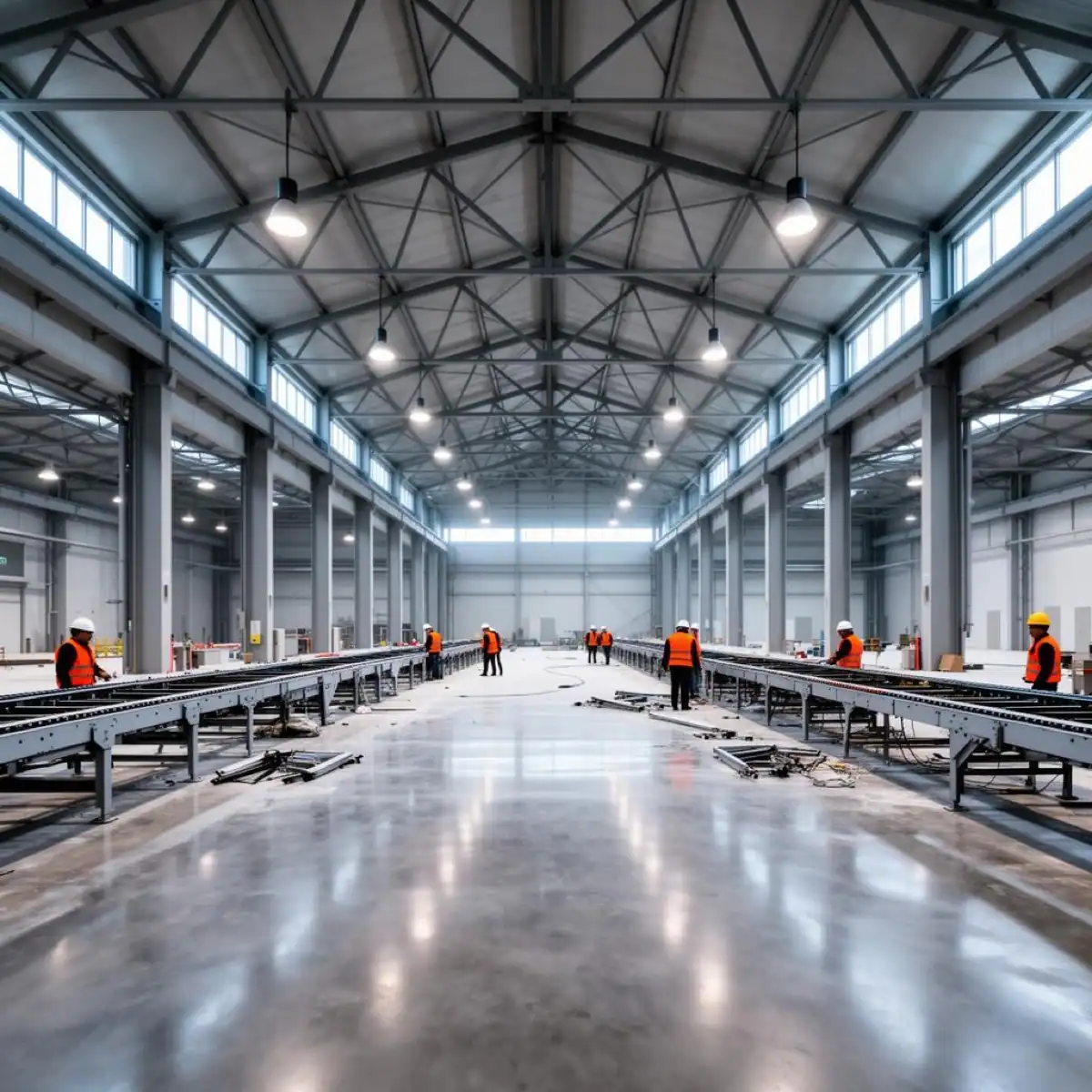
Decommissioning an industrial facility is a cash recovery exercise wearing a demolition project's clothing. Do it well and you recover meaningful value from the equipment, the metal, and sometimes the building itself. Do it poorly and you end up paying for disposal of assets that had buyers, and you face cleanup bills for environmental conditions that proper sequencing would have prevented.
This is the checklist we use internally on plant cleanup projects, condensed into the five phases that actually matter. It won't replace a project-specific engineering plan, but if any of these items are missing from your scope, the scope has holes.
Phase 1 — Pre-planning (4–12 weeks out)
The most expensive mistakes happen here, because they compound.
Stakeholder alignment. Identify the final decision-maker on schedule, budget, and scope. Industrial decommissioning projects typically have a plant manager, a corporate real estate or capital projects manager, and an environmental/HSE manager, and they often want different things. Get them aligned in writing before the first contractor shows up.
Target close-out date and handover condition. What does "done" look like? A building stripped of equipment and swept? A building ready for sale as-is? A vacant pad ready for redevelopment? Each implies different scope. Be explicit.
Regulatory notifications. Most jurisdictions require advance notice for industrial demolition:
- EPA NESHAP notification for asbestos (10-day minimum in most states; more in some)
- State air quality demolition notifications
- OSHA Subpart P if deep excavation is in scope
- Local building department demo permit
- Utility disconnect scheduling with the serving utility (often 2–4 week lead)
Insurance and contractor qualifications. Verify contractor insurance, COI naming owner, OSHA safety records, and references on similar-scale projects. For anything over a few acres or with hazmat, this is not a small-contractor job.
Preliminary hazmat survey. Before any cost estimate is credible, you need at least a desktop review of likely hazmat locations: asbestos in pipe insulation, flooring, and roofing; lead paint; PCB ballasts; historic records of chemical storage. A full survey comes later; a preliminary one drives budget realism.
Budget reserve for surprises. Industrial decommissioning projects routinely find things the desktop survey missed — buried tanks, undocumented chemical spills, hidden asbestos behind walls. Budget 15–25% reserve against the base contract value.
Phase 2 — Equipment inventory and asset recovery
This is where the money is. Skip or rush this phase and you leave cash on the loading dock.
Full equipment walk-through. Every piece of process equipment, HVAC, and electrical distribution gets photographed, nameplate-captured, and assigned a disposition: sell, redeploy, salvage for scrap, or dispose.
Categorize by resale potential:
- Strong resale: chillers, boilers, generators, large switchgear, MCCs, transformers, CNC machine tools, packaging lines, process tanks. These have direct end-buyers. We buy most of these categories — other direct buyers exist for specific niches.
- Scrap-plus-component value: older electrical gear, HVAC air handlers without premium controls, most standard pumps and motors, piping systems.
- Pure scrap: structural steel, metal roofing and siding, rebar in removed concrete, non-valuable tanks and vessels.
- Disposal cost: refractory, insulation containing hazmat, contaminated equipment, sludge and residuals in tanks.
Document everything before disconnection. Nameplates, serial numbers, recent service dates, and any certification tags. The documentation dramatically raises the offer on anything you're selling — we've seen 10–20% value swings on identical equipment based purely on paperwork being complete.
Get buyer quotes early. Don't wait until the equipment is ready to come out. A good equipment buyer can give you a firm offer inside 48 hours based on photos and nameplates, which lets you compare recovery value against the cost of removal before you commit.
Phase 3 — Hazmat abatement and decontamination
Always before demolition. Always.
Final hazmat survey. Licensed environmental professional does a comprehensive building survey plus bulk sampling on:
- Thermal systems insulation (pipes, boilers, ducts)
- Surfacing materials (popcorn ceilings, firestop)
- Miscellaneous materials (floor tile, mastics, roofing felt)
- Lead-based paint on surfaces to be disturbed
- PCB oils in transformers and capacitors
- Residual chemicals in tanks, piping, process equipment
Chemical cleanup. Empty all tanks, pipes, sumps, and process equipment to acceptable residual levels. Profile and characterize waste streams for disposal. Dispose through licensed TSDFs with manifest documentation.
Refrigerant recovery. For any HVAC or process cooling equipment being scrapped, refrigerant must be recovered by an EPA Section 608-certified technician. This is legally required regardless of destination — scrapyards will not accept equipment with refrigerant still charged.
Asbestos abatement. Performed by licensed contractors, with required notifications, negative-pressure containment, air monitoring, and waste manifesting. Pay the manifests — chain of custody is on the generator (you) in perpetuity.
Documentation. Keep every manifest, air monitoring report, and certification for minimum 30 years in most jurisdictions. Longer in some.
Phase 4 — Equipment removal and building strip-out
Now the equipment you're selling comes out, then the building shell work begins.
Sequencing matters. Pull the highest-value equipment first, while crews are fresh and the site is clean. Lower-value equipment and scrap can come out during building strip-out. Waiting to sell the chillers until "last" so they don't get in the way means they've been sitting offline longer and are worth less.
Electrical isolation. Coordinate with the utility on service disconnect. Lock out all internal distribution. Don't let anyone cut into energized anything, ever.
Mechanical removal. Chillers, boilers, air handlers, cooling towers, pumps — in that typical order. Rigging crews pull these through existing openings when possible; temporary wall openings when not.
Electrical removal. Main switchgear, MCCs, panels, transformers. Copper bus recovered as scrap if not resold whole; aluminum bus recovered. Control wiring bundled for copper recovery.
Piping and process. Stainless, copper, brass separated and bundled for scrap. Carbon steel piping loaded for ferrous scrap. Insulation already handled in Phase 3.
Structural strip-out. Interior partitions, mezzanines, platforms, non-loadbearing everything. Building comes down to shell.
Site cleanup at the end of each phase. Don't leave debris overnight. Daily sweep, daily haul-off. This has real impact on final site condition and on the neighboring businesses' tolerance of the project.
Phase 5 — Final site condition and documentation
Sweep the building clean. Broom-clean concrete floors, no residual debris, no oil spots, no standing water.
Patch penetrations. Temporary wall and roof openings cut for equipment removal get patched, at least weather-tight if not aesthetic.
Disposal documentation package. Manifests for every hazmat waste stream, weight tickets for every scrap load, haul-off receipts for construction debris. This is the closeout package that protects you against future environmental claims.
Equipment sale documentation. Bill of sale for every piece of equipment sold — who bought it, what they paid, what the unit's identifying marks were.
Walk-through with owner. Formal handover. Any punch-list items get a closeout date.
Environmental closeout report. For any facility with even moderate environmental history, a Phase II environmental site assessment at the end is cheap insurance. Run it before the demo crew leaves so remediation, if needed, happens while the contractor is still mobilized.
Time and cost reality
Full decommissioning of a 100,000 sq ft manufacturing facility with typical process equipment typically runs:
- 8–16 weeks of on-site work, depending on equipment density and hazmat scope.
- Cost: highly variable. A clean facility with strong equipment recovery can net positive or near-zero net cost after asset sales. A hazmat-heavy facility with limited salvage value can run $8–$25 per sq ft in net cost.
The spread comes almost entirely from the equipment recovery side. Facilities that systematically inventory, market, and sell their equipment recover 30–60% of their gross demolition cost through asset sales. Facilities that treat everything as scrap recover 5–15%. That's the real return-on-investment of a good decommissioning plan — it's why our plant cleanup scopes include an asset recovery consultation up front.
The facilities we see end up paying the most are the ones where decommissioning was treated as a sunk cost from day one, and the equipment was scrapped or given away because nobody wanted to deal with the sales process. Don't be that facility.
Decommissioning a facility?
Full plant cleanup — equipment recovery, hazmat-aware, turnkey scopes.
Get a Plant Cleanup QuoteMore in Plant Cleanup
Utility Isolation and Lockout During a Plant Decommissioning
Every energy source in a facility has to be identified, isolated and verified before removal work starts. This is the plan that prevents the serious incidents.
What to Do With Process Piping
Miles of pipe in an industrial facility is either a disposal cost or a recovery, depending on what ran through it and how it comes out.
Closing Out a Plating Line or Process Tank System
Process tanks, plating lines and waste treatment systems have to be emptied, cleaned and documented before anything structural happens. The order is not negotiable.