
How to Sell Your Used Commercial Chiller
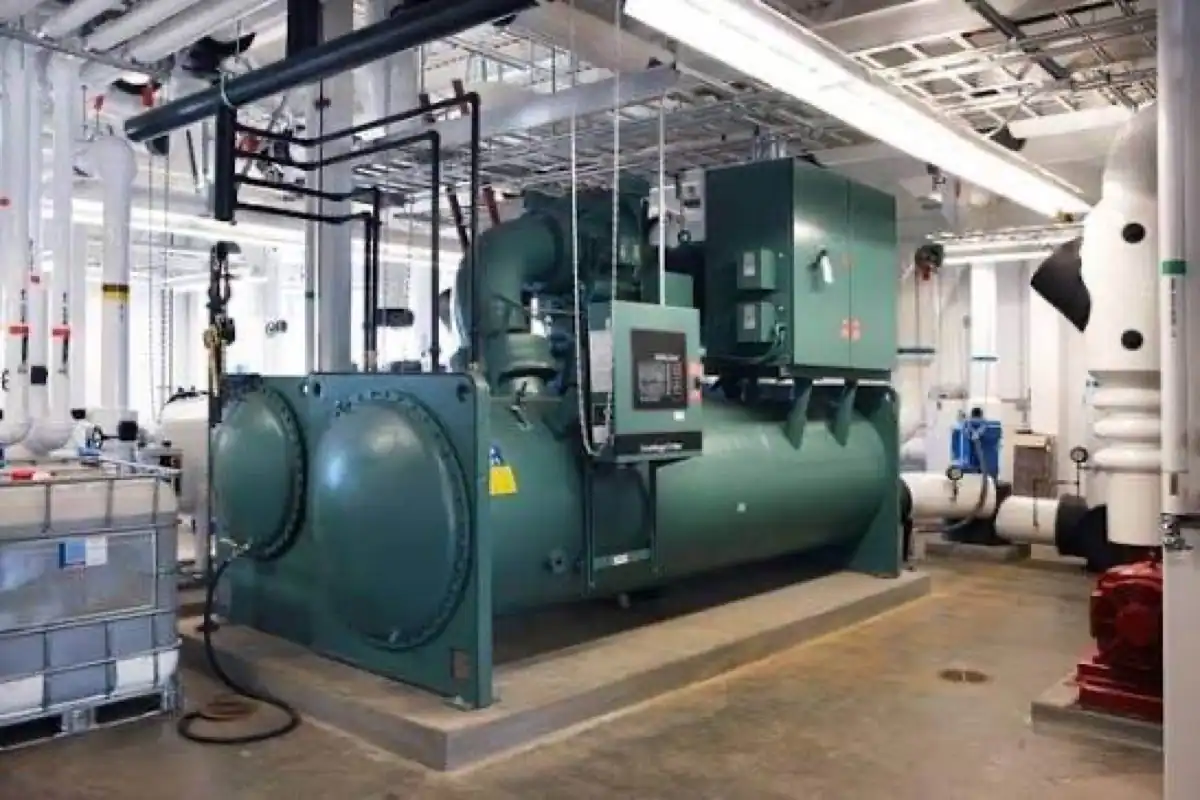
Most operators we talk to are surprised by what their old chiller is actually worth. A well-maintained 500-ton centrifugal chiller can clear five or six figures on the secondary market. Even a non-running, end-of-life unit usually has meaningful scrap and core value in its compressors, tube bundles, and controls. The mistake we see most often is selling too late — or selling through the wrong channel — and leaving thousands of dollars sitting on the loading dock.
This guide covers what actually drives the price, the photos and paperwork a serious buyer will ask for, and the handful of decisions that separate a smooth sale from a drawn-out mess.
What determines what your chiller is worth
Six things move the needle, in rough order of importance.
Condition and recent run history. A chiller that was operational within the last 12 months, has clean coils, and came out of a facility on a maintenance contract is worth substantially more than the same unit that sat idle for three years. If you have service records, pull them. They're the single most valuable document you can attach to a sale.
Tonnage. The strongest resale market is for commercial units in the 150-ton to 1,500-ton range. Very small packaged units (under 50 tons) compete with new equipment that's cheap to buy. Very large industrial process chillers over 3,000 tons have a smaller but often higher-paying specialist market.
Refrigerant. Modern refrigerants — R-134a, R-1234ze, R-513A — hold resale value well. Older R-22 and R-123 chillers sell mostly for their copper content and compressor cores. If your unit runs an obsolete refrigerant, don't expect to get paid like it's current-gen.
Manufacturer. York, Carrier, Trane, McQuay, Daikin, Multistack, and Johnson Controls are all strong names on the resale market. Off-brand or heavily-proprietary units are buyable but priced lower.
Completeness. A chiller with its original controls, VFDs, starters, and safeties in place is worth a lot more than a partially stripped unit. If you're thinking of "salvaging" parts before sale — don't. You'll take apart hundreds of dollars of reusable equipment and get $50 of scrap out of it.
Accessibility for removal. A rooftop unit with crane access is easy. A chiller in a basement mechanical room with a restricted rigging path is hard. Buyers factor the removal difficulty into their offer — bad access shaves the price.
The photo and nameplate checklist
Before you talk to a buyer, spend fifteen minutes getting these shots:
- Nameplate — close enough to read. Model, serial number, tonnage, refrigerant type, voltage, full load amps. This is the single most important photo.
- Three-quarter exterior shots from two sides. Shows overall condition, visible corrosion, missing panels.
- Control panel with door open. Shows the safeties, starter, and any visible damage or aftermarket repairs.
- Any visible damage, leaks, or pending repairs. Be honest — a buyer who discovers a surprise during pickup renegotiates.
- The rigging path. Photo of how the unit actually comes out of the building. If it's a straight shot out a louvered wall, great. If it involves a temporary opening, show it.
Send all of that plus the facility city and state. A good buyer comes back with a firm cash offer inside 48 hours.
How buyers are actually thinking
When we buy a chiller, we're evaluating three things in parallel: what it's worth as a running unit on the resale market, what it's worth as a rebuildable core, and what the recovery cost is. Whichever has the highest net nets you the offer. Most of the time, resale wins — but not always, and for older units the scrap-plus-core calculation wins more often than operators expect.
The broker model works differently. A broker's offer is what they think they can resell the unit for, minus their margin, minus an assumption about removal cost and risk. A broker who doesn't do the removal themselves is guessing at the rigging complexity and tends to underpay to protect their downside. This is a big reason a direct-to-buyer sale usually gets you a higher number.
Mistakes that cost sellers money
Waiting too long. Chillers lose value the longer they sit offline. Rubber gaskets dry out, electrical components degrade, and the service history gets staler with each passing quarter. If you know the unit is coming out, start the sale process before decommissioning — not after.
Partial teardown before the sale. Pulling the VFD, the controls, or the starter for "reuse elsewhere" and then trying to sell the shell tanks the price more than keeping the parts is worth.
Bad photos or no nameplate shot. A buyer can't price what they can't see. Grainy phone photos taken at night, no nameplate, no context shots — that's a slow sale at best.
Running the removal yourself. Unless you're an HVAC contractor with rigging capacity, selling "as-is, buyer removes" is almost always the better path. You avoid the rigging cost, the refrigerant recovery, the disposal paperwork, and the liability. Our offers on chillers include full rigging and removal — that's standard in the industry for direct buyers.
Trusting "I'll be there next month" timelines. A buyer who can't schedule the pickup inside two weeks of offer acceptance is not a serious buyer. Get the pickup window confirmed in writing before you sign anything.
The short version
A good sale on a used chiller takes about a week of calendar time, not a month. Gather the nameplate and five photos, send them to one or two direct buyers, compare the offers, confirm the pickup window, and get paid on pickup day. The unit is gone, the pad is empty, and your books are cleaner.
Most of the friction sellers experience comes from either selling through too many middlemen or waiting until the unit has already been sitting disconnected for a year. Neither is necessary.
Got equipment to sell?
Cash offers in 24–48 hours. Nationwide pickup. Any condition.
Get a Cash OfferMore in Selling Equipment
Selling a Chiller Plant: Whole or Piece by Piece?
A complete central plant sometimes sells better as a system than as components. Here is how to tell which case you are in.
Why Removal Access Changes What Your Equipment Is Worth
A buyer prices the equipment and the extraction together. What you can do about access, and what it is worth.
What Actually Determines Used Equipment Resale Value
Age matters less than most sellers assume. Condition, documentation, removal difficulty and market depth matter more.