
Who Buys Used Industrial Boilers?
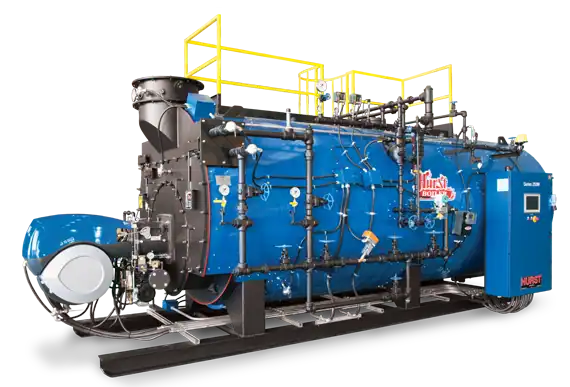
When a facility takes a boiler offline, the usual instinct is to call around and get a few quotes on having it hauled off. That works — but it leaves money on the table for anything above scrap grade. A well-maintained firetube or watertube unit from a name-brand manufacturer has a real secondary market, and knowing which kind of buyer to call changes what you actually get paid.
Here's the landscape, from the perspective of someone who buys boilers directly and has seen every variant of how these sales go sideways.
Three types of buyers
1. Brokers. The largest category. A broker doesn't own the equipment at any point — they line up an end-buyer and take a margin in the middle. Offers are almost always lower because the broker has to protect against rigging cost and resale risk. The advantage is that brokers know the market and can move obscure equipment. The disadvantage is they take 15–30% off what the unit is ultimately worth.
2. Scrap yards. Scrap yards buy on metal content, not resale potential. For a boiler this means they pay the weight-based ferrous scrap price — which in 2026 has been running roughly $100–$200 per gross ton — plus whatever copper, brass, or stainless they can recover from the burners, controls, and trim. For a very old unit with no resale value, scrap might genuinely be the best option. For anything newer than 15–20 years with good condition, scrap is a bottom-of-market outcome.
3. Direct end-buyers. Companies that either resell boilers into the secondary market, refurbish and redeploy them, or buy for parts inventory. Demo Dynasty falls into this category — we buy boilers for resale, for rebuild cores, and for component pull-downs depending on condition. The advantage: a direct buyer cuts out the broker margin and tends to pay 20-40% more for good equipment. The trade-off: direct buyers are more selective, so a boiler in rough shape may get a lower offer than a broker promising to "try to find a buyer."
Which type to call depends on what you have. For a working or recently-offline boiler from any of the major names (Cleaver-Brooks, Fulton, Burnham, Weil-McLain, Lochinvar, Hurst, Superior, Williams & Davis), go direct. For anything unknown, older than 25–30 years, or known non-working, get one scrap quote and one direct-buyer quote and compare.
Red flags to spot before you commit
Most bad sales we see traceable to one or more of these.
"We'll be there next month." Serious buyers schedule pickups within 1–2 weeks of offer acceptance. A month-out timeline usually means the buyer is still trying to sell it downstream and doesn't actually have a home for it yet. You're carrying the equipment on your property while they figure it out.
No rigging plan discussion. If the buyer doesn't ask how the boiler comes out of the building, they haven't actually priced the removal. Expect a post-acceptance renegotiation when they show up and realize the boiler won't fit through the loading dock.
Cash offer that's dramatically higher than everyone else. The high bid is sometimes just the buyer who hasn't thought it through. If three quotes are in the $8K–$12K range and one is at $22K, ask them to walk you through the rigging plan and the disposal of the refractory and stack. They'll often revise down.
Vague payment terms. Payment should be on pickup day, wire or certified check, before the trailer leaves the property. Any buyer proposing "net 30" or "we'll pay after we move it" is a buyer you're financing.
Insistence on excluding rigging from the price. "We'll give you $15K for the boiler but you handle removal" puts every cost variable back on you. Real removal — crane, forklift, disconnect, cutting, hauling — often runs $5K–$12K on a mid-size industrial unit. A removal-inclusive offer at $12K is better economics than a $15K "buyer removes" offer, almost every time.
The logistics of actually moving a boiler
This is where a lot of sales fall apart, so it's worth knowing what "included" really means.
Isolation and disconnect. Fuel gas, water, steam, condensate return, blowdown, electrical, and stack. Each needs to be isolated, drained, and disconnected safely. A proper removal crew does this before the rigging starts.
Cutting. Breaching (the stack), piping, and sometimes the boiler shell itself if it can't be moved in one piece. This is where experience shows up — clean cuts in the right places vs random torch work that destroys resale value.
Rigging. A firetube boiler is heavy — a 200 HP unit runs 8,000–15,000 lbs. Rigging means crane or forklift capacity matched to the weight, plus chain or sling rigging, plus dunnage for the trailer.
Transport. Commercial or industrial boilers usually need a lowboy or flatbed; very large units may need overwidth permits. A competent buyer handles this end-to-end.
Site cleanup. The pad, the mechanical room, the breaching penetrations in the wall — all need to be left in a reasonable state. Not necessarily patched back to pre-boiler condition, but at minimum broom-clean and with any temporary openings covered.
If the buyer's offer doesn't cover all of that, ask specifically what's excluded. Our offers on boilers include full removal — disconnect, cutting, rigging, transport, and site sweep. That's the standard you should measure other offers against.
Realistic timelines for a sale
For a typical industrial boiler in decent condition, the full cycle looks like:
- Day 0: send nameplate photos + 5 exterior shots + facility city/state to buyer.
- Day 1–2: receive written offer.
- Day 3–5: accept, schedule pickup.
- Day 7–14: pickup day. Payment wires that morning or is handed over on-site. Unit leaves.
Bad sales stretch this to 6–8 weeks and involve at least one broken commitment and usually one price renegotiation. Good ones close inside two weeks.
Bottom line
The cheapest buyer-type to call is a broker. The most expensive is usually a direct end-buyer — but "most expensive" for them means the best offer for you. For boilers of any real resale caliber, skip the middle layer and talk to the party that's actually going to own the equipment after the sale. The fewer hands between your boiler and its next facility, the more of the money ends up in yours.
Got equipment to sell?
Cash offers in 24–48 hours. Nationwide pickup. Any condition.
Get a Cash OfferMore in Selling Equipment
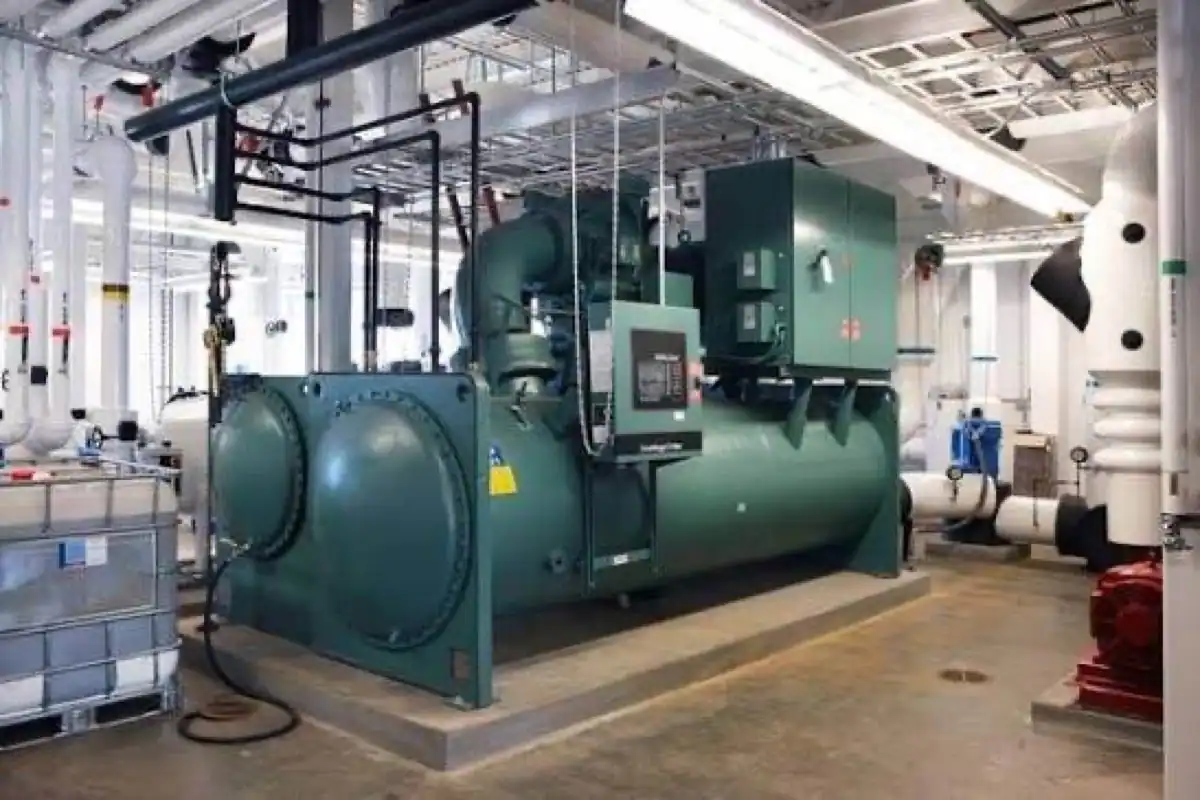
Selling a Chiller Plant: Whole or Piece by Piece?
A complete central plant sometimes sells better as a system than as components. Here is how to tell which case you are in.
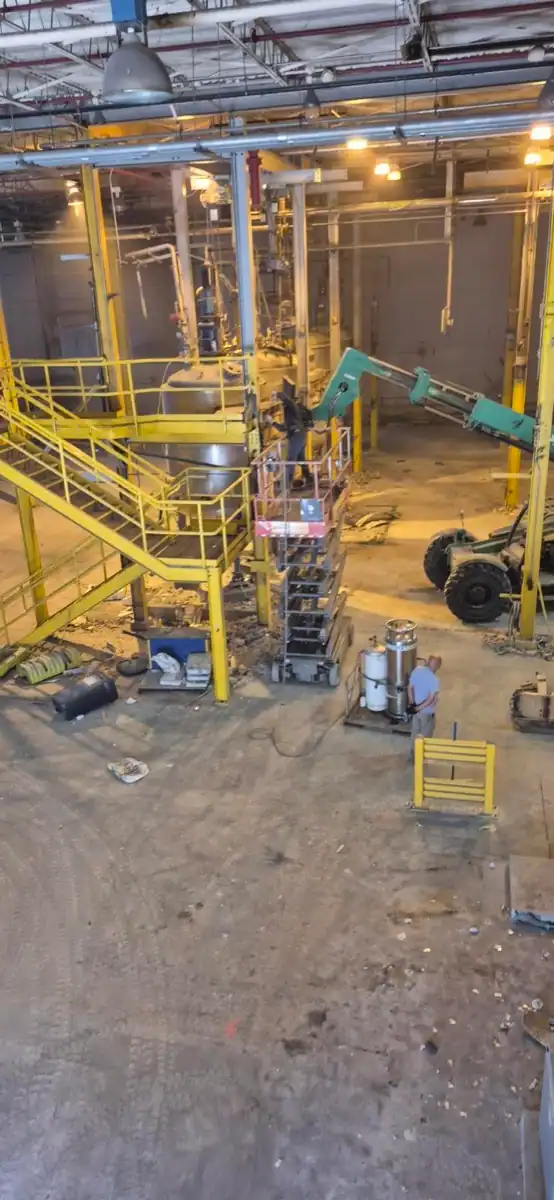
Why Removal Access Changes What Your Equipment Is Worth
A buyer prices the equipment and the extraction together. What you can do about access, and what it is worth.
What Actually Determines Used Equipment Resale Value
Age matters less than most sellers assume. Condition, documentation, removal difficulty and market depth matter more.