
Gas Station Demolition: What Is Actually Involved
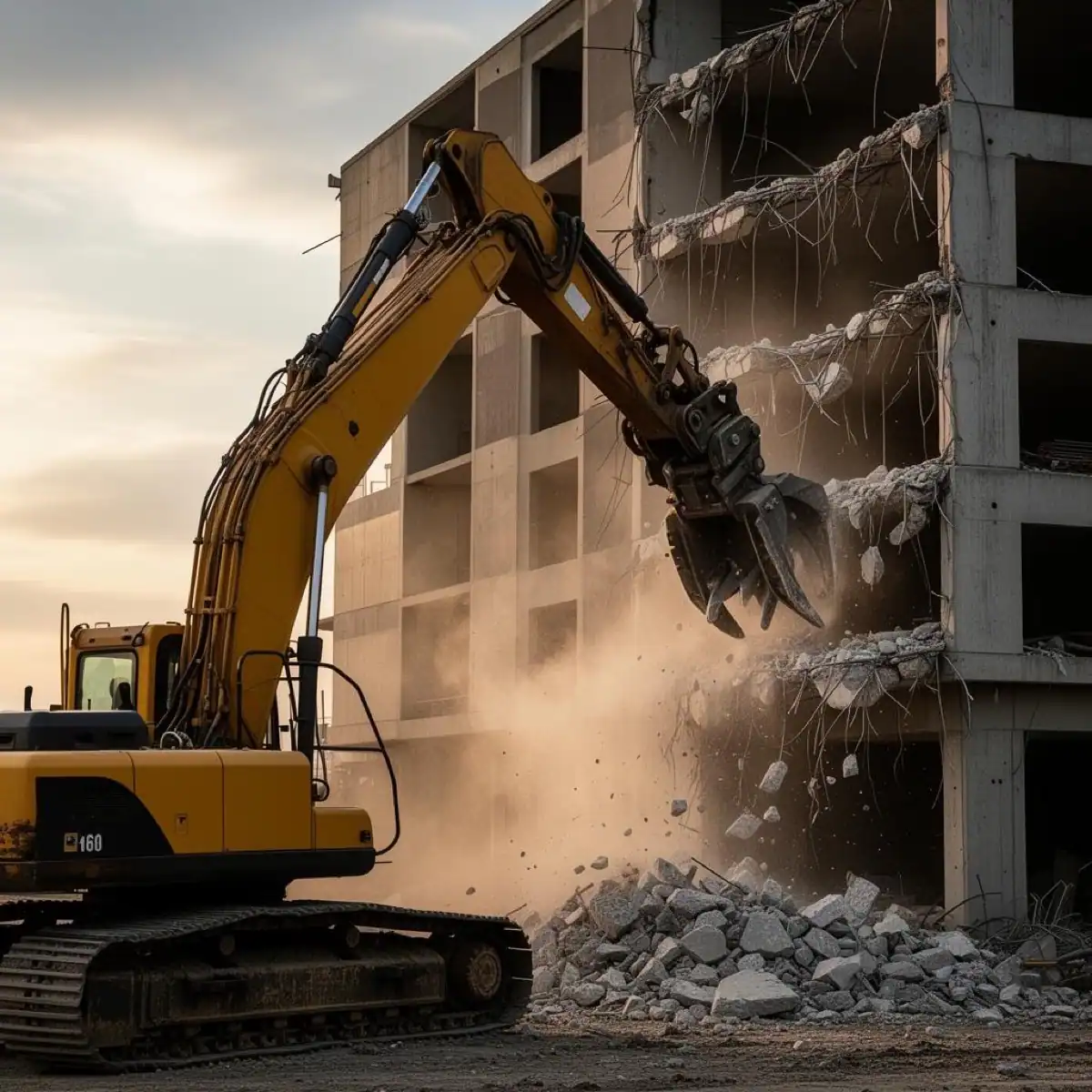
Former fuel stations are attractive redevelopment parcels: hard corners, good visibility, existing curb cuts. They are also among the most regulated small demolitions there are, because the building is the least of it. The tanks, the piping, and whatever is in the soil around them drive the project.
Three separate scopes on one site
A gas station demolition is really three jobs that have to be sequenced correctly.
The fuel system. Underground storage tanks, product piping, dispensers, sumps, and the vent lines. This is a regulated closure with its own notification, procedure, and reporting, and it is handled by contractors qualified for that work.
The canopy. A steel-framed canopy on drilled piers, with lighting and often the dispenser electrical running through the columns. It comes down as a structural demolition, usually with a crane or excavator, after the electrical is isolated.
The building. The convenience store, kiosk, or service bays. This part is ordinary commercial demolition, though older service stations with hydraulic lifts have their own below-grade issue: the lift cylinders and their oil reservoirs are in the ground too.
The tanks come first, and they set the schedule
The fuel system closure is the critical path. The tanks are emptied, cleaned, and rendered safe. They are then removed, or in limited cases closed in place, and soil and groundwater around the excavation are sampled. If the results come back clean, the closure is documented and the rest of the site can proceed on a normal demolition timeline.
If they do not, the project moves into environmental assessment and possibly remediation, and that runs on a scale of months rather than weeks. We walk through the process and Florida's specific complications in underground storage tank closure in Florida. The short version: do the tank work before you commit to a redevelopment schedule, not after.
Hydraulic lifts and service bays
Older stations that had service bays often still have in-ground hydraulic lifts. Each one is a steel cylinder set in the ground with a hydraulic oil reservoir, and they are treated as their own removal with soil assessment around the excavation. They are easy to miss during scoping if the bays have been converted to retail floor space, so look for the telltale steel plates or filled patches in the slab.
Canopy removal
The canopy is straightforward mechanically but needs care because of what runs through it. Dispenser power, canopy lighting, and sometimes communications all route through the columns from the building. Everything is de-energized and verified dead before a torch or a shear touches steel. The columns sit on deep piers that have to be broken off below the final grade or pulled entirely, depending on what the redevelopment plan calls for.
Canopy steel has scrap value, and on a clean job that offsets part of the removal.
The building and the slab
With the tanks and canopy dealt with, the building comes down like any small commercial structure. The asbestos survey is still required, and stations of a certain age will have floor tile and roofing that test positive. The slab and the fuel island curbs typically come out because the redevelopment will regrade the corner anyway.
What the owner should have ready
Tank registration records and any prior closure or assessment reports. Utility account information for power, water, and gas. As-built drawings of the fuel system if they exist. And the redevelopment site plan, so the demolition scope matches what the next contractor needs to find when they arrive.
Frequently Asked Questions
How long does a gas station demolition take?
The demolition itself is short. The tank closure and its assessment set the real timeline, and that depends on the sampling results. Plan the redevelopment around the closure, not the teardown.
Do the tanks have to come out?
Removal is the default and usually preferred. Closure in place is used only where removal is not practical, and it still requires cleaning, filling, assessment, and documentation.
What if the site was a station decades ago and the tanks are gone?
Verify it. Unregistered or undocumented tanks turn up on old corners regularly. A records search and a site walk before demolition are cheap compared to finding a tank with an excavator.
Can you handle the whole site?
We coordinate the tank closure with qualified contractors, sequence the canopy and building demolition around it, and handle debris removal so the corner is ready for the next project.
We handle fuel station and commercial demolitions across Florida and the Southeast from our Auburndale, FL base. Call (689) 323-4676 or request a quote.
Need an interior stripped?
Nationwide interior demolition crews. Fast scheduling. Clean hand-offs.
Request a Demo QuoteMore in Demolition
Strip Mall and Retail Center Demolition in Florida
Older retail centers are coming down across Florida for redevelopment. Here is what drives the cost and schedule on a strip mall teardown.
Hotel and Motel Demolition in Florida
Florida's aging roadside motels and mid-century hotels are prime redevelopment sites. What drives cost and schedule when one comes down.
Demolition Debris Hauling: How Cost per Ton Really Works
The haul-off is often the largest single line on a demolition quote. Here is how tonnage, material type, and distance turn into the number.