
Strip Mall and Retail Center Demolition in Florida
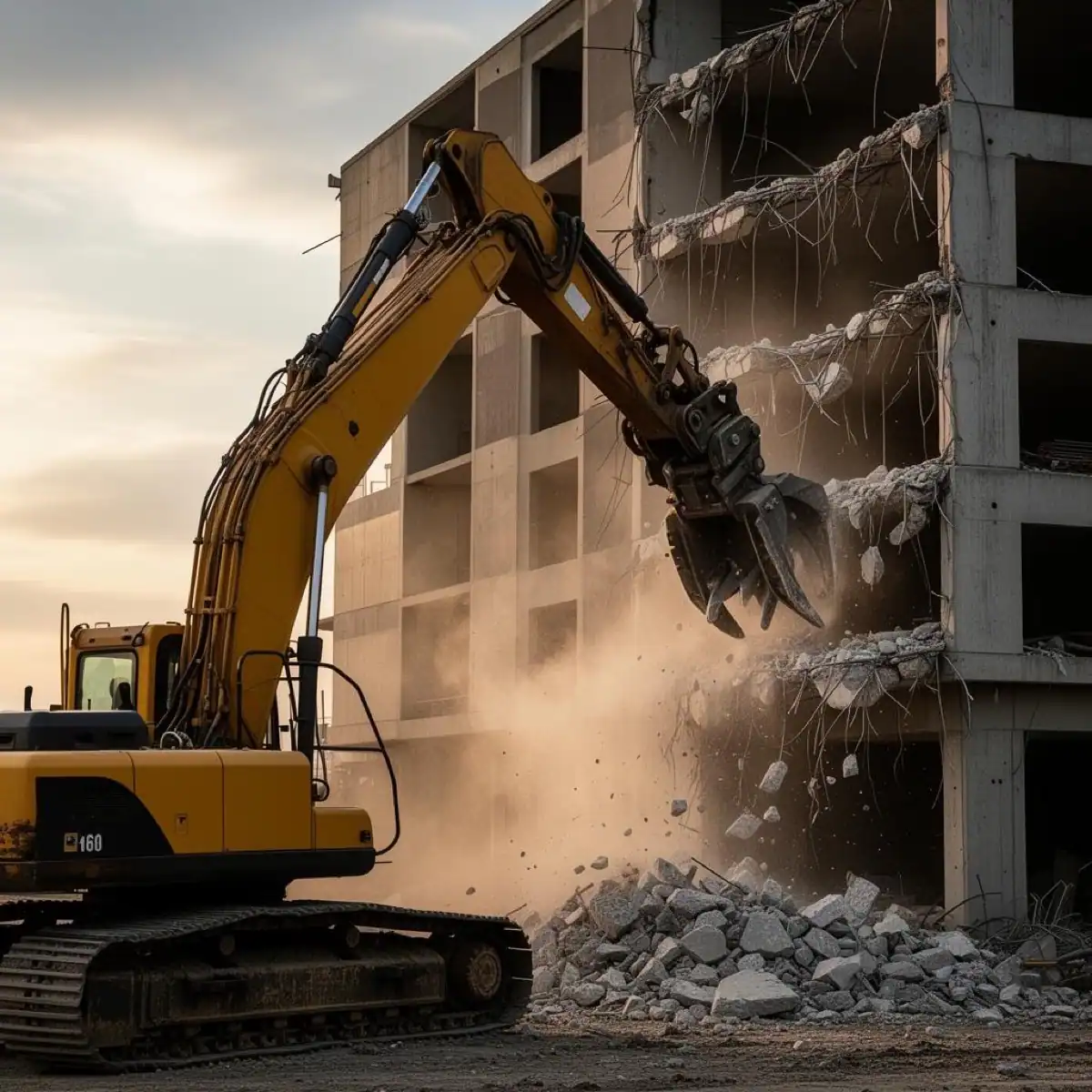
A lot of Florida's 1970s and 1980s retail stock has reached the end of its useful life. Single-story strip centers on large parking fields are being replaced with multifamily, self-storage, medical, and mixed-use projects, and the first step on every one of those sites is getting the old building and its pavement out of the way.
Retail demolition looks simple from the road. It rarely is. Here is how these jobs actually get scoped and priced.
Every tenant space is its own small project
A 60,000 square foot strip center is not one building. It is fifteen or twenty separate build-outs, each with its own storefront, ceiling grid, HVAC split, restrooms, and electrical panel, and often decades of layered finishes from successive tenants. A former restaurant space will have grease ducts, a hood, walk-in coolers, and floor drains. A former dry cleaner may have a regulatory history of its own. A former salon or nail studio can have plumbing at every station.
Before the structure comes down, those interiors have to be evaluated for hazardous materials and, on many jobs, stripped selectively so recyclable metals and any sellable equipment come out clean. That interior phase is priced separately from the structural teardown and it is where the surprises usually live.
The asbestos survey comes first
Florida requires an asbestos survey before a demolition permit is issued on a commercial building, and retail centers of this vintage almost always turn something up. Floor tile and mastic, roofing materials, joint compound, and duct insulation are the common finds. The abatement scope cannot be quoted until the survey is complete, so get it done early. We cover the process in what Florida requires for an asbestos survey before demolition.
Roof-mounted equipment has value
Strip centers carry a rooftop unit for nearly every tenant bay, and many have a central chiller or larger package units serving anchor spaces. Before demolition, that equipment is either recovered for resale, recovered for refrigerant and scrap, or crushed with the building. The first option is worth the most. Because we buy used HVAC and electrical equipment ourselves, we appraise what is on the roof and in the electrical rooms before we quote, and the recovery value is credited against the demolition number.
Slab, footers, and the parking field
The building is usually the smaller part of the removal. A retail center sits on a slab with turned-down footers, and the parking lot around it can be several times the building footprint. Whether that pavement stays or goes depends entirely on the redevelopment plan. If the new site plan reuses the parking geometry, leaving asphalt in place until the site contractor takes over saves real money. If the whole parcel is being regraded for stormwater, everything comes out.
Decide this before you take bids. A demolition quote with the slab and pavement excluded is not comparable to one with them included, and it is the single biggest swing in the total.
Utilities and the pylon sign
Retail centers have a lot of services: separate electric meters for each bay, gas to restaurant spaces, water and sewer taps, irrigation, and site lighting. Every one has to be formally disconnected and, in most jurisdictions, capped at the property line with documentation before the permit closes. Utility disconnection is the step that most often delays a demolition start, so begin it as soon as the property is vacant.
Do not forget the pylon sign, its foundation, and the electrical feed to it. These get missed in scopes constantly.
Working next to open tenants
Many retail demolitions are partial. The anchor stays open while the inline bays come down, or an outparcel restaurant keeps operating through the whole job. That changes everything about sequencing: dust control, restricted hours, protected pedestrian routes, and structural separation where a shared wall or roof line is being cut. We plan those jobs around the tenant's business hours and keep the site walkable and safe every day.
Schedule
For a vacant single-story center with the survey complete, structural demolition and haul-off is measured in weeks, not months. Add time on the front end for the survey, abatement, and utility disconnects, and time on the back end if slab and pavement removal are in scope. The demolition itself is rarely the long pole. The permit, the survey, and the utilities are.
Frequently Asked Questions
Does the demolition contractor pull the permit?
We can, and on most jobs we do. The permit application needs the asbestos survey, proof of utility disconnects, and in some counties a notice to the state before work starts.
Can the parking lot be left in place?
Often, yes. If the redevelopment reuses the pavement or the site contractor is handling grading anyway, leaving it saves money. Confirm with the civil engineer before scoping.
What happens to the rooftop units?
We recover them. Units in working condition are resold, the rest are reclaimed for refrigerant and scrap, and either way the value comes off your demolition invoice.
Can part of the center stay open during demolition?
Yes. Partial demolition next to operating tenants is common. It requires separation, dust and noise controls, and coordination with tenant hours, and it is priced accordingly.
We demolish retail centers across Florida from our Auburndale base and throughout the Southeast. Call (689) 323-4676 or request a quote, and if the site is in a metro we work regularly, start at industrial demolition in Florida.
Need an interior stripped?
Nationwide interior demolition crews. Fast scheduling. Clean hand-offs.
Request a Demo QuoteMore in Demolition
Gas Station Demolition: What Is Actually Involved
A gas station teardown is a tank closure, a canopy removal, and a building demolition rolled into one regulated project. Here is how it sequences.
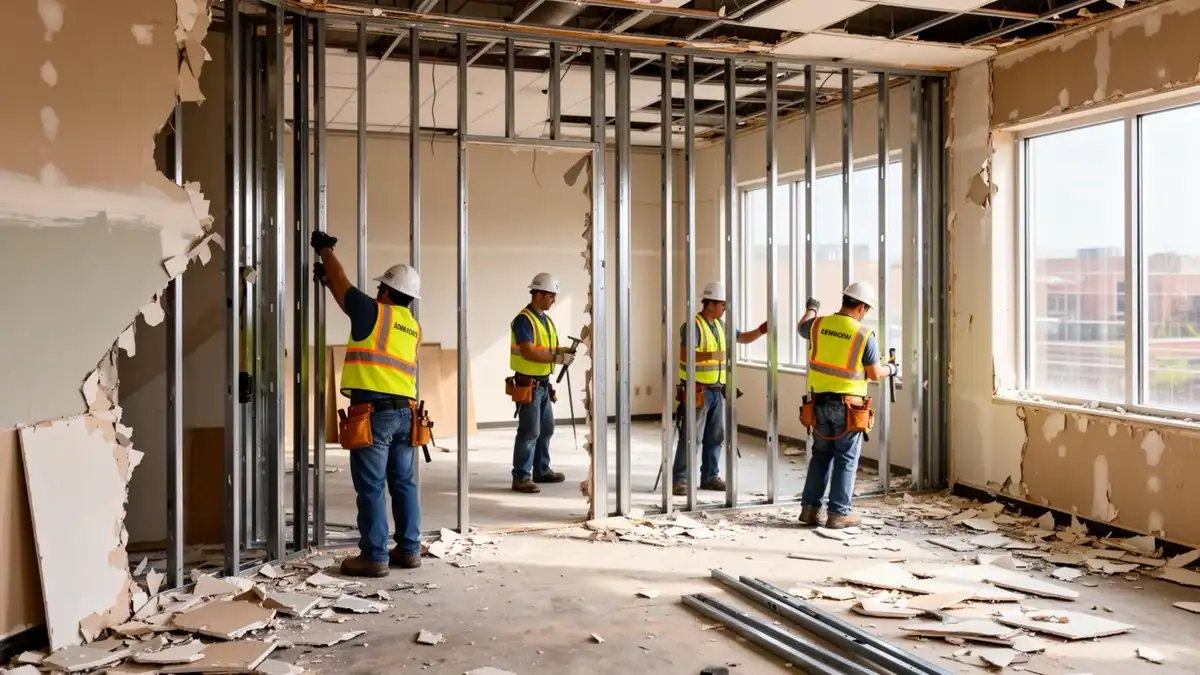
Hotel and Motel Demolition in Florida
Florida's aging roadside motels and mid-century hotels are prime redevelopment sites. What drives cost and schedule when one comes down.
Demolition Debris Hauling: How Cost per Ton Really Works
The haul-off is often the largest single line on a demolition quote. Here is how tonnage, material type, and distance turn into the number.