
Buying Used Industrial Pumps: What to Check Before You Commit
Pumps are the easiest used industrial equipment to buy and the easiest to buy wrong. They are cheap relative to most plant equipment, they are everywhere in a decommissioning, and a used pump in good condition will run for years. But a pump that does not match your duty point will run badly forever no matter how good its condition — and no amount of rebuild work fixes a mismatch.
Get the hydraulics right first, the condition second.
Start with your duty point, not the pump
You need two numbers before you shop: flow (GPM) and total dynamic head (feet), calculated for your actual system including static lift, friction losses, and any pressure you have to deliver against. Then check the candidate pump's curve at that point.
Running a pump far from its best efficiency point is what kills it. Too far left and you get recirculation, vibration, and bearing wear. Too far right and you risk cavitation and motor overload. A pump running at its BEP is quiet, efficient, and long-lived.
Also check NPSH available against the pump's NPSH required. Suction-side problems cause more failed installations than anything else, and they are entirely predictable on paper before you buy.
Materials matter more than condition
Match the wetted materials to the fluid, temperature, and any abrasives:
- Cast iron — water, non-corrosive fluids, the commodity default
- Ductile iron / bronze fitted — general service with mild corrosion
- 316 stainless — chemical, sanitary, food, and corrosive service
- Alloy and specialty — aggressive chemicals, high temperature
- Hard iron / rubber lined — slurries and abrasives
A stainless pump can serve where a cast iron one cannot, but the reverse is a short and expensive experiment. Confirm the actual material, not the seller's guess — a magnet tells you a lot in ten seconds.
Get the service history
Ask directly: what did this pump move, at what temperature, for how long? A pump that ran clean water for ten years is in different shape than an identical pump that ran an abrasive slurry for two.
For chemical service, ask what specifically was pumped — both for wear assessment and because you need to know what residue you are receiving.
Inspection checklist
- Spin the shaft by hand. It should turn smoothly with no grinding or catch.
- Check shaft runout and endplay. Excessive play means bearings.
- Look at the impeller through the suction if you can. Vane erosion, wear-ring clearance, and pitting all show up visually.
- Inspect the casing for wear, especially in slurry service, and check the volute for thinning.
- Look at the seal area for evidence of chronic leakage — packing service that scored the sleeve means added cost.
- Verify the motor separately: nameplate, insulation resistance, bearing condition, and enclosure type suited to your environment.
- Confirm the coupling and base are complete and aligned-able.
- Run it if possible, and check amp draw against nameplate.
Rebuild economics
A used pump plus a rebuild is often the smartest purchase available. Seals, bearings, wear rings, and gaskets are consumables, and a shop rebuild of a good casing costs a fraction of a new pump with a long lead time.
Two rules keep this from going sideways: first, confirm parts availability for the make and model before you buy — an orphan pump with no parts is scrap regardless of condition. Second, get the rebuild quoted before you commit if the pump is not running, so the total lands where you expect.
Buy the package when you can
A pump on a base with its motor, coupling, guard, and drive is worth paying up for. Matched, aligned, and complete beats assembling a pump, motor, base, and coupling separately — and the used price differential is usually small.
Where good used pumps come from
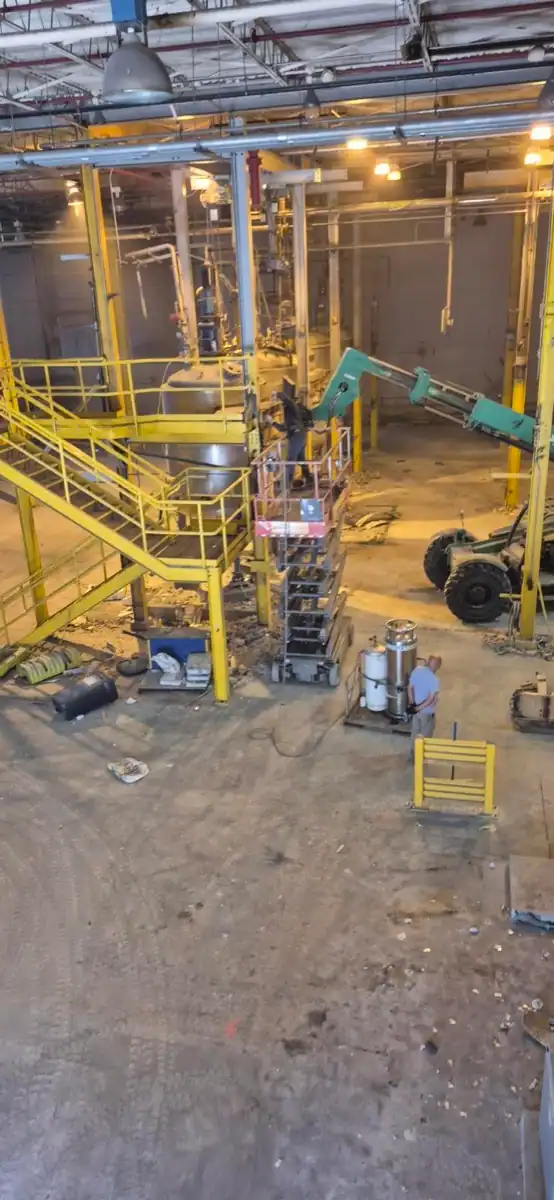
The best source is a plant that closed while everything was still running. Equipment recovered from a proper plant cleanup comes with known history, was under maintenance until shutdown, and was removed carefully rather than cut out with a torch.
Auction lots can be great value but you are buying blind and typically as-is, with no history and no recourse. The trade-offs are laid out in reconditioned vs. as-is used equipment.
What to tell us
Give us flow, head, fluid, temperature, and any material requirements, plus your available power. We will tell you what is in the yard that fits, or source it through our decommissioning pipeline.
Call (689) 323-4676 or browse used equipment for sale. Selling pumps instead? See selling used industrial pumps.
Looking for used equipment?
We move chillers, boilers, generators, and cooling towers across Florida and nationwide. Tell us what you need.
Ask About Available UnitsMore in Buying Guides
Buying Used Machine Tools From a Plant Closure
Machine tools from a closing facility can be the best value in industrial equipment, provided you evaluate wear, controls and what it takes to move.
Inspecting a Used Industrial Boiler Before You Buy
Pressure vessel condition, jurisdiction paperwork and burner package all decide whether a used boiler is a bargain or an ornament.
Load Testing a Used Generator Before You Buy
Hours mean little without a load test. What to test, what to look for, and what a generator's history tells you.