
Demolition Insurance and Bonding: What to Verify Before You Sign
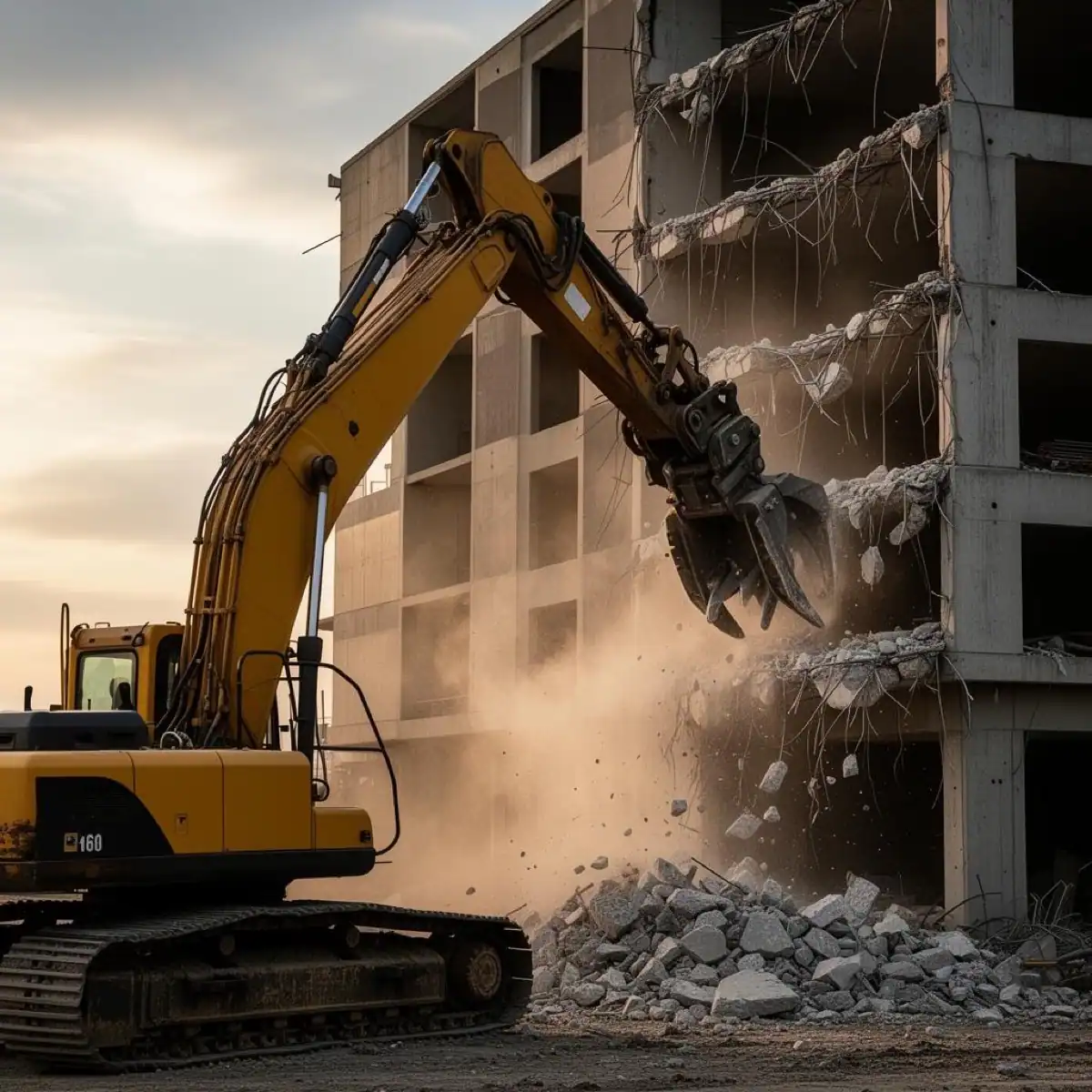
Demolition is one of the few trades where a contractor's mistake can become the property owner's liability instantly and permanently. A collapsed adjacent wall, an unpermitted disturbance of asbestos, a released contaminant, an injured worker with no coverage behind them — each of these lands on the owner when the contractor turns out to be underinsured.
Verifying coverage takes twenty minutes and it is the highest-return twenty minutes in the whole procurement.
Ask for the certificate from the insurer, not the contractor
A COI emailed by the contractor is a PDF. A COI sent directly by the agent or insurer, naming you as certificate holder, is a document you can rely on. Request it that way every time. And check the dates — coverage that expires mid-project is coverage you do not have when the risk is highest.
General liability: look past the number
Most owners check the limit and stop. The limit matters, but three other things matter more on demolition work:
Exclusions. Some policies written for general contractors carve out demolition, blasting, or work above a certain height. Read the exclusions page, or ask the agent in writing whether structural demolition is covered.
Per-project aggregate. A shared aggregate can already be half consumed by other jobs before your project starts. A per-project aggregate endorsement means your limit is your limit.
Completed operations. Coverage should extend past the completion date. Problems on demolition sites — settlement, undiscovered contamination, structural issues in an adjacent building — surface after the crew leaves.
Pollution liability is the one most people miss
Standard general liability policies typically exclude pollution. Demolition routinely disturbs the exact things that trigger those exclusions: asbestos, lead, mold, fuel and hydraulic residue, refrigerants, and contaminated soil.
Ask specifically for contractors pollution liability, and ask whether asbestos and lead are covered or excluded. On any project with an abatement component, the abatement contractor should carry it too, and you should see their certificate separately.
Workers compensation is non-negotiable
In Florida, an uninsured worker injured on your property can become your problem. Verify the policy is active, that it covers the actual crew doing the work, and that subcontractors carry their own. Ask whether any of the crew are classified as independent contractors — if a large share of the workforce is 1099, ask how they are covered, because "they carry their own" often means nobody does.
Additional insured and waiver of subrogation
You want to be named an additional insured on the general liability policy — not merely a certificate holder. Certificate holder means you receive a notice. Additional insured means you are covered.
A waiver of subrogation keeps the contractor's insurer from turning around and pursuing you after paying a claim. Both are standard requests and any competent demolition contractor's agent processes them without drama.
Bonding: when it matters
Payment and performance bonds are standard on public work and common on large private projects. A bond is not insurance — it is a guarantee that the job gets finished and that subs and suppliers get paid, backed by a surety that has already underwritten the contractor's finances.
That underwriting is itself useful information. A contractor who can obtain a bond for the size of your project has passed a financial review by a third party with money at stake. On smaller private demolition jobs a bond is often unnecessary, but if the project is large enough that a failed contractor would strand you, ask.
Also worth asking about on Florida sites: whether the contractor carries or arranges builder's risk or installation coverage for equipment staged on site, and how the site is secured after hours.
Licensing and permit standing
Florida commercial demolition requires a licensed contractor of record. Verify the license number is active and in the right classification for the scope, and confirm the license holder is the entity signing your contract — not an affiliated company with a similar name.
Ask whether the contractor has ever had a permit revoked or a stop-work order issued. The answer, and the way it is answered, tells you a lot.
The practical checklist
- COI sent directly from the agent, current dates
- General liability with no demolition exclusion, per-project aggregate, completed operations
- Contractors pollution liability, with asbestos and lead status confirmed
- Active workers compensation covering the actual crew
- You named as additional insured, with waiver of subrogation
- Active Florida license in the correct classification
- Subcontractor certificates for abatement and hauling
- Bond, if project size warrants it
Why we put this in writing
We are licensed, insured, and OSHA-compliant, and we send the certificates before the contract, not after. On industrial demolition and plant cleanup work we also carry the equipment and hauling scopes in-house, which means fewer parties on your site and fewer certificates for you to chase.
Call (689) 323-4676 or request a quote.
Need an interior stripped?
Nationwide interior demolition crews. Fast scheduling. Clean hand-offs.
Request a Demo QuoteMore in Demolition
Strip Mall and Retail Center Demolition in Florida
Older retail centers are coming down across Florida for redevelopment. Here is what drives the cost and schedule on a strip mall teardown.
Gas Station Demolition: What Is Actually Involved
A gas station teardown is a tank closure, a canopy removal, and a building demolition rolled into one regulated project. Here is how it sequences.
Hotel and Motel Demolition in Florida
Florida's aging roadside motels and mid-century hotels are prime redevelopment sites. What drives cost and schedule when one comes down.