
Reading a Demolition Contractor's Safety Plan
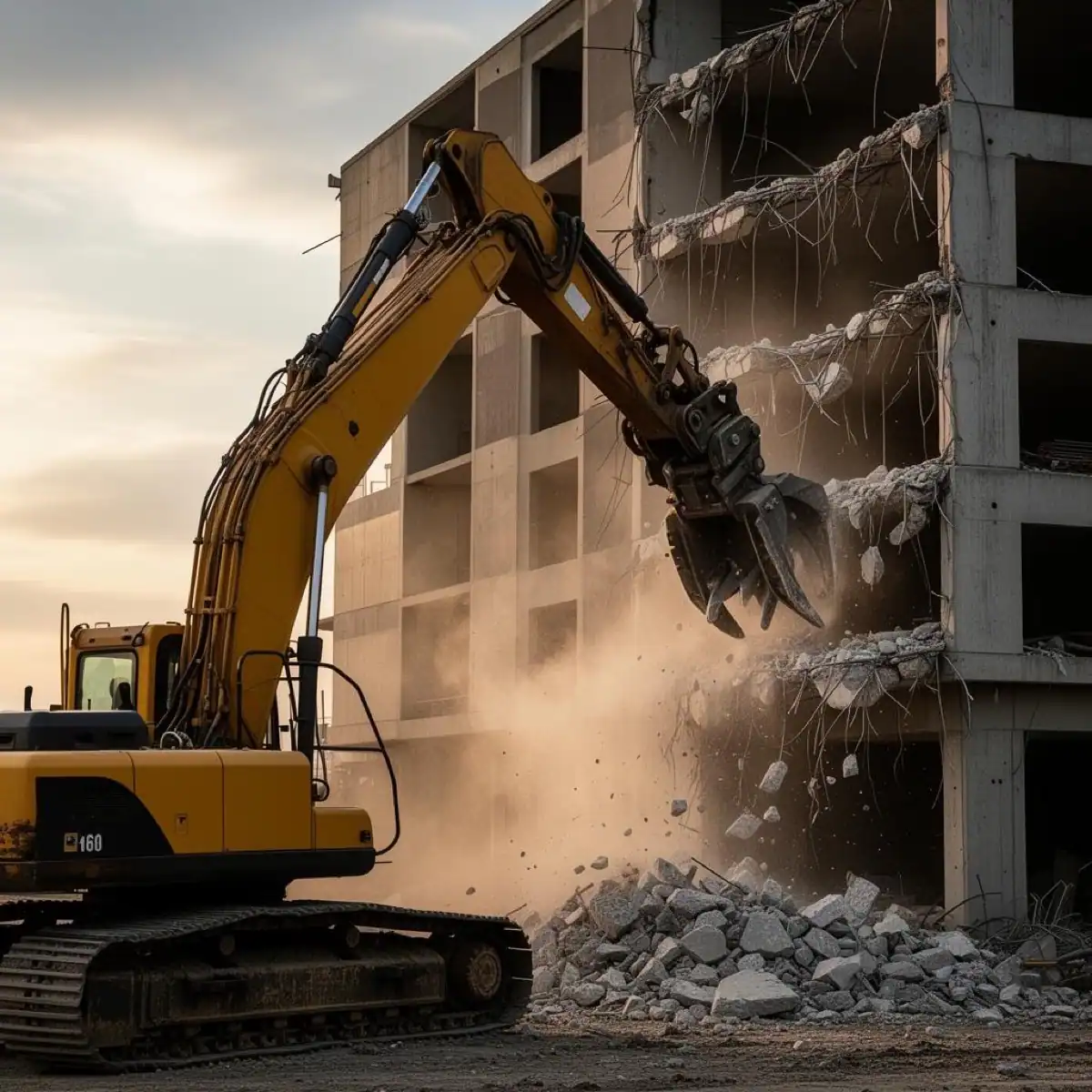
Owners generally evaluate demolition contractors on price and schedule. The safety plan tells you more about a contractor's competence than either, and almost nobody reads it.
The engineering survey comes first
Before demolition begins, a competent person must survey the structure to determine its condition, the potential for unplanned collapse, and the condition of adjacent structures. That survey drives the demolition method.
A plan that describes the sequence without referencing a structural assessment is a plan written from a template. Ask who performed the survey, what it found, and how it changed the approach. A contractor who has genuinely done it will have a specific answer about your building.
The sequence should be specific to your structure
Generic language about proceeding in reverse order of construction is not a plan. What you want to see:
- What comes down first and why.
- Where the equipment operates from and what it stands on.
- How stability is maintained at each stage — because a partially demolished building is a structure the engineer never designed.
- Where temporary shoring is required.
- Drop zones and exclusion areas.
- What triggers a stop and reassessment.
That last one matters. Conditions change during demolition, and a plan with no defined stop condition is a plan that assumes nothing unexpected happens.
Hazard-specific controls
The plan should address, by name, the hazards actually present on your site:
Falls. Both from height and through openings and weakened floors, which is the one that causes more demolition fatalities.
Struck-by. Exclusion zones around equipment, spotters, and communication protocols.
Silica and dust. Written exposure control plan with specific engineering controls.
Lead and asbestos. Where present, the specific protection and containment.
Confined space. Any tank, vessel, pit or vault entry, with permits, monitoring, attendants and rescue provisions.
Hot work. Fire watch, permits, and clearance around cutting operations.
Utilities. Verification of disconnection before work begins, not an assumption.
Emergency planning
The plan should say what happens when something goes wrong: how emergency services access the site, where the muster point is, who is trained in first aid, and — for confined space work — what the rescue plan is.
A confined space rescue plan that consists of calling emergency services is not a rescue plan. That is a specific and well-known failure, and its presence in a document tells you what you need to know.
The competent person
Regulations require a competent person with the authority to identify hazards and take corrective action. The plan should name that role for your project and describe their authority.
Ask who it is, what their experience is, and whether they will be on site or supervising several projects from a truck. The answer is informative.
Their record
Beyond the plan, ask for the contractor's experience modification rate and their recordable incident rate, and ask about any citations in recent years.
A contractor with a poor record is not necessarily a bad contractor — the industry is genuinely hazardous — but a contractor who becomes evasive when asked is telling you something. So is one who has never been asked before.
Why an owner should care
Beyond the obvious: an incident on your property stops your project, may create liability for you, and produces investigations and delays that dwarf any price difference between bidders.
The safety plan is also a proxy for everything else. A contractor who plans hazards carefully generally plans schedule, sequencing and cost carefully too. One who hands over a generic document usually operates the same way in every other respect.
Need an interior stripped?
Nationwide interior demolition crews. Fast scheduling. Clean hand-offs.
Request a Demo QuoteMore in Demolition
Strip Mall and Retail Center Demolition in Florida
Older retail centers are coming down across Florida for redevelopment. Here is what drives the cost and schedule on a strip mall teardown.
Gas Station Demolition: What Is Actually Involved
A gas station teardown is a tank closure, a canopy removal, and a building demolition rolled into one regulated project. Here is how it sequences.
Hotel and Motel Demolition in Florida
Florida's aging roadside motels and mid-century hotels are prime redevelopment sites. What drives cost and schedule when one comes down.