
What a Demolition Scope of Work Should Actually Contain
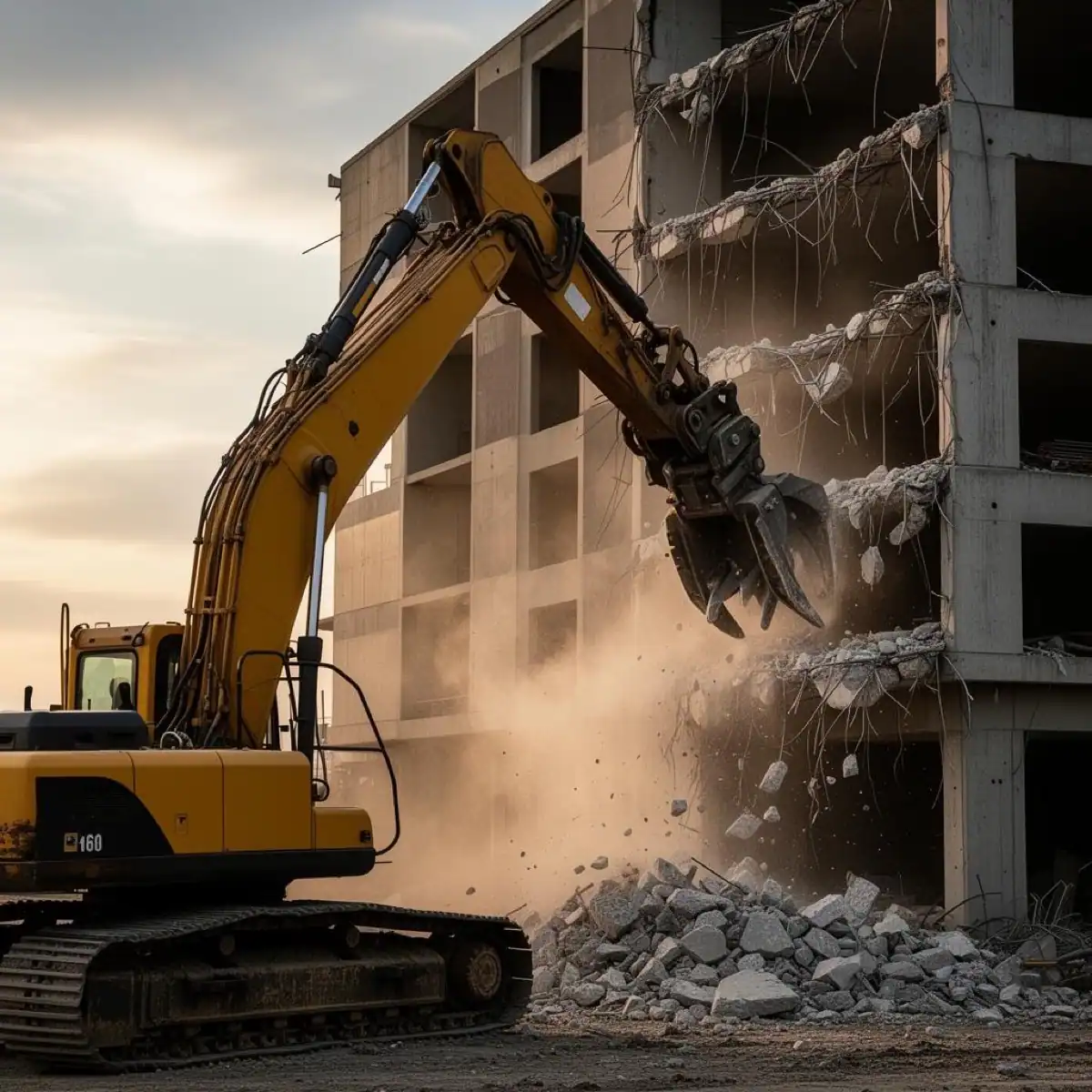
Almost every serious dispute on a demolition project comes back to the same thing: something happened that the scope did not address, and both parties genuinely believed the other was responsible.
A thorough scope is not paperwork. It is the mechanism that prevents that conversation.
The building, precisely
Which structures, identified unambiguously — address, building designation, a marked site plan. On a multi-building site "the old warehouse" is not an identification.
Also what is not included. If there are three structures and one stays, say so explicitly rather than relying on the omission.
How far down
This is the single most common gap. Does the scope include:
- Above-grade structure only?
- Slab on grade?
- Foundations, footings and grade beams?
- Below-grade structures, pits, tunnels, basements?
- Underground utilities, tanks and piping?
- Paving, curbs and site hardscape?
Each is a substantial cost and each is routinely assumed by one party and excluded by the other.
Abatement, and who owns it
Whether the survey has been done and by whom. Whether abatement is in the demolition contract or a separate contract. Who is responsible if the survey missed something. What happens to the schedule when abatement runs long.
Asbestos is the obvious one, but lead paint, mercury in older equipment, PCBs in light ballasts and transformers, and refrigerants all have handling requirements that need an owner.
Utility disconnection
Who requests it, who pays for it, who provides documentation to the permitting authority, and what happens to the schedule if a utility takes longer than expected. This is the most common cause of delay and it deserves explicit treatment.
Salvage and equipment rights
Critically important on industrial work, and frequently vague. Who owns what comes out of the building? Does the contractor's price assume salvage value it is entitled to keep? Is there specific equipment the owner is retaining?
The clean way to handle it: an itemised inventory of equipment with the recovery credit stated as a separate figure against the demolition price, so both numbers are visible rather than netted into one.
Site condition at completion
What does "finished" look like?
- Debris removed to what standard?
- Site graded to what specification?
- Backfilled with what material, compacted to what standard?
- Stabilised, seeded or left bare?
- Fencing removed or left?
"Broom clean" means nothing on a demolition site. Specify it.
Unknown conditions
Every demolition project encounters something. The scope should say what happens: what constitutes a differing site condition, how it is documented and priced, and how the decision gets made.
The alternative is finding out mid-project that the contractor's price assumed no contamination and the owner assumed it was covered.
Schedule, access and constraints
Working hours, days permitted, access routes, staging areas, adjacent operations that must continue, noise restrictions, and any dates that are genuinely fixed. If a tenant is operating next door, that belongs in the scope rather than being discovered on day one.
Safety, insurance and documentation
Insurance limits, bonding if required, the safety plan, required submittals, waste manifests and disposal documentation, and any close-out documentation the owner needs for the permit or for the record.
The test
Read the scope and ask: if the crew hits something unexpected next Tuesday, does this document say who deals with it and how it gets priced?
If it does, it is a good scope. If it does not, it is a price list with a building name on it.
Need an interior stripped?
Nationwide interior demolition crews. Fast scheduling. Clean hand-offs.
Request a Demo QuoteMore in Demolition
Strip Mall and Retail Center Demolition in Florida
Older retail centers are coming down across Florida for redevelopment. Here is what drives the cost and schedule on a strip mall teardown.
Gas Station Demolition: What Is Actually Involved
A gas station teardown is a tank closure, a canopy removal, and a building demolition rolled into one regulated project. Here is how it sequences.
Hotel and Motel Demolition in Florida
Florida's aging roadside motels and mid-century hotels are prime redevelopment sites. What drives cost and schedule when one comes down.