
How Much of a Demolished Building Actually Gets Recycled
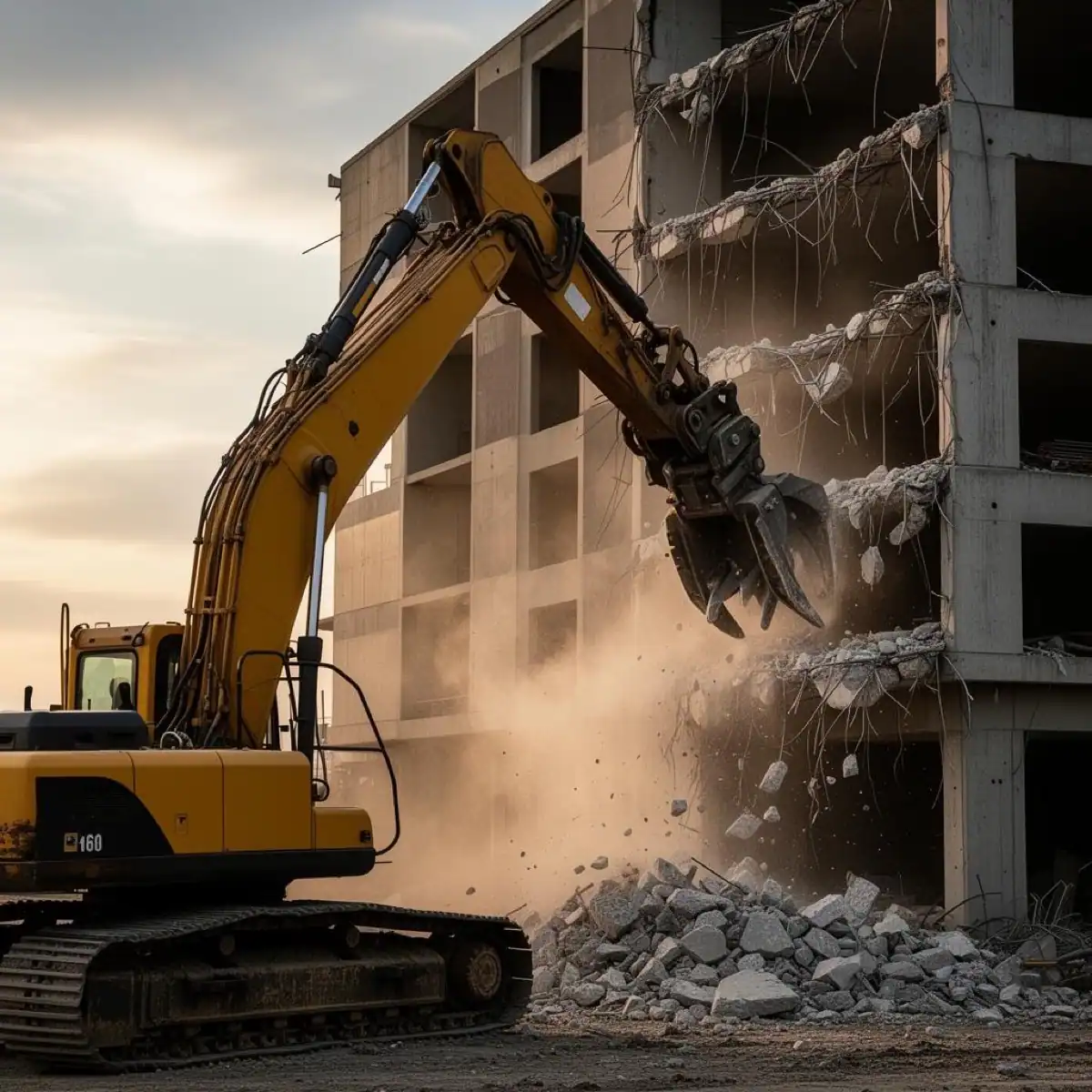
A demolished commercial building produces an enormous amount of material, and a surprisingly high proportion of it has somewhere better to go than a landfill. Whether it gets there depends on decisions made before the machine starts.
The streams, ranked by value
Non-ferrous metal. Copper wire and bus, aluminium, brass, stainless. Small by weight and by far the highest value per pound. It is also the material most likely to disappear from an unsecured site.
Structural steel and ferrous scrap. Beams, columns, joists, decking, rebar, mechanical equipment. Real value, high volume, and a well-established market.
Concrete and masonry. The dominant material by weight. Low value per ton, but the volume means the disposal cost avoided is substantial — and crushed on site it becomes usable aggregate.
Wood. Clean, untreated dimensional lumber and heavy timber can be reclaimed, and on older mill buildings heavy timber has genuine architectural value. Treated and painted wood generally cannot.
Gypsum board. Recyclable in some markets, landfilled in most.
Roofing, glass and mixed debris. Usually the landfill stream, and the one to minimise.
Separation happens during demolition or not at all
This is the whole thing. Once materials are mixed in a pile, separating them is manual, slow and expensive, and it usually does not pay.
Achieving a high diversion rate means demolishing in a sequence that keeps streams apart:
- Strip the valuable non-ferrous and recoverable equipment before structural demolition begins.
- Take out mechanical and electrical systems as a separate operation.
- Remove interior finishes and non-structural material before the structure comes down.
- Bring the structure down in a way that keeps steel separable from concrete.
- Process and stockpile separately as you go.
All of that is more machine time and more planning than mixing everything and hauling it. It is also what makes the difference between a project that pays for a share of its own cost and one that pays full disposal on everything.
Realistic diversion rates
For a straightforward steel-framed industrial or warehouse building demolished with separation in mind, very high diversion is achievable — the great majority of the material by weight has a destination.
For a concrete structure with on-site crushing and reuse, the numbers can be higher still, because the heaviest stream never leaves the parcel.
For a building full of finishes, insulation, roofing and mixed materials, the rate is considerably lower no matter how carefully it is done. That is a function of what the building is made of, not of contractor effort.
Be sceptical of a contractor claiming a very high diversion rate on a finish-heavy building. Ask how they measured it.
Documentation
If diversion is being tracked — for a green building certification, a corporate requirement, or a public project — it has to be documented with weight tickets by material stream from receiving facilities.
That needs setting up before the job starts. Reconstructing it afterward from a pile of mixed tickets is not possible, and it is a common reason a project misses a certification target it was on track to hit.
Where equipment recovery fits
The largest single diversion on an industrial project is usually not a material stream at all. It is equipment that comes out functional and gets resold rather than scrapped.
A chiller sold as a chiller is worth many times what the same machine is worth as ferrous scrap and copper. The same is true of transformers, switchgear, compressors, cranes and machine tools. Every piece that comes out intact is diverted material and recovered value at the same time.
That is why the equipment inventory happens before the demolition plan is written, rather than being an afterthought once the walls are already coming down.
Need an interior stripped?
Nationwide interior demolition crews. Fast scheduling. Clean hand-offs.
Request a Demo QuoteMore in Demolition
Strip Mall and Retail Center Demolition in Florida
Older retail centers are coming down across Florida for redevelopment. Here is what drives the cost and schedule on a strip mall teardown.
Gas Station Demolition: What Is Actually Involved
A gas station teardown is a tank closure, a canopy removal, and a building demolition rolled into one regulated project. Here is how it sequences.
Hotel and Motel Demolition in Florida
Florida's aging roadside motels and mid-century hotels are prime redevelopment sites. What drives cost and schedule when one comes down.