
Dust Control on a Demolition Site: What Actually Works
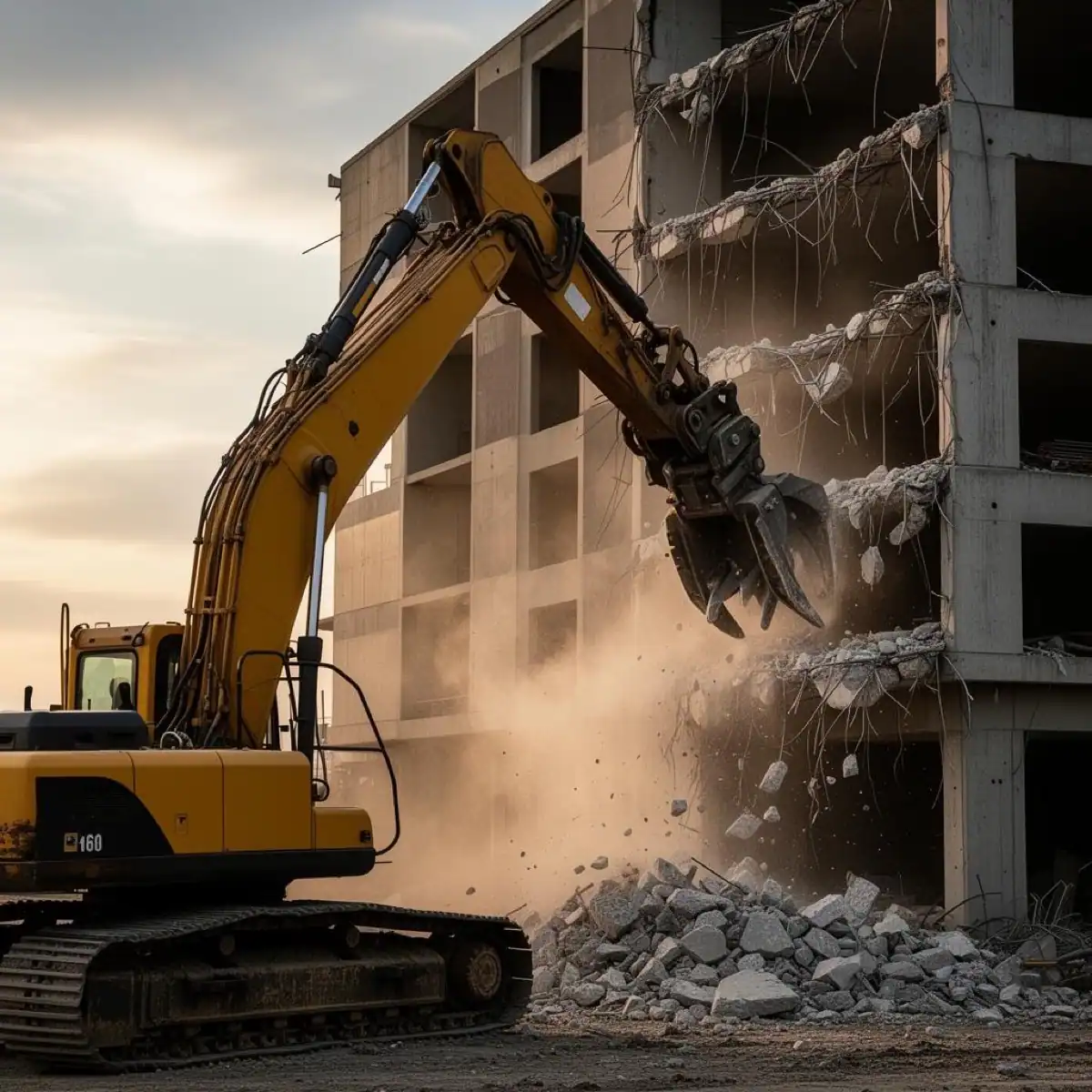
Dust is the complaint that arrives fastest on a demolition job. Before the neighbours know how long the project will take, they know whether their cars are covered.
It is also a regulatory issue, a health issue and, on sites near occupied buildings, the thing most likely to stop your job.
Water is necessary and not sufficient
Water suppression at the point of impact is the foundation of dust control on structural demolition. A hose on the bucket, a mister at the drop zone, water at the crusher. It works, and it is the first thing a competent contractor sets up.
What it does not do is control fine respirable dust in enclosed spaces, control dust that migrates after the work stops, or address silica exposure to the crew. Contractors who treat water as the whole plan are usually the ones generating complaints anyway.
Silica is the health issue behind all of it
Cutting, grinding, drilling and demolishing concrete and masonry produces respirable crystalline silica, which is regulated with specific exposure limits and required control methods. That means engineering controls first — water or local exhaust at the tool — plus respiratory protection, exposure assessment, training and a written control plan.
This is not optional and it is not a paperwork exercise. It is also frequently the difference between a contractor whose crews stay healthy over a career and one whose do not.
Enclosures and negative air on interior work
Interior demolition in an occupied building is a different problem entirely. Water is limited by what the building can tolerate, and the dust has nowhere to go but into occupied space.
The controls are physical: full poly enclosures with taped seams, negative air machines with HEPA filtration exhausting appropriately, sealed returns and supply diffusers so the building's own HVAC does not distribute your dust through three floors, and a decontamination route for workers and material.
Set up properly, an interior demolition adjacent to an operating tenant produces no visible dust in occupied space. Set up carelessly, it produces a complaint on day one and a shutdown on day two.
Site-level measures that get skipped
Wheel wash or track-out control. Mud and dust carried onto public roads by trucks is one of the most common enforcement issues on a demolition site, and it is entirely preventable with a rumble grid or a wash station.
Stabilising exposed soil. Once a building is down, the bare parcel generates dust every windy day until something covers it. Tackifier, mulch or temporary seeding solves it.
Covering loads. Every truck leaving the site, without exception.
Wind monitoring. On sites near sensitive receptors — schools, hospitals, occupied residential — knowing when to stop is part of the plan. High wind days are when the complaints are generated.
Stockpile management. Uncovered debris piles are a continuous source. Keeping them low, wet, or covered matters more than people assume.
Perimeter monitoring on sensitive sites
Where a project sits adjacent to occupied buildings, real-time perimeter dust monitoring is worth doing even where it is not required. It converts an argument into data. When a neighbour complains, you either have a record showing you were within limits or you have early warning that something needs adjusting.
It also protects the contractor. Complaints about dust are frequently about visible activity rather than measured exposure, and having numbers is the only way to separate those.
Ask about it before you hire
A demolition contractor's dust plan tells you a lot about the rest of their operation. The good answer describes the specific controls for your site — the enclosure detail, the water plan, the track-out control, the monitoring — rather than saying they will keep it wet.
On a job adjacent to occupied space, ask to see the plan in writing before work starts. It is the same question a building owner should ask about the safety plan, and for the same reason.
Need an interior stripped?
Nationwide interior demolition crews. Fast scheduling. Clean hand-offs.
Request a Demo QuoteMore in Demolition
Strip Mall and Retail Center Demolition in Florida
Older retail centers are coming down across Florida for redevelopment. Here is what drives the cost and schedule on a strip mall teardown.
Gas Station Demolition: What Is Actually Involved
A gas station teardown is a tank closure, a canopy removal, and a building demolition rolled into one regulated project. Here is how it sequences.
Hotel and Motel Demolition in Florida
Florida's aging roadside motels and mid-century hotels are prime redevelopment sites. What drives cost and schedule when one comes down.