
How to Get a Demolition Permit in Florida
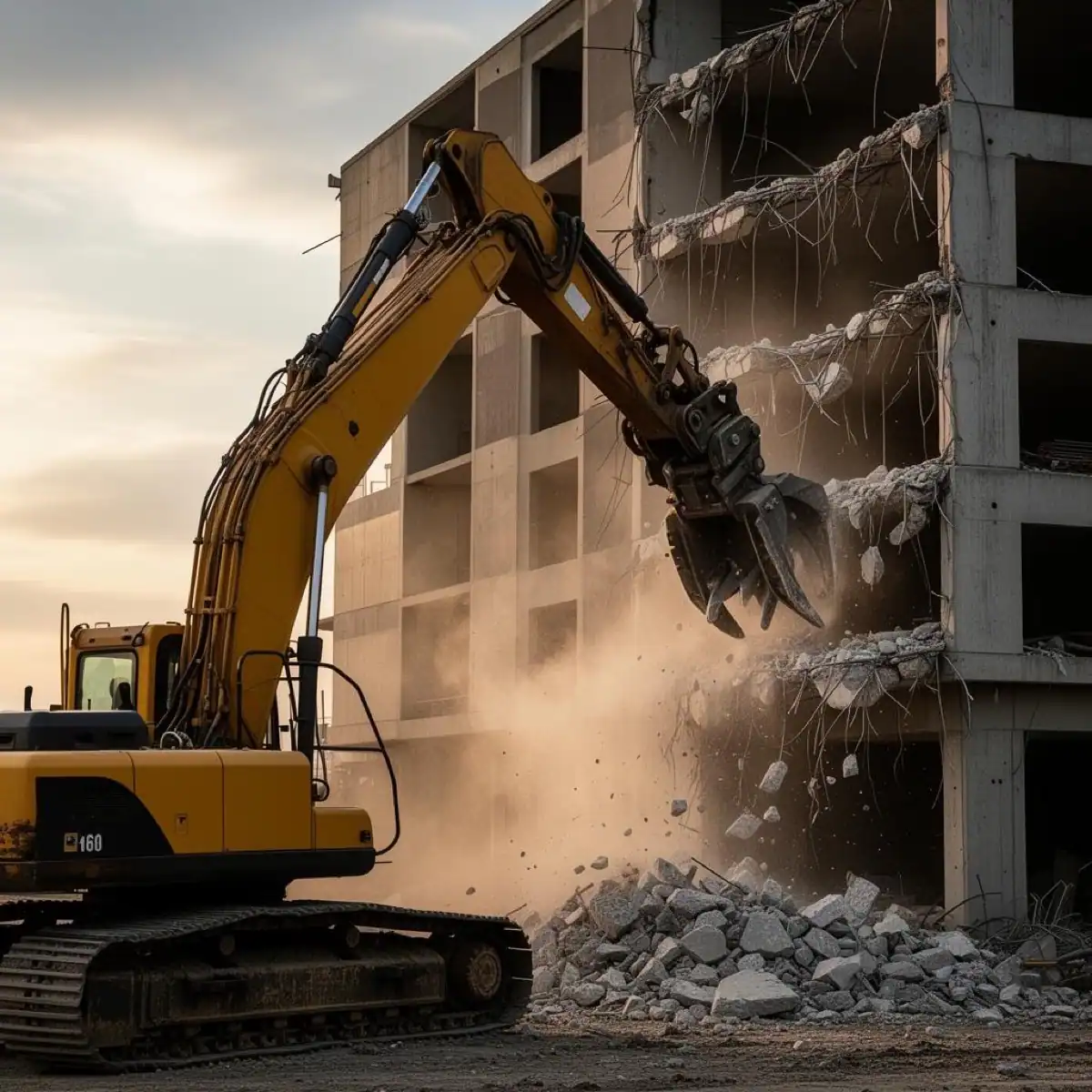
Demolition permits are not the hard part of a demolition project. Permit sequencing is. Almost every stalled teardown we get called into was stalled because somebody applied for the permit before the survey, or scheduled a crew before the utilities were released. Here is the order that works in Florida.
Step 1: Confirm who owns the scope
The permit is pulled by a licensed demolition contractor or the property owner, depending on the jurisdiction and the building type. For commercial and industrial work, essentially every Florida county requires a licensed contractor of record. Owner-builder permits exist for residential work but come with liability most owners do not actually want on a structural teardown.
Before anything else, confirm three things: who holds the license, who is named on the permit, and who carries the insurance and any required bond. If those three answers are not the same company, ask why.
Step 2: Get the asbestos survey — before you apply
This is the step that trips people. Florida requires an asbestos survey by a licensed inspector prior to demolition of essentially any commercial structure, and most building departments will not even accept a demolition permit application without the report attached. The rule is federal at root — EPA NESHAP — and it applies regardless of the building's age, though pre-1990 buildings are where the finds cluster.
The survey covers the obvious materials and the ones people forget: roofing felt and mastic, floor tile and the glue under it, pipe and boiler insulation, transite wall panels, window glazing, fireproofing. If the survey finds regulated asbestos-containing material, it must be abated by a licensed abatement contractor before demolition begins, and that abatement gets its own notification and its own paperwork.
Step 3: File the NESHAP / DEP notification
For most commercial demolitions, a 10-working-day notification goes to the Florida Department of Environmental Protection (or the delegated local program) before work starts — even when the survey comes back clean. That ten-day clock is real. It is the single most common cause of a demolition start date slipping, because owners assume the building permit is the only approval that matters.
File it as soon as the survey is in hand, not when the crew is ready to mobilize.
Step 4: Kill the utilities and get it in writing
Every utility serving the structure has to be disconnected and released, and the building department will want documentation:
- Electric — disconnected and the meter pulled by the utility, not by your electrician.
- Water — shut off and typically capped at the main; some jurisdictions want the meter removed.
- Sewer — capped at the property line, often with an inspection.
- Gas — disconnected and the line capped by the gas provider.
Each of these runs on the utility's schedule, not yours, and they do not run in parallel unless you push them to. Start all four the same week you file for the permit.
Step 5: Submit the application package
A typical Florida commercial demolition package includes the application, proof of contractor license and insurance, the asbestos survey report, utility disconnect confirmations, a site plan showing the structure to be removed, and often a tree-protection or erosion-control plan. Coastal and historic-district properties add review layers — a building inside a designated historic district can require a certificate of appropriateness, which is a months-long process, not a days-long one.
Review times vary widely across Florida. A small county can turn a clean commercial demolition package in a week or two; a large municipal department in a busy season can take considerably longer, and any incomplete item resets you to the back of the queue.
Step 6: Pre-demolition site requirements
Before the first machine moves, most jurisdictions expect construction fencing, erosion and sediment control, a dust-control plan (water on site), and posted permits visible from the street. If the site borders a road or an occupied building, expect requirements for pedestrian protection and haul-route conditions.
Step 7: Final inspection and closeout
The permit is not done when the building is down. Most jurisdictions require the site to be graded, cleared of debris, and often filled and seeded before final inspection. An open demolition permit sitting unclosed is a title problem waiting to happen when the property sells.
Typical timeline, honestly
For a straightforward commercial building with a clean survey: allow two to six weeks from decision to legal start, with the ten-day notification and the utility disconnects usually setting the pace. If abatement is required, add the abatement contractor's schedule and its own notification on top. Anyone promising a next-week start on a building that has not been surveyed is telling you what you want to hear.
We handle the whole package
We pull permits, coordinate the survey and abatement scheduling, chase the utility disconnects, and close the permit out at the end — across Polk County and the rest of Florida. And before the building comes down we appraise the equipment still inside and credit that value back against the job.
Call (689) 323-4676 or request a demolition quote. For cost expectations, start with commercial demolition cost in Florida.
Need an interior stripped?
Nationwide interior demolition crews. Fast scheduling. Clean hand-offs.
Request a Demo QuoteMore in Demolition
Strip Mall and Retail Center Demolition in Florida
Older retail centers are coming down across Florida for redevelopment. Here is what drives the cost and schedule on a strip mall teardown.
Gas Station Demolition: What Is Actually Involved
A gas station teardown is a tank closure, a canopy removal, and a building demolition rolled into one regulated project. Here is how it sequences.
Hotel and Motel Demolition in Florida
Florida's aging roadside motels and mid-century hotels are prime redevelopment sites. What drives cost and schedule when one comes down.