
What It Costs to Get an Industrial Parcel Development-Ready
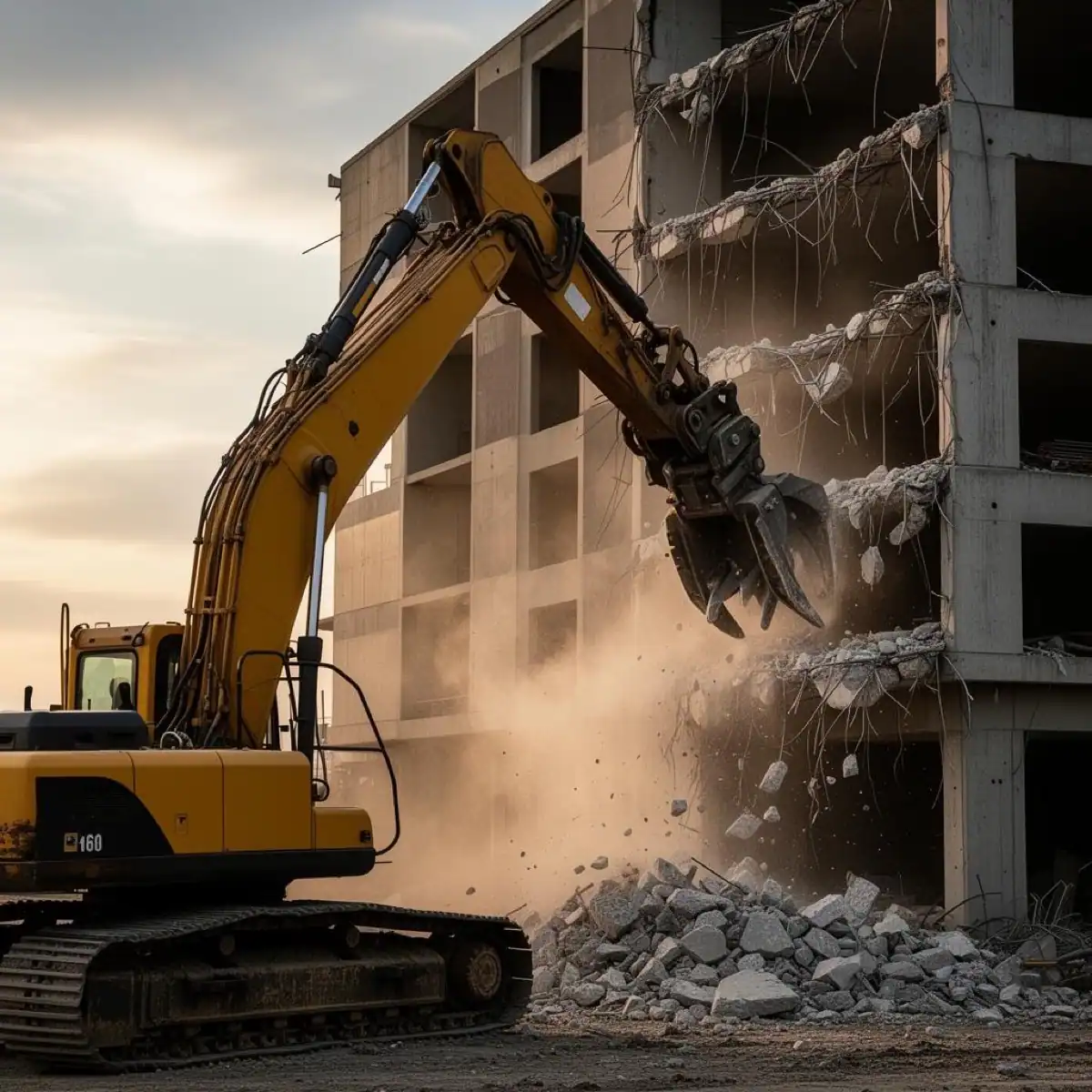
Getting a former industrial parcel from an occupied building to development-ready ground involves a series of costs that are individually predictable and collectively frequently underestimated.
Abatement
Asbestos, lead and any other regulated materials. Driven by the survey, and on older industrial buildings the scope is usually larger than expected — pipe and boiler insulation, floor tile and mastic, roofing, and joint compound are all common.
This precedes demolition and is on the critical path. It also has a hard floor: no amount of scheduling pressure compresses abatement below what the work requires.
Equipment recovery, as a credit
The one line that runs the other way. Transformers, switchgear, motor control centers, compressors, chillers, cranes, machine tools and material handling all carry resale value.
On an equipment-rich facility this can be a substantial offset against everything else. It is also the item most often left on the table by owners who treated the building as the asset and the contents as debris.
Get the appraisal before the demolition is priced, and get both numbers separately rather than netted.
Structural demolition
Driven by construction type and tonnage far more than by square footage. Pre-engineered steel is the cheapest per square foot and carries scrap offset. Poured concrete, masonry and heavy industrial construction generate far more material and cost accordingly.
Foundations, slabs and below grade
The scope that most often surprises people, and the one that depends entirely on the intended use.
Industrial slabs are thick and heavily reinforced. Equipment pads for heavy machinery extend well below the floor. Pits, tunnels, sumps and underground utilities all have to come out if anything is going to be built over them.
Decide the final condition before pricing, because "demolish the building" and "deliver a pad-ready site" are very different scopes.
Environmental work
If the assessments identified impacted soil or groundwater, this is the cost with the widest range and the longest timeline. It runs on a regulatory track, not a construction one.
Tank closures fall here too, and a tank that turns out to have leaked converts a scheduled line item into an open-ended one.
Backfill, compaction and grading
Filling the excavation with suitable material, placed and compacted to specification with testing, then grading to the design. Skimping here produces settlement under whatever gets built, which surfaces years later at far greater cost.
On-site concrete crushing frequently pays for itself here, because the material being removed becomes the material going back in.
Stormwater and site infrastructure
Modern stormwater requirements are frequently more demanding than what an older industrial site was built with, so redevelopment often means new detention, treatment and conveyance regardless of what existed before.
Utilities
Existing heavy electrical service is an asset worth preserving if the new use needs it. Otherwise, service upgrades, relocations and new connections all carry cost and utility-controlled timelines.
The sequence that keeps the schedule
Assessments and surveys first. Utility disconnection requests immediately after. Equipment appraisal and recovery next. Abatement, then demolition, then below-grade removal, then backfill and grading.
The two items that most often control the calendar — environmental clearance and utility disconnection — are also the two that can be started earliest, at no cost.
How to get a number you can rely on
Ask for a scope that specifies the final site condition, not just the demolition. Depth of removal, backfill material and compaction standard, final grade, and what documentation you receive at the end.
Bids against that specification are comparable. Bids against a building address are not, and the difference between them will be exactly the scope you did not define.
Fix-and-flip or rehab portfolio?
House gut-outs in 2–5 days. Volume pricing for repeat investors.
Get an Investor QuoteMore in Investor Guides
Buying a Closed Industrial Plant: What to Check First
Closed plants trade at a discount for reasons. Environmental status, structure, equipment and demolition cost decide whether the discount is real.
Gutting a House After Water Damage in Florida
Flooded and storm-damaged houses need a specific kind of gut-out, fast. What comes out, how far up the wall, and why the clock matters in Florida's climate.
Gutting a Duplex or Small Multifamily Property
Two to twelve units changes the gut-out: shared walls, occupied units, stacked plumbing, and one meter bank. How investors plan a small multifamily strip-out.