
Gutting a House After Water Damage in Florida
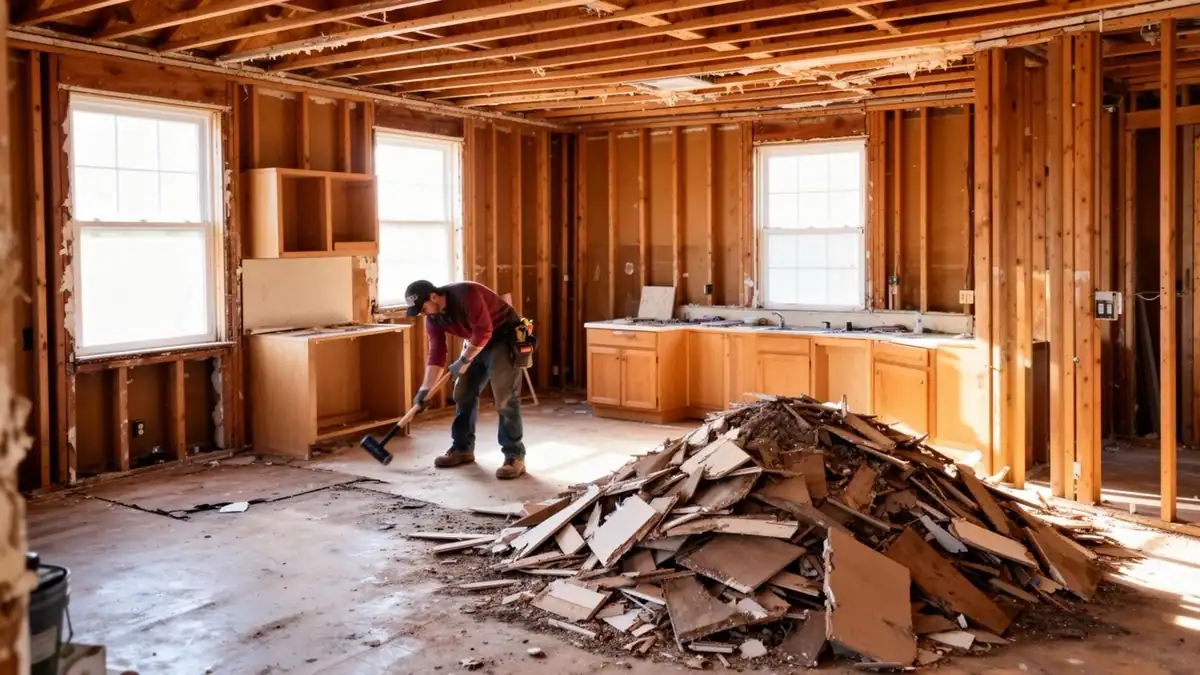
Water damage in Florida has a clock on it. A house that flooded from a storm surge, a burst supply line, or a roof failure starts growing mold within days in this climate, and the difference between a straightforward gut-and-rebuild and a full remediation project is often how fast the wet material came out. Investors who buy water-damaged properties, and owners dealing with a loss, need to understand what the gut-out involves and why it cannot wait.
What has to come out
Anything porous that got wet and cannot be dried quickly is removed. In practice that means:
- Drywall and plaster to a height above the water line.
- Insulation in those wall cavities, which holds water long after the drywall is gone.
- Carpet, pad, laminate, and any flooring with a fiber or wood core that was submerged. Tile can sometimes stay if the substrate is sound.
- Baseboards, casing, and interior doors that were in the water.
- Lower cabinets and vanities, which are particleboard and do not recover.
- Any wet ceiling material if the water came from above.
Framing, concrete block, and slab stay. They dry. The gut-out exposes them so they can.
The flood cut
On a flood, drywall is cut horizontally a set distance above the visible water line, because water wicks up the wall above where it stood. The cut height is chosen to get above the wicking and to land on a clean line that is easy to rebuild. Everything below the cut comes out; everything above stays if it is dry. On a house that was submerged to the ceiling, the whole interior comes out, and the job becomes a full gut like the one in how long does it take to gut a house.
Speed and drying
The gut-out is not the end of the water job. Once the wet material is out, the structure has to be dried with air movers and dehumidifiers until the framing and block read dry on a moisture meter. Closing walls over damp framing creates the mold problem the gut-out was supposed to prevent. In Florida's humidity, that drying takes equipment, not just open windows.
This is why sequence matters. Gut first, dry second, treat if needed, rebuild last. When the gut-out is delayed, mold is already established by the time the walls open, and the project becomes remediation rather than demolition. The distinction is laid out in mold remediation vs. gutting.
Documentation for insurance
If the loss is insured, the gut-out has to be documented. Photograph every room before anything is removed, showing the water line. Photograph the material as it comes out and after the walls are open. Keep the dumpster tickets. Note the moisture readings. Adjusters work from evidence, and a clean record of what was removed and why supports the claim. Some carriers want to inspect before removal; find out before the crew starts, but do not let that hold up a job by more than a day or two, because the mold clock does not stop for an adjuster.
Storm-damaged properties bought as investments
Investors who buy storm-damaged houses in bulk after a hurricane are usually buying properties that have already sat wet for weeks. Those are gut-to-the-studs projects with a remediation component, and they should be scoped that way. The cost model for a full gut is covered in house gutting cost for investors. We run these as volume work for repeat investors and price accordingly.
Frequently Asked Questions
How high should the flood cut be?
Above the visible water line by enough to clear the wicking. The crew measures moisture in the drywall to find where it is actually dry and cuts above that.
Does the slab or block need to be replaced?
No. Concrete dries. The gut-out exposes it so it can.
How fast does the wet material need to come out?
As fast as possible. Mold growth in Florida's climate begins within days. Every day of delay adds remediation cost.
Can you handle the drying too?
The gut-out and debris removal are ours. Drying and mold treatment are done by remediation contractors, and we coordinate the handoff so there is no gap.
Demo Dynasty handles house gutting and debris removal for investors and owners across Florida from Auburndale, FL. Call (689) 323-4676 or request a quote.
Fix-and-flip or rehab portfolio?
House gut-outs in 2–5 days. Volume pricing for repeat investors.
Get an Investor QuoteMore in Investor Guides
What It Costs to Get an Industrial Parcel Development-Ready
Between buying a closed plant and putting something new on it sits a set of costs that are predictable if you ask for them.

Buying a Closed Industrial Plant: What to Check First
Closed plants trade at a discount for reasons. Environmental status, structure, equipment and demolition cost decide whether the discount is real.
Gutting a Duplex or Small Multifamily Property
Two to twelve units changes the gut-out: shared walls, occupied units, stacked plumbing, and one meter bank. How investors plan a small multifamily strip-out.