
Lead Paint on Structural Steel: What It Adds to a Demolition
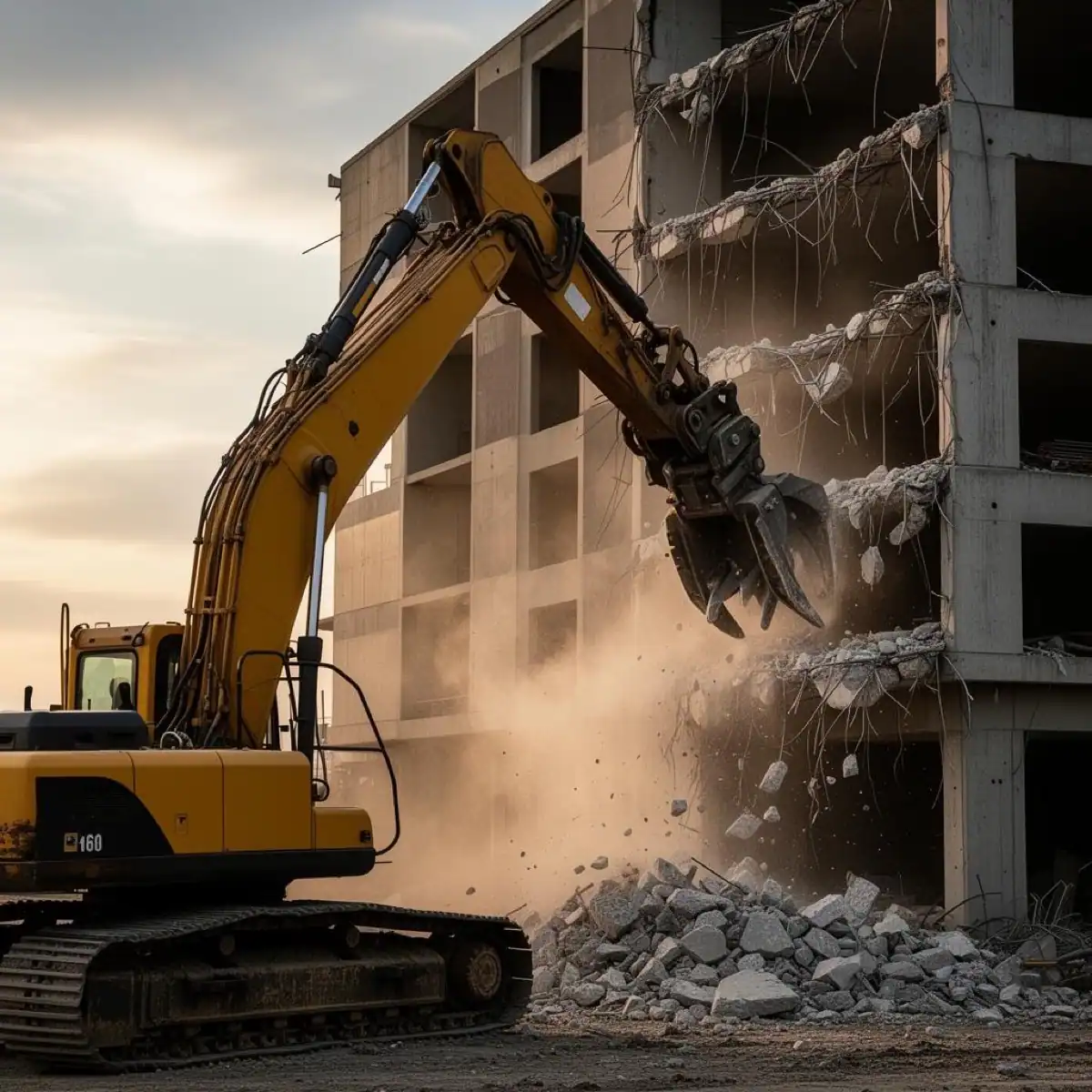
Asbestos gets all the attention in demolition planning. On older industrial buildings, lead is the issue that more often surprises people — and it has a specific interaction with the way steel structures come apart.
Where it is
Structural steel in industrial buildings built before the 1980s was routinely coated with lead-based primers and paints, because they performed well against corrosion. Bridges, mill buildings, tanks, cranes, structural framing and equipment supports all commonly carry it.
It is also on painted concrete and masonry surfaces, on window frames, and on painted equipment. But the structural steel case matters most because of what happens when you cut it.
Torch cutting is the problem
Heating lead-coated steel with a cutting torch vaporises the lead. That produces airborne lead fume at concentrations that are genuinely hazardous to anyone nearby, and it is the exposure route that causes the most harm in demolition work.
This drives the entire control strategy:
- Assessment first. Testing the coating before any hot work, so you know what you are dealing with.
- Method selection. Mechanical cutting — shears, saws, cold cutting — instead of torches wherever practical. This is the single most effective control.
- Where hot work is unavoidable, local exhaust ventilation at the cut, respiratory protection, and containment.
- Air monitoring to verify the controls are working rather than assuming.
- Worker protection — protective clothing, hygiene facilities, no eating or smoking in work areas, and medical surveillance where exposure warrants it.
None of that is optional and all of it costs money that a bid ignoring lead does not include.
The waste question
Lead-coated debris has to be characterised for disposal. Depending on the results, it may be handled as ordinary construction debris, or it may be a regulated waste with manifested disposal at significantly higher cost.
The characterisation is done by testing, and it is worth doing before the job is priced rather than after the material is in a pile. A stockpile of unknown status is a stockpile that cannot move.
Effect on scrap value
This is the part owners do not anticipate. Steel scrap with lead-based coating is worth less than clean steel, and some processors will not accept it at all. Others require it to be sorted separately or accept it at a discount.
That changes the recovery arithmetic on a heavy steel structure. A bid that assumed full scrap credit on lead-painted steel is a bid that will come up short, and it is worth asking a contractor explicitly whether their scrap assumption accounted for coating.
Blasting and paint removal
On some projects — particularly where steel is being salvaged for reuse rather than scrap — removing the coating is worth doing. That is a controlled operation with full containment, because uncontrolled blasting of lead paint contaminates a site and everything around it.
Whether it pencils depends on the value of the steel intact versus as scrap, and on the containment cost. On heavy structural sections and on equipment with resale value, it sometimes does.
Test before you price
The practical advice for an owner is the same as for asbestos: get the assessment done before the project is bid, so every bidder is pricing the same reality.
A lead assessment is inexpensive relative to a demolition project and it removes the largest source of variance between bids. Without it, the low bidder is usually just the one who assumed the least.
Need an interior stripped?
Nationwide interior demolition crews. Fast scheduling. Clean hand-offs.
Request a Demo QuoteMore in Demolition
Strip Mall and Retail Center Demolition in Florida
Older retail centers are coming down across Florida for redevelopment. Here is what drives the cost and schedule on a strip mall teardown.
Gas Station Demolition: What Is Actually Involved
A gas station teardown is a tank closure, a canopy removal, and a building demolition rolled into one regulated project. Here is how it sequences.
Hotel and Motel Demolition in Florida
Florida's aging roadside motels and mid-century hotels are prime redevelopment sites. What drives cost and schedule when one comes down.