
Utility Disconnection: The Step That Delays Everything
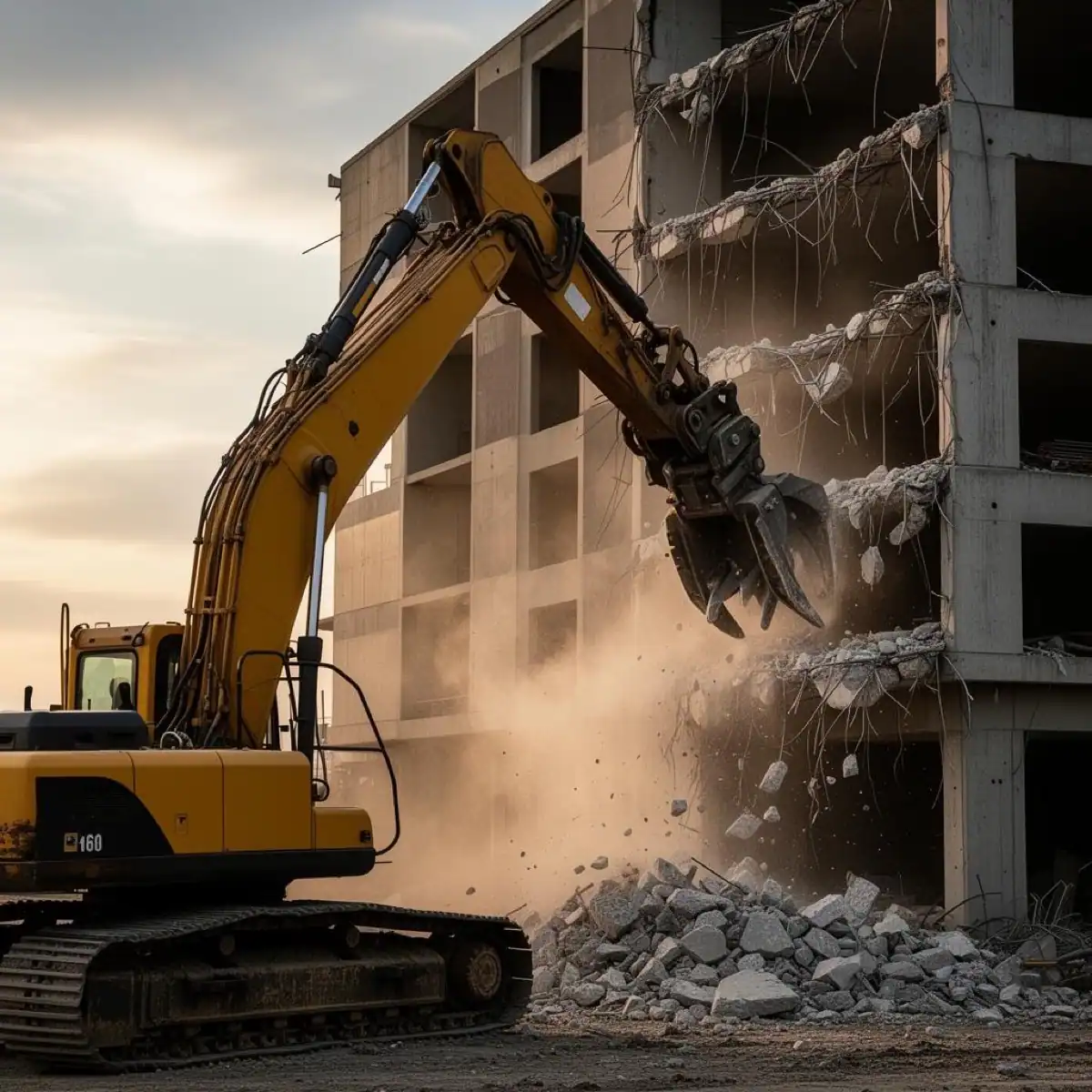
Ask a demolition contractor what most often delays a project and the answer is rarely the demolition. It is waiting for a utility.
Every service needs formal disconnection
Electric. The service has to be de-energised and physically disconnected at the pole or transformer by the utility, not by a contractor pulling a meter. Depending on the service size and the utility, this ranges from a routine scheduled visit to a job requiring engineering and equipment.
Gas. Shut off, disconnected, and the line capped at the main by the gas utility. Never assume a valve at the building is sufficient — an abandoned service line with residual gas is a real hazard.
Water. Shut off at the main and capped. Some jurisdictions require the meter removed and the tap killed at the main rather than just closed.
Sewer. Capped at the property line or the main, with the method and location documented. This is frequently the requirement people forget, and it holds up a final inspection.
Telecom and data. Usually the least hazardous and often the slowest to schedule, particularly where multiple carriers have equipment in a building.
Fire service and sprinkler. Its own process, and coordination with the fire marshal in many jurisdictions.
The documentation is what the permit needs
Most jurisdictions will not issue a demolition permit without proof of disconnection for each service. Not a statement that it has been arranged — documentation that it is done.
That makes utility disconnection the gating item for the entire project, and it is why it belongs at the very start of the schedule rather than in the week before mobilization.
Lead times are the real problem
Utility disconnection lead times vary enormously by utility, by service type and by season. A routine residential-scale electric disconnect might be scheduled in days. A large industrial service requiring a transformer removal and engineering review can take considerably longer, and there is no mechanism to accelerate it.
The practical advice is simple: submit every disconnection request as soon as the decision to demolish is made, before the design or the contractor selection is finalised. There is no downside to being early and a substantial downside to being late.
What goes wrong
Services nobody knew about. Older industrial buildings frequently have abandoned services, second meters, or lines feeding something that was demolished years ago. A utility locate and a walk of the site perimeter finds them; assuming the drawings are complete does not.
Shared services. A building sharing a service with an adjacent structure that is staying cannot simply be disconnected. That requires reconfiguration, which requires engineering and time.
Services that feed something else. Site lighting, a monitoring system, an irrigation controller, a neighbouring tenant. Cutting those produces an urgent phone call.
Private utilities. On industrial sites, plant-owned distribution — substations, compressed air, process water, plant steam — is the owner's responsibility to isolate, not the utility's, and it needs its own documented isolation plan.
Isolation on an industrial site is a bigger job
On a plant decommissioning, utility disconnection extends well past the meter. Process piping, compressed air, steam, chemical feed lines, plant electrical distribution and control systems all need isolating, draining, cleaning where appropriate and documenting.
That is a written plan with a defined sequence and verification at each step. It belongs to whoever knows the plant, and it happens before demolition crews arrive rather than concurrently.
Who handles it
On our projects we manage the disconnection requests and gather the documentation for the permit, because we know what each jurisdiction wants and how long each utility takes. What we need from an owner is early notice, access, and any records of what services exist — particularly the ones that are not obvious.
The single most useful thing an owner can do is make the decision to demolish and start the utility process on the same day.
Need an interior stripped?
Nationwide interior demolition crews. Fast scheduling. Clean hand-offs.
Request a Demo QuoteMore in Demolition
Strip Mall and Retail Center Demolition in Florida
Older retail centers are coming down across Florida for redevelopment. Here is what drives the cost and schedule on a strip mall teardown.
Gas Station Demolition: What Is Actually Involved
A gas station teardown is a tank closure, a canopy removal, and a building demolition rolled into one regulated project. Here is how it sequences.
Hotel and Motel Demolition in Florida
Florida's aging roadside motels and mid-century hotels are prime redevelopment sites. What drives cost and schedule when one comes down.