
Demolishing Next to an Occupied Building
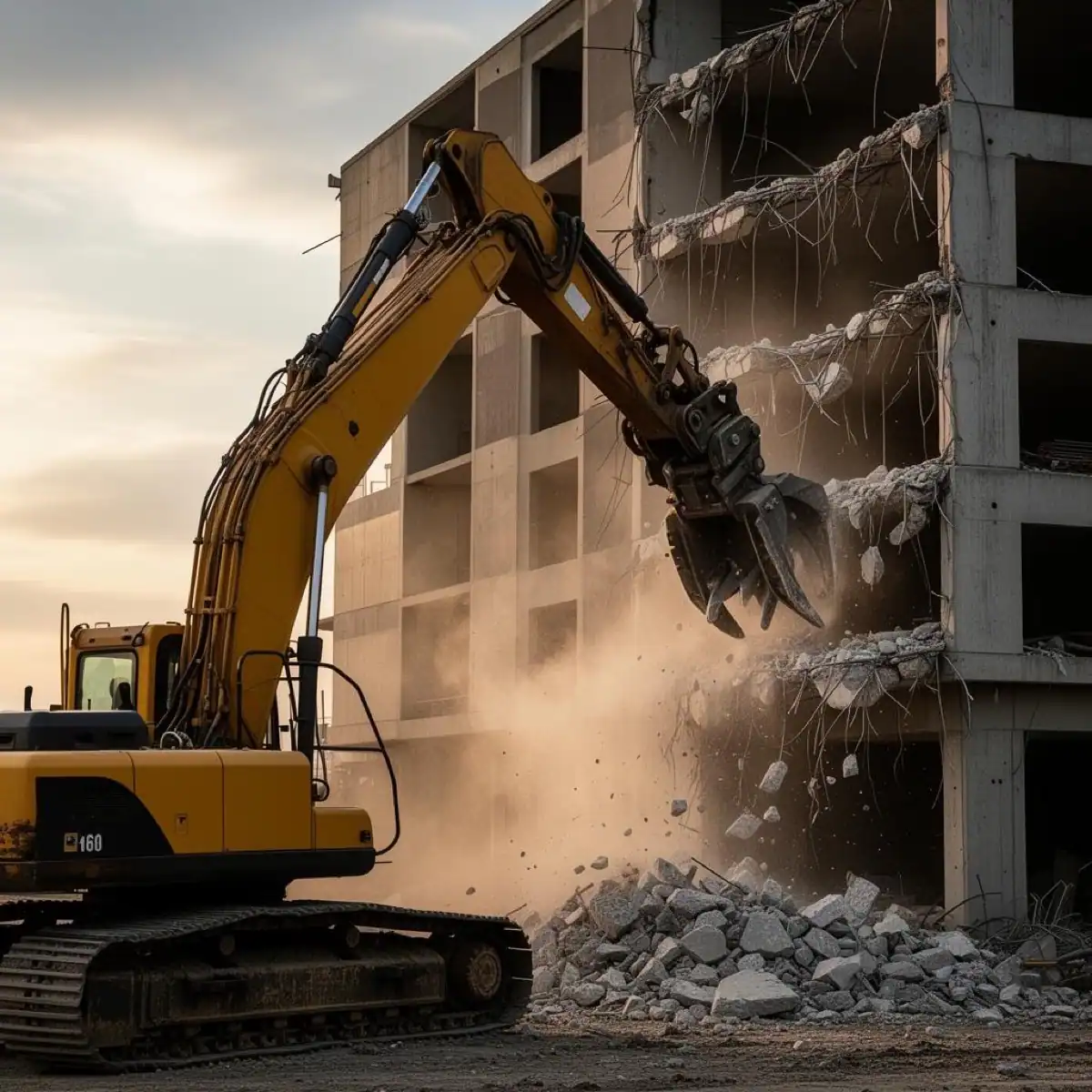
Urban and infill demolition means working next to buildings that are staying. In dense markets — Fort Lauderdale, Tampa, Atlanta, downtown anywhere — that is the normal condition rather than the exception, and it changes the entire approach.
Start with a pre-condition survey
Before anything is touched, document the condition of adjacent structures. Photographs and video of every visible crack, settlement, finish defect and existing damage, inside and out where access permits, with dates.
This protects everyone. Adjacent owners will attribute pre-existing cracks to your work — not dishonestly, but because they noticed them for the first time when they started paying attention. Without a survey, that is an argument you cannot win. With one, it is a five-minute conversation.
On sensitive or high-value adjacent property, install crack monitors on existing cracks so movement can be measured rather than debated.
Vibration monitoring, with thresholds set in advance
Seismographs at the property line, recording continuously, with alarm thresholds set before work starts based on the construction type and condition of the adjacent structure.
The thresholds matter. Historic masonry tolerates far less than modern reinforced concrete, and a threshold copied from a generic specification may be either uselessly high or so low that no work is possible. Setting them requires knowing what is next door.
When an alarm trips, work stops and the method changes — smaller equipment, different sequence, more processing on the ground rather than at height. A monitoring program with no defined response is theatre.
Party walls are their own problem
Shared walls are the hardest situation in adjacent demolition. Removing a building attached to a party wall means the remaining structure loses lateral support, weather protection, and sometimes structural capacity it has relied on for decades.
That requires engineering: temporary or permanent shoring, weatherproofing the newly exposed face, and frequently a legal agreement with the adjacent owner about who is responsible for what afterward. This work belongs to a structural engineer, not to a demolition foreman's judgement.
Protection, physically
Beyond monitoring, adjacent structures need physical protection:
- Debris netting and screens to contain material.
- Protective decking over anything below the work.
- Covered walkways where pedestrians pass.
- Barriers at the property line that actually stop material.
- Protection of adjacent windows, finishes and roofs.
The cost of this is real and it is far smaller than the cost of a claim.
Method selection changes
Adjacent structures push you toward slower, more controlled methods. Mechanical demolition with high-reach equipment from a distance rather than at close quarters. Cutting and lifting sections out rather than dropping them. Processing debris away from the property line. More hand demolition at interfaces.
All of it takes longer and costs more, which is why an accurate scope matters — a bid that priced open-site methods on an adjacent-structure job is a bid that will produce change orders or produce damage.
Communicate before you start
Talk to the adjacent owner before mobilizing. Explain the schedule, the noisy stages, the protection being installed and the monitoring being done, and give them a name and number.
Most adjacent-property disputes escalate because the neighbour felt ignored rather than because of the actual impact. Twenty minutes at the start prevents most of them.
What to ask a contractor
Whether they will do a pre-condition survey, what vibration thresholds they will monitor to and how those were determined, what the response is when a threshold is exceeded, and who is engineering any shoring. A contractor with confident specific answers has done this work before. One who has not will be vague, and that vagueness is the risk.
Need an interior stripped?
Nationwide interior demolition crews. Fast scheduling. Clean hand-offs.
Request a Demo QuoteMore in Demolition
Strip Mall and Retail Center Demolition in Florida
Older retail centers are coming down across Florida for redevelopment. Here is what drives the cost and schedule on a strip mall teardown.
Gas Station Demolition: What Is Actually Involved
A gas station teardown is a tank closure, a canopy removal, and a building demolition rolled into one regulated project. Here is how it sequences.
Hotel and Motel Demolition in Florida
Florida's aging roadside motels and mid-century hotels are prime redevelopment sites. What drives cost and schedule when one comes down.