
Decommissioning a Compressed Air System
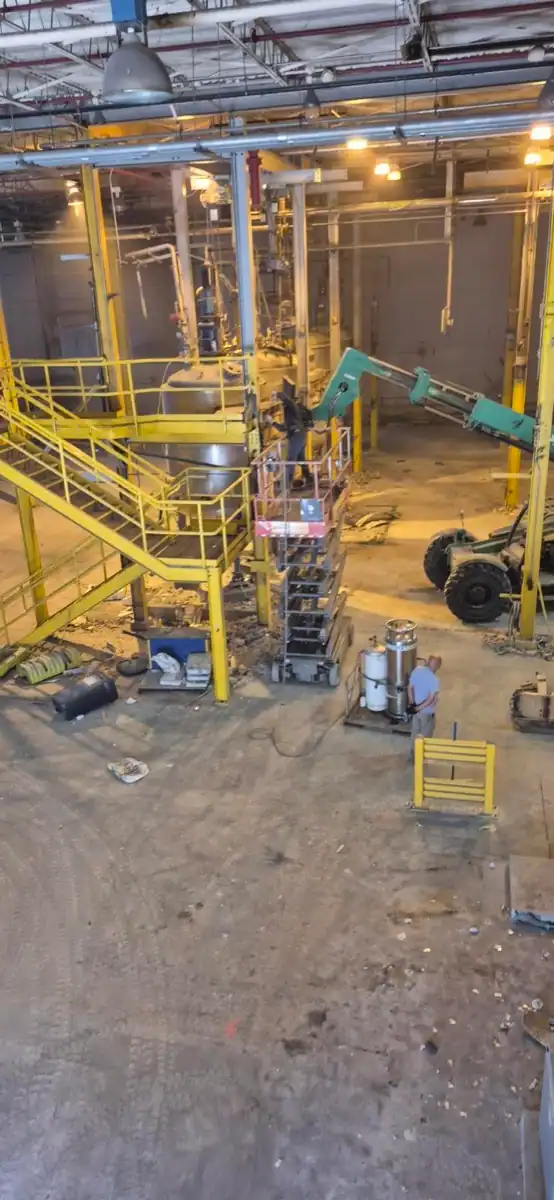
Nearly every manufacturing plant runs on compressed air, and the compressor room is one of the more valuable rooms in a closing facility. Rotary screw compressors, refrigerated and desiccant dryers, and receiver tanks are all recoverable equipment with an active secondary market, and the piping loop across the plant is a real quantity of scrap. Here is how the system is taken out of service and what to expect from it.
Depressurize and isolate
A compressed air system holds stored energy in the receivers and in every foot of pipe. Before any work, the compressors are shut down and locked out electrically, the system is bled to atmosphere through the drains and relief points, and every receiver is verified at zero pressure. Isolation valves between the compressor room and the plant loop are closed and tagged.
If the plant has other gas systems that tie in, such as nitrogen generation fed by compressed air, those are isolated as well. The general lockout approach is in utility isolation and lockout during a plant decommissioning.
Condensate, oil, and filters
Compressed air systems produce condensate that carries compressor oil, and that condensate is collected in separators, drains, and receiver bottoms. It is an oily waste and it is removed and disposed of properly rather than dumped. Oil-flooded screw compressors carry a sump of lubricant that is drained before the machine moves. Filter elements and desiccant from dryers are removed and disposed of.
This is small-volume work but skipping it turns a clean removal into a spill.
What the equipment is worth
Rotary screw compressors from major manufacturers hold their value well, particularly units under a certain age with reasonable hours, intact controls, and a service history. Variable speed units are in demand. Reciprocating compressors and very old screws have less of a market and are more likely to be scrapped.
Refrigerated dryers, desiccant dryers, and receivers all sell. Receivers in particular are simple pressure vessels with a nameplate, and a receiver with a legible nameplate and no corrosion is easy to move.
We buy used air compressors and the associated dryers and receivers, and on a plant cleanout we appraise the air system as part of the project. The selling side from the owner's perspective is covered in how to sell a used industrial air compressor.
Removal
Compressor rooms are usually on the ground floor with reasonable access, which makes this one of the easier equipment removals in a plant. Compressors are skid-mounted and forklift-ready. Receivers are lifted or rolled. The main issue is usually the electrical: large compressors are hard-wired to a motor control center or a dedicated disconnect, and the disconnect has to be locked out and the leads pulled before the unit is moved.
Equipment that will be sold is removed carefully with its controls, hoses, and documentation. Equipment that is being scrapped is handled as scrap.
The piping loop
The distribution loop runs across the entire plant, usually overhead, in steel, copper, or aluminum. Copper and aluminum piping have significant scrap value per pound and are separated. Steel pipe is scrap steel. Drops, filter-regulator-lubricator sets, and quick disconnects come down with it.
On a plant that is being demolished, the loop comes down as part of the interior strip-out. On a plant being returned to a landlord, it comes down as a separate scope with the hangers removed and the penetrations patched.
Frequently Asked Questions
Is a compressor worth selling if it is old?
It depends on the type and the hours. Screw compressors from major brands sell readily. Old reciprocating units are usually scrap. Get it appraised before deciding.
What about the oil?
Compressor oil and oily condensate are removed and disposed of as used oil before the machine moves. It is part of the scope.
Can the piping be reused?
Rarely. It is removed as scrap. Copper and aluminum piping are worth separating from steel.
How long does the compressor room take?
Usually a short part of the overall cleanout. The isolation and electrical disconnect take longer than the physical removal.
Demo Dynasty recovers compressed air equipment as part of plant cleanup projects across Florida and the Southeast from Auburndale, FL. Call (689) 323-4676 or request a quote.
Decommissioning a facility?
Full plant cleanup — equipment recovery, hazmat-aware, turnkey scopes.
Get a Plant Cleanup QuoteMore in Plant Cleanup
Utility Isolation and Lockout During a Plant Decommissioning
Every energy source in a facility has to be identified, isolated and verified before removal work starts. This is the plan that prevents the serious incidents.
What to Do With Process Piping
Miles of pipe in an industrial facility is either a disposal cost or a recovery, depending on what ran through it and how it comes out.
Closing Out a Plating Line or Process Tank System
Process tanks, plating lines and waste treatment systems have to be emptied, cleaned and documented before anything structural happens. The order is not negotiable.