
Removing Conveyors, Cranes and Material Handling Systems
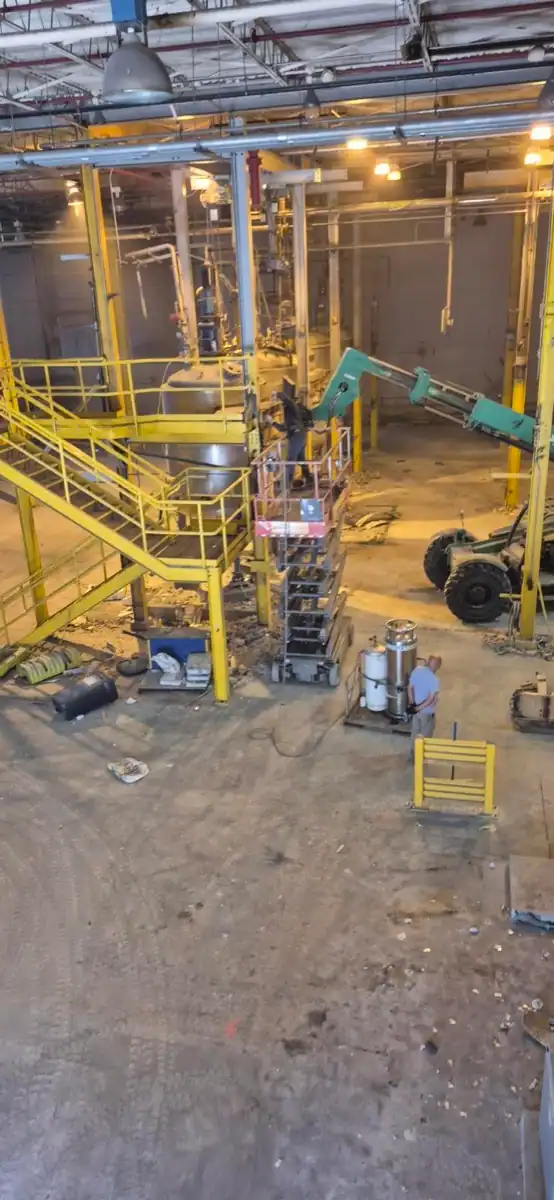
Every distribution centre, manufacturing plant and processing facility has material handling, and it is one of the categories most consistently undervalued during a closure.
Cut apart, a conveyor line is light-gauge steel scrap and some motors. Removed properly, it is a system somebody else will buy.
Overhead cranes
Bridge cranes and gantry cranes are among the highest-value single items in an industrial facility, and there is an active market for them at essentially every capacity.
What determines value: capacity, span, service class, hoist condition, controls, and — importantly — documentation. A crane with load test records, maintenance history and a legible data plate sells considerably better than an identical crane without them.
Removal requires real planning. Cranes are heavy, high, and structurally integrated with the building. Taking one down means understanding how the runway is supported, how the load path changes as components come out, and what rigging is required. It is engineered work, not improvised work.
The runway beams and columns themselves also carry value, both as equipment and as heavy structural steel.
Conveyor systems
Value depends heavily on type and age. Modern sortation systems, powered roller conveyor, and specialty handling equipment resell well. Older gravity conveyor and heavily customised installations are worth less, sometimes only scrap.
The determining factor is usually whether the system can be removed as sections that go back together. That means labelling, documenting the layout, disassembling at joints rather than cutting, and keeping controls and drives with the sections they belong to.
Every one of those takes longer than cutting it out with a torch, which is why a facility in a hurry frequently converts an asset into scrap without meaning to.
Racking
Pallet racking is a genuine commodity with an established secondary market. It comes down quickly, stacks efficiently, and sells — provided it is not damaged and the components are kept together.
Racking that is bent, has been repaired badly, or is missing beams is worth much less. Sorting good from bad during removal rather than after is what protects the value.
Hoists, lifts and specialty handling
Jib cranes, chain hoists, dock levellers, scissor lifts, vertical reciprocating conveyors and automated storage systems all have markets. They are also frequently missed on an inventory because they are small relative to the building.
Documentation adds real value
For anything with a capacity rating — cranes, hoists, lifts — inspection records, load tests and manuals materially affect what a buyer will pay, because the alternative is recertification at their cost.
That documentation exists at the facility right up until the maintenance staff leave. Collecting it early is one of the cheapest things an owner can do to increase recovery.
The safety side
Material handling removal is high-hazard work. Elevated work, heavy loads, structures that lose stability as components come out, and stored energy in counterweights and hoists.
It needs a rigging plan, an understanding of the load path at every stage, exclusion zones, and a competent person supervising. This is not work to hand to a general labour crew because it looks like unbolting.
The decision to make early
Whether the facility is being emptied for value or cleared for speed. Those produce different plans, different timelines and very different returns.
If there is any prospect of the equipment being worth something, the inventory and appraisal should happen before anybody starts cutting — because the decision to cut is not reversible.
Decommissioning a facility?
Full plant cleanup — equipment recovery, hazmat-aware, turnkey scopes.
Get a Plant Cleanup QuoteMore in Plant Cleanup
Utility Isolation and Lockout During a Plant Decommissioning
Every energy source in a facility has to be identified, isolated and verified before removal work starts. This is the plan that prevents the serious incidents.
What to Do With Process Piping
Miles of pipe in an industrial facility is either a disposal cost or a recovery, depending on what ran through it and how it comes out.
Closing Out a Plating Line or Process Tank System
Process tanks, plating lines and waste treatment systems have to be emptied, cleaned and documented before anything structural happens. The order is not negotiable.