
Selective Demolition vs. Full Demolition: Which Does Your Project Need?
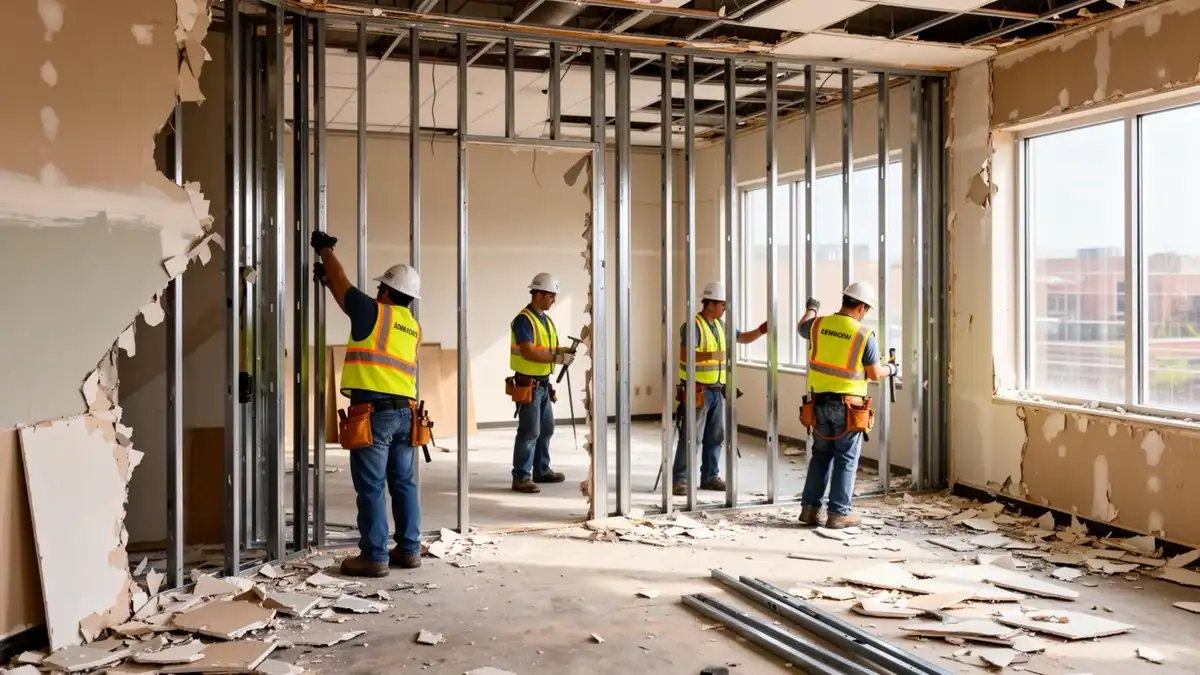
"Demolition" covers two very different jobs. In one, the building stays and you carefully remove what is inside it. In the other, the building goes away. They use different crews, different equipment, different permits, and different money — so getting the label right at the start of a project matters more than it sounds.
What selective demolition actually means
Selective demolition — sometimes called strip-out, soft demolition, or interior demolition — is the removal of specific components while the structure remains intact and often while the rest of the building stays occupied.
Typical scopes:
- Stripping a tenant space back to shell for a new build-out
- Removing non-load-bearing walls, ceilings, flooring, and casework
- Pulling out mechanical, electrical, and plumbing to make way for new systems
- Taking out a mezzanine, a cooler box, or a production line while the shell stays
- Gutting a house or unit down to studs for a rehab — see house gutting
The defining constraint is that something has to survive. That means protection of what stays, dust and noise control, careful cutting rather than pulling, and usually work sequenced around other trades or around a tenant's operating hours.
What full demolition means
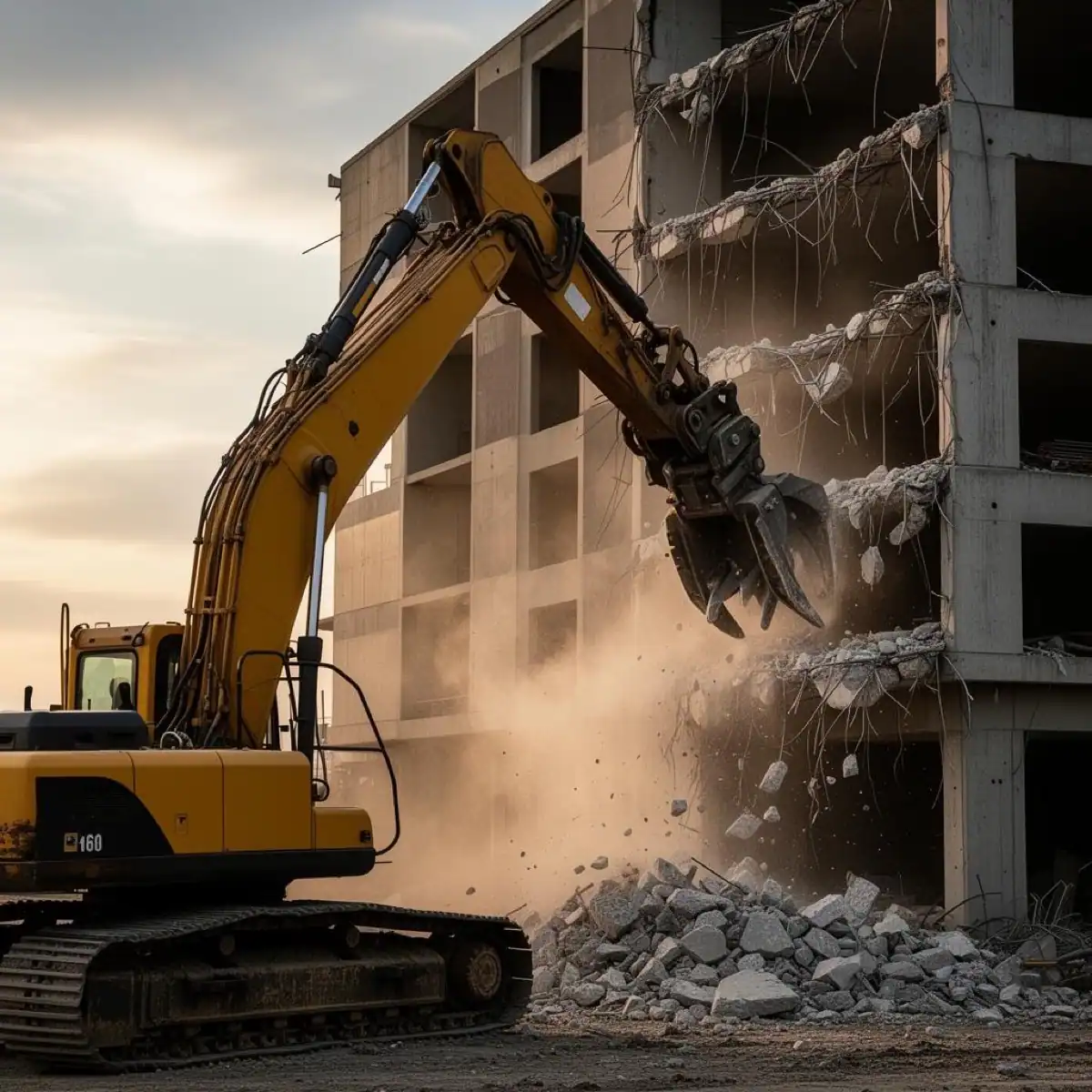
Full demolition removes the structure: walls, roof, framing, and typically the slab and foundations. It is machine work, sequenced for safety, and priced largely by tonnage of material leaving the site.
The constraints here are different — protecting adjacent property, controlling dust, managing haul routes, and hitting the permit and notification requirements covered in how to get a demolition permit in Florida.
How the cost profiles differ
Selective demolition costs more per square foot but covers less area. You are paying for labor, care, and protection, not for tonnage. Hand tools and small equipment, more crew hours per square foot, more sorting, and often after-hours work all push the unit price up.
Full demolition costs less per square foot but the total is bigger because the whole structure counts. The bill is dominated by heavy equipment, trucking, and disposal — which is why thickness, structure type, and distance to the tip site matter so much.
A useful rule of thumb: selective demolition is a labor problem, full demolition is a logistics problem.
Permitting is not the same either
Interior strip-outs frequently need a building permit rather than a demolition permit, and if nothing structural is touched, the review is lighter. That said, an asbestos survey is still required whenever you disturb suspect materials, and a strip-out disturbs plenty of them — flooring adhesive, ceiling tile, pipe insulation, and drywall joint compound are all on the list.
Full demolition triggers the whole package: demolition permit, survey, NESHAP notification, utility disconnects, and site controls.
Structural risk: the reason selective work needs an engineer
The most expensive mistakes in selective demolition come from removing something that turned out to be carrying load. Older buildings hide surprises: a "partition" that is actually a shear wall, a mezzanine tied into the roof structure, or a masonry wall braced by the very thing you are pulling out.
On any selective scope that touches walls, columns, or slabs, get a structural engineer's sign-off before the first cut. It is cheap relative to a shoring emergency.
When selective demolition is the right call
- The building is sound and the shell has value
- You are re-tenanting, converting use, or renovating
- Zoning or historic designation makes rebuilding hard or impossible
- Only part of the facility is being retired — one production line, one wing, one cooler
When full demolition is the right call
- The structure is at end of life, unsafe, or economically obsolete
- The land is worth more clear than built
- The new use does not fit the existing footprint
- Repair costs approach replacement costs
The hybrid that most industrial projects actually need
In practice, most plant and warehouse projects are both. You selectively remove the valuable mechanical and electrical equipment — chillers, transformers, switchgear, generators, air compressors — then demolish the structure that is left. That is exactly the sequence in a proper plant cleanup, and it is where recovered equipment value offsets demolition cost.
Doing it in that order is what separates a facility that gets scrapped from one that gets harvested.
Getting it scoped
Tell us what has to survive, and we will tell you which scope you are actually buying. We handle selective strip-outs, full structural demolition, equipment recovery, and debris removal with one crew across Florida.
Call (689) 323-4676 or request a quote.
Need an interior stripped?
Nationwide interior demolition crews. Fast scheduling. Clean hand-offs.
Request a Demo QuoteMore in Demolition
Strip Mall and Retail Center Demolition in Florida
Older retail centers are coming down across Florida for redevelopment. Here is what drives the cost and schedule on a strip mall teardown.
Gas Station Demolition: What Is Actually Involved
A gas station teardown is a tank closure, a canopy removal, and a building demolition rolled into one regulated project. Here is how it sequences.
Hotel and Motel Demolition in Florida
Florida's aging roadside motels and mid-century hotels are prime redevelopment sites. What drives cost and schedule when one comes down.