
Selling Used Industrial Generators: A Seller's Guide
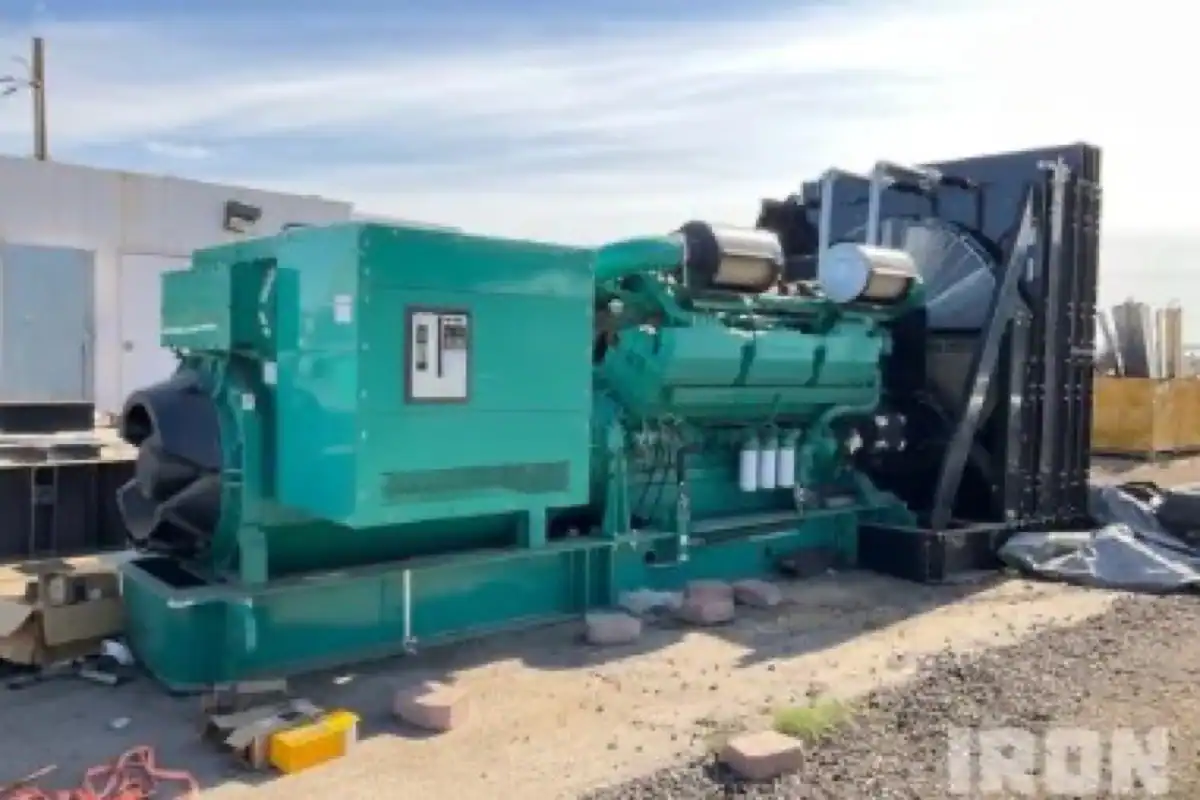
A standby diesel genset is one of the few pieces of plant equipment that holds real resale value years after it leaves service. Where a boiler or chiller might be worth its scrap weight after 20 years, a well-kept 500 kW Caterpillar or Cummins unit can still command five figures on the used market. That gap between scrap price and resale price is exactly the money most sellers leave on the table because they treat the generator like debris instead of an asset.
We buy generators directly, resell them into the secondary market, and pull cores for rebuild. Here's how to run the sale so the resale premium ends up in your account.
What actually drives the number
Four things move a used generator's value more than anything else.
Make and model. Buyers pay up for the names that hold parts and service support: Caterpillar, Cummins, Kohler, and Generac industrial units first, then MTU, Detroit, and Volvo Penta. An off-brand or discontinued controller platform pulls the offer down because the next owner worries about parts.
Hours on the engine. This is the odometer of the sale. A standby unit with under 500 hours is close to new and prices accordingly. 500 to 2,000 hours is a strong resale unit. Over 5,000 hours moves toward core-and-parts territory unless it's a big prime-rated engine. Get the exact reading off the controller before you list.
kW rating. The sweet spot for resale demand is roughly 100 kW to 800 kW — big enough for real commercial and light-industrial standby, small enough to move on a standard trailer. Sub-50 kW units are common and cheap; over 1.5 MW units are worth serious money but have a thinner buyer pool.
Fuel type and condition. Diesel dominates the resale market. Natural-gas and bi-fuel units sell but to a narrower audience. Rust-through on the enclosure, a cracked radiator, or a missing controller each knock real dollars off.
As a rough frame: a clean 300 kW to 500 kW Caterpillar or Cummins diesel with low hours frequently transacts in the $18,000 to $45,000 range depending on year and enclosure. The identical engine dragged to a scrap yard might bring $2,000 to $4,000 on weight. That's the whole reason to sell it as a machine.
Prove it runs
The single fastest way to raise your offer is documentation that the unit works.
- Load-bank test report. A resistive load-bank test under real load tells a buyer the engine and alternator are healthy. Even a recent report from your service vendor is gold.
- Maintenance records. Oil changes, coolant service, ATS testing logs. A paper trail says the unit was babied.
- Nameplate photos. Engine serial, alternator serial, kW/kVA, voltage, and phase. Buyers price off the nameplate, not your description.
- A 30-second video of it starting and running removes most of the buyer's risk, and less risk means a higher number.
If you have none of this, you can still sell — just expect the offer to carry a "we haven't seen it run" discount until we inspect it.
Who to sell to, and how they price
Same three-lane market as the rest of the used-equipment world. Brokers never own the unit, so they shave 15 to 30 percent to cover their margin and resale risk. Scrap yards pay ferrous weight plus the copper in the alternator windings — a real number on a big genset, but a fraction of resale. Direct end-buyers like us cut out the middle layer and pay for the machine, not the metal. For anything from a major brand under about 8,000 hours, going direct is almost always the better economics. We walk through the same logic in our guide to who buys used industrial boilers — the buyer landscape is nearly identical for gensets.
If the generator is coming out as part of a larger shutdown, the math gets even better because the sale offsets your other costs. That's the core idea behind selling equipment during a plant shutdown.
The removal is where deals go sideways
A generator is heavy and awkward. A 500 kW diesel in a weatherproof enclosure runs 10,000 to 18,000 lbs; sub-base fuel tanks add more. Getting it out cleanly matters.
- Electrical disconnect and lockout at the ATS or main. This is licensed-electrician work, not something to freelance.
- Fuel handling. Sub-base tanks get pumped down and, if the unit ships with the tank, drained to a safe transport level. Spilled diesel on your pad is your liability.
- Rigging. Crane or forklift matched to weight, plus a flatbed or lowboy. Rooftop or basement installs need a crane pick and sometimes a street permit.
- The pad and penetrations get left broom-clean.
Always compare offers on a removal-included basis. A "$25K, you handle removal" offer can easily net less than a "$20K, we remove everything" offer once you price the crane, electrician, and hauling. We fold all of that into our number the same way we do on generator purchases.
A realistic timeline
- Day 0: send nameplate photos, hour reading, and 5 exterior shots.
- Day 1 to 2: written offer.
- Day 3 to 5: accept and schedule.
- Day 7 to 14: pickup day, payment on-site, unit leaves.
Good sales close inside two weeks. If a buyer is stretching it to six weeks with vague pickup dates, they're still shopping your generator downstream and don't have a home for it yet.
Bottom line
A used industrial generator from a major brand is an asset, not scrap — treat it that way. Pull the hours, shoot the nameplate, dig up any load-bank or service records, and take your best photos to a direct buyer who'll own the unit next. The fewer hands between your genset and its next facility, the more of the resale premium you keep. Send us the nameplate and hours and we'll put a real number on it, removal included.
Got equipment to sell?
Cash offers in 24–48 hours. Nationwide pickup. Any condition.
Get a Cash OfferMore in Selling Equipment
Selling a Chiller Plant: Whole or Piece by Piece?
A complete central plant sometimes sells better as a system than as components. Here is how to tell which case you are in.
Why Removal Access Changes What Your Equipment Is Worth
A buyer prices the equipment and the extraction together. What you can do about access, and what it is worth.
What Actually Determines Used Equipment Resale Value
Age matters less than most sellers assume. Condition, documentation, removal difficulty and market depth matter more.