
Selling Used Air Handlers and AHUs: What Buyers Pay For
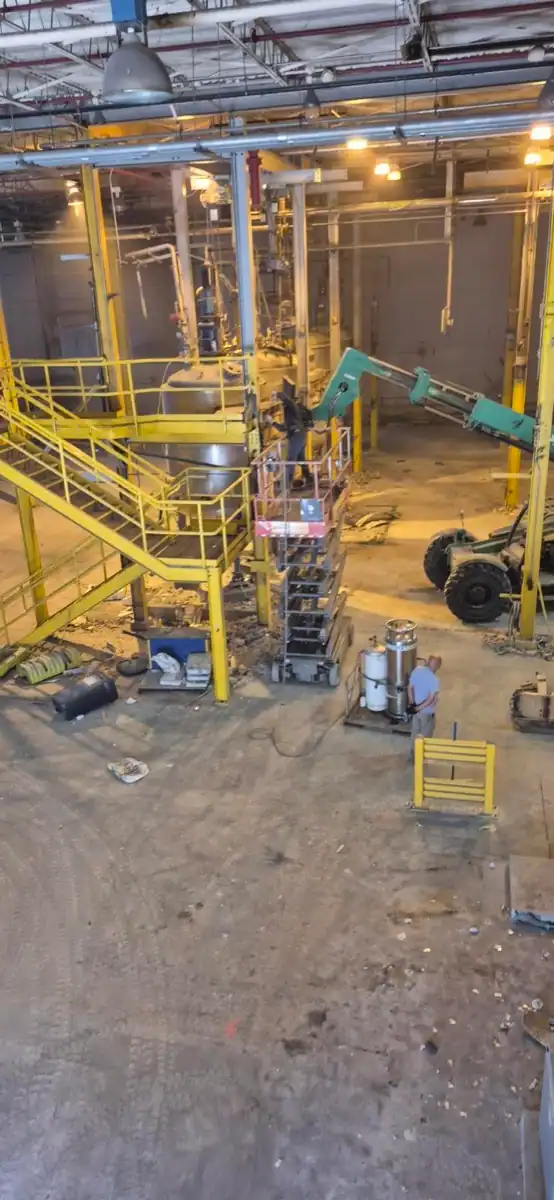
Air handlers are the least glamorous major equipment in a building and, on the resale side, the most inconsistent. Some units are worth real money. Plenty are worth their metal and nothing more. The difference comes down to size, construction, and what is bolted inside — and knowing which one you have keeps you from either scrapping an asset or waiting on an offer that is never coming.
When an AHU is genuinely worth selling
Large custom or semi-custom units. Big built-up air handlers with heavy-gauge casings, double-wall insulated panels, and substantial coil sections are expensive to buy new and carry long lead times. That supports a real used market.
Recent units in good condition. A ten-year-old, well-maintained unit from a building being repurposed is a legitimate resale item, particularly if it comes with its VFDs and controls.
Specialty units. Cleanroom AHUs, hospital-grade units with high-level filtration, makeup air units, dedicated outdoor air systems, and units built for corrosive environments all have narrower but better-paying buyer pools.
Packaged rooftop units in common tonnages — these move well, especially recent high-efficiency units pulled from a building that is being demolished rather than because the unit failed.
When it is really a scrap and components sale
Small commercial AHUs and older units generally are not worth trucking. What is worth pulling out of them:
- Motors — anything of size has its own resale and rewind market
- VFDs and starters — often the most valuable single component in the unit
- Copper coils — the copper and aluminum have real scrap value; do not let coils go out in a mixed steel container
- Sheet metal casing — scrap by weight
- Controls, actuators, and dampers — modest but not zero
A tired 1990s AHU is a copper and motor recovery, and that is a perfectly good outcome as long as it is done deliberately rather than crushed with the building.
What determines the offer
Physical size and shipping. Air handlers are big, light, and awkward — the worst possible combination for freight, because you pay for volume rather than weight. A large unit that has to be shipped far often costs more to move than it earns, which is why local and regional buyers dominate this market. Units that break down into shippable modules do much better.
Coil condition. The coils are the heart of the unit. Corrosion, fin damage, and previous leak repairs all cut value hard. In Florida, coastal salt exposure is a real factor — a unit that ran near the coast may have far more corrosion than its age suggests.
Casing condition. Rust-through in the drain pan and the bottom of the casing is the common failure. A unit with a rotted pan is a components sale.
Included components. Motors, VFDs, filters racks, humidifiers, heat recovery wheels, and controls all add. Heat recovery wheels in particular are worth calling out separately.
Access and removal. A rooftop unit a crane can pick in one lift is straightforward. A built-up air handler assembled inside a mechanical room — which is how most large ones got there — has to be disassembled to get out. That labor comes out of the offer, so tell us up front how the unit sits.
What to send for an offer
- Nameplate photos — make, model, serial, CFM, tonnage
- Age and service history
- Photos of the coils, the drain pan, and the interior if you can open it
- Motor and VFD nameplates
- Where it sits and how it would come out — roof, mechanical room, ground pad
- Whether it is running now
The bigger picture on a building sale or closure
Air handlers rarely justify a standalone transaction, but they are a solid contributor inside a full building recovery. On a facility we are decommissioning, the air-side equipment comes out alongside the chillers, cooling towers, boilers, switchgear, and transformers — and the total across all of it is what offsets the demolition bill.
That is exactly the logic in how equipment recovery offsets demolition cost.
Refrigerant first
Any unit with a DX coil holds refrigerant, and it has to be recovered by a certified technician before the unit is disposed of or dismantled. That is federal law, not a preference — see refrigerant recovery before demolition.
Get an honest read
Send us photos and nameplates and we will tell you plainly which of your air-side equipment is worth selling and which is a components recovery. Either way we handle the removal, the rigging, and the haul-off.
Call (689) 323-4676 or get a cash offer. Buying instead? See used air handlers for sale.
Got equipment to sell?
Cash offers in 24–48 hours. Nationwide pickup. Any condition.
Get a Cash OfferMore in Selling Equipment
Selling a Chiller Plant: Whole or Piece by Piece?
A complete central plant sometimes sells better as a system than as components. Here is how to tell which case you are in.
Why Removal Access Changes What Your Equipment Is Worth
A buyer prices the equipment and the extraction together. What you can do about access, and what it is worth.
What Actually Determines Used Equipment Resale Value
Age matters less than most sellers assume. Condition, documentation, removal difficulty and market depth matter more.