
Used Air Handlers (AHUs) for Sale
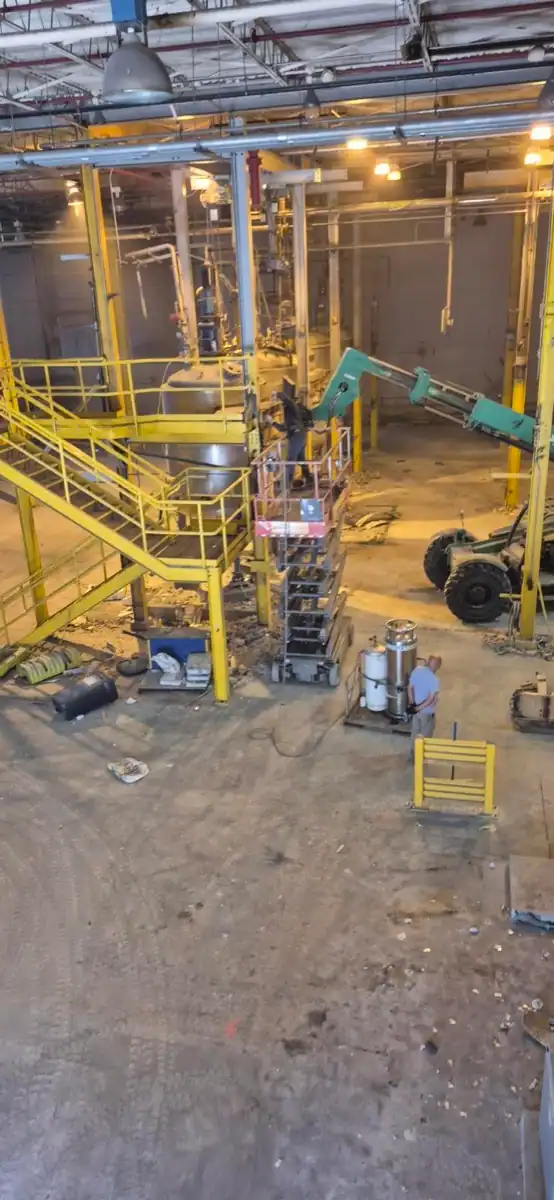
Air handlers are the unglamorous workhorses of commercial HVAC, and they're one of the easiest pieces of equipment to buy used well. There's no compressor and no sealed refrigerant circuit — an AHU is a box with a coil, a fan, and controls. That simplicity means fewer catastrophic failure modes and steep discounts off new. We pull air handlers off decommissioned plants and building retrofits constantly, and here's how to buy one without a headache.
What a used air handler actually is
An air handling unit moves conditioned air through a building. Inside the cabinet you've got a supply fan (belt-drive or direct-drive plenum), one or more coils (chilled water, hot water, or DX), filter banks, dampers, and often a mixing box for outside air. Rooftop packaged units (RTUs) add their own compressors and condenser; a true AHU is fed by your central plant.
The core spec is airflow — CFM — followed by coil type and rows, static pressure, and cabinet configuration. Nail those and everything else is detail.
What used air handlers cost
Pricing tracks airflow, coil capacity, and configuration. Working ranges:
- Small units (2,000 to 8,000 CFM): roughly 1,500 to 8,000 dollars.
- Mid-size (10,000 to 25,000 CFM): roughly 6,000 to 25,000 dollars.
- Large built-up / custom AHUs (30,000 CFM and up): 20,000 to 80,000-plus dollars.
Discounts off new tend to run 40 to 65 percent. Brands that resell well and have easy parts support include Trane, Carrier, York, Daikin/McQuay, and AAON. As with chiller brand selection, buy a nameplate your techs already know so coils, motors, and controls are sourceable.
Match it to your system, or don't bother
This is where used AHU buys succeed or fail. The unit has to fit your building and your central plant:
- Airflow (CFM). Match the design airflow of the space it serves. An oversized AHU wastes fan energy and can overcool; undersized and you never hit setpoint.
- Coil type and capacity. A chilled-water coil AHU needs to match your plant's water temperatures and flow. A DX-coil AHU needs a compatible condensing unit. Confirm rows and circuiting, not just "it has a coil."
- Static pressure. The fan has to overcome your ductwork's resistance. A unit built for a low-static application won't push air through a long, tight duct run.
- Control scheme. Constant-volume versus VAV changes the fan, dampers, and controls entirely. Know which your system uses before you buy.
If you're feeding these AHUs from a used chiller, size the whole loop together — our chiller sizing guide covers matching capacity across the system.
What to inspect before buying
The good news: an AHU inspection is mostly visual and mechanical.
- Coil condition. The most important check. Look for bent or corroded fins, leaks, and freeze damage. Pressure-test a chilled-water coil for leaks — a leaking coil is a real replacement cost. Coastal Florida units suffer coil corrosion first.
- Fan and motor. Megger the fan motor, check bearings for play and noise, and inspect belts, sheaves, and the VFD if fitted. A plenum fan with worn bearings is a cheap fix; a burned motor isn't.
- Cabinet and casing. Rust-through, delaminated insulation, and rotted drain pans. A rusted condensate pan on a Florida unit — where they run wet nearly year-round — is common and worth budgeting to replace.
- Dampers and actuators. Confirm outside-air and mixing dampers move freely and actuators respond.
- Filter racks. Confirm standard filter sizes so you're not chasing custom filters forever.
The same test-it-before-you-trust-it discipline from our chiller testing process applies — megger the motor and prove the coil holds pressure.
Florida realities
- Condensate and corrosion. Florida's humidity means AHUs run wet almost year-round. Drain pans, coils, and cabinet floors corrode faster here, so weight the inspection toward the wet end of the unit.
- Delivery and rigging. AHUs are lighter than chillers but bulky. Small units set with a forklift; large built-up units come in sections and reassemble on site. See our delivery and rigging guide for permit and access details.
- Sales tax. Florida charges sales tax on the equipment; manufacturing-use exemptions sometimes apply — confirm with your accountant.
Built-up vs packaged: which to buy used
Air handlers come in two flavors, and the used-buying calculus differs. Packaged AHUs ship as a single factory-assembled cabinet — easy to inspect, easy to move, and the safer used buy for most 2,000 to 25,000 CFM jobs. Built-up (custom) units are assembled on site from a fan section, coil sections, filter banks, and mixing boxes, often for large or architecturally specific applications. Built-up units can be exceptional value used because they're expensive new, but they demand a careful field reassembly and a close look at every section's condition. If you're buying a built-up unit off a decommissioned plant, get photos of each section and the original submittal drawings so you know how the pieces go back together. Packaged is plug-and-play; built-up is a project.
Where the good units come from
The best used AHUs come off building retrofits and plant decommissioning — units that ran on a maintenance program until the building changed hands or the process shut down. Those beat auction pulls with no run history every time. It's the same sourcing logic as where to buy used chillers in Florida: the source tells you most of what you need to know.
Bottom line
Used air handlers are cheap, plentiful, and low-risk to buy — no compressor to fail, 40 to 65 percent off new, and simple to inspect. The whole game is matching CFM, coil type, static pressure, and control scheme to your existing system, then checking the coil, fan motor, and drain pan for corrosion. Get those right and a used AHU is one of the safest buys in commercial HVAC.
We stock air handlers off decommissioned plants and retrofits across Florida. Tell us your airflow, coil type, and plant conditions and we'll match a unit — start here or reach out directly.
Looking for used equipment?
We move chillers, boilers, generators, and cooling towers across Florida and nationwide. Tell us what you need.
Ask About Available UnitsMore in Buying Guides
Buying Used Machine Tools From a Plant Closure
Machine tools from a closing facility can be the best value in industrial equipment, provided you evaluate wear, controls and what it takes to move.
Inspecting a Used Industrial Boiler Before You Buy
Pressure vessel condition, jurisdiction paperwork and burner package all decide whether a used boiler is a bargain or an ornament.
Load Testing a Used Generator Before You Buy
Hours mean little without a load test. What to test, what to look for, and what a generator's history tells you.