
The Best Used Chiller Brands to Buy
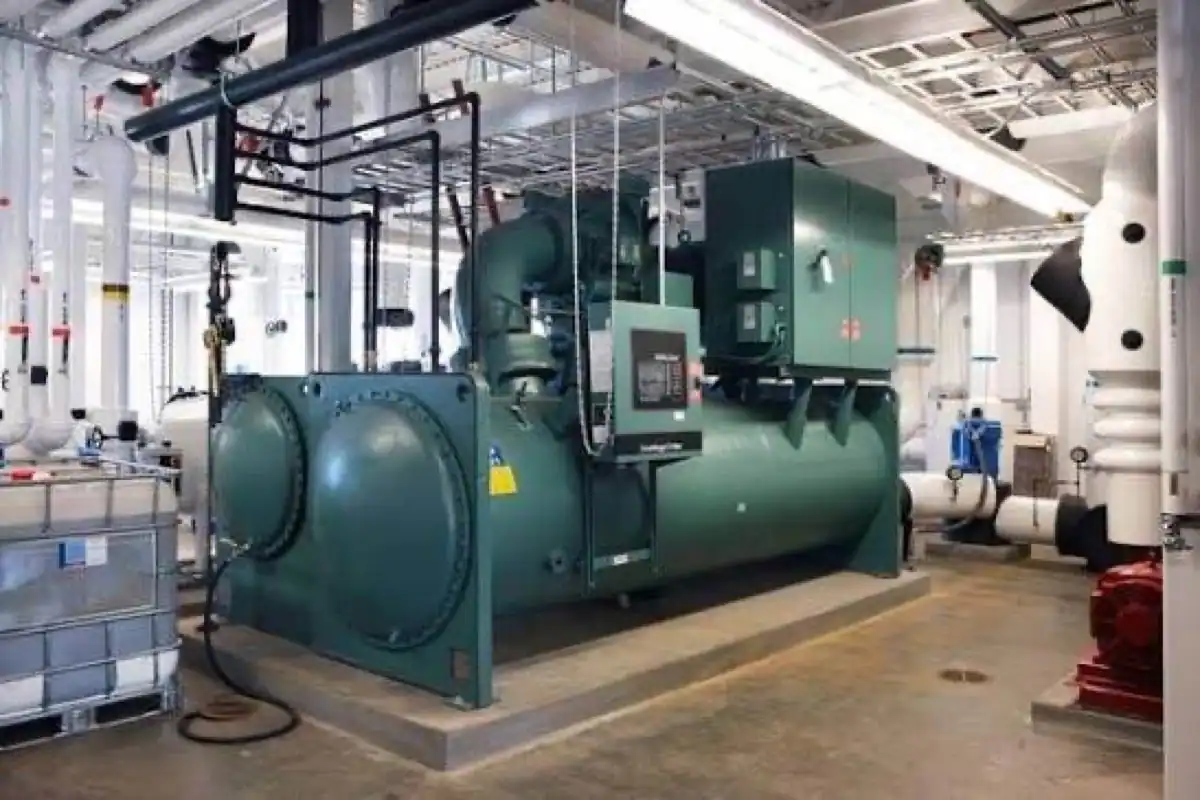
Brand matters more on the used market than the new one, because on a used unit you're betting on parts availability, service-tech familiarity, and resale value 10 years down the road. We buy and resell every major name, so here's our honest read on which used chiller brands are worth your money and which application each one fits.
The good news: the major manufacturers are all buyable. There's no brand on this list we'd refuse outright. The differences are about service ecosystem, control quirks, and where each one shines — not about one brand being junk.
The brands that hold value
These are the names that keep a strong resale market, which also means parts and techs are everywhere. When we price a used unit, these command a premium for a reason.
- York (Johnson Controls). Workhorse centrifugal and screw units. Huge installed base, so parts and service are easy to find nationwide. York centrifugals in the 500-to-1,500-ton range are some of the most liquid units on the resale market — easy to buy, easy to sell later.
- Carrier. Excellent centrifugal lineup, strong controls, and a deep parts network. Carrier's larger centrifugals are a safe buy for hotels and large commercial loads.
- Trane. Arguably the strongest service ecosystem in the country. If your local contractor base knows one brand cold, it's usually Trane. Their screw and centrifugal units are reliable and hold value well.
- Daikin (formerly McQuay). McQuay-badged and Daikin units are solid, and Daikin's global scale keeps parts flowing. Good value on the used market because they sometimes price a touch under York and Trane for comparable capacity.
The specialists worth knowing
- Multistack. Modular chiller specialist. If you need redundancy or a phased capacity build, a modular Multistack setup lets you run partial load efficiently and service one module without shutting the plant down. Great for facilities that grew in stages.
- Johnson Controls. Parent of York, and their branded controls and building-automation tie-ins are strong. If you're integrating into a JCI building-management system, staying in the family simplifies life.
Match the brand to the application
The best brand is the one that fits your load, your controls, and your service reality.
- Warehouse or large commercial (400 to 1,500 tons): York or Trane centrifugal. Liquid resale, easy service, proven at scale. See buying a used chiller for a warehouse.
- Hotel central plant: Carrier or York centrifugal — quiet, efficient at part load, and easy to get serviced. See used chillers for hotels.
- Data center: whatever your control platform and redundancy plan demand — often modular Multistack or a pair of mid-size units for N+1. See used chillers for data centers.
- Process cooling: brand matters less than matching the exact temperature and flow spec. See used process chillers guide.
What matters more than the badge
Here's the part sellers don't want you to fixate on: a well-maintained off-brand unit beats a neglected premium one every single time. Brand is a tiebreaker, not the whole decision. Weigh these first:
- Run history and condition. A Trane that sat idle and corroded for four years is a worse buy than a serviced Daikin that ran until last month.
- Refrigerant. A modern R-134a or R-513A unit from any of these makers is a better long-term hold than an R-22 unit from the "best" brand. See used chiller refrigerants explained.
- Controls generation. An older proprietary control package can be expensive to source regardless of brand. Confirm the controls are current or supportable.
- Parts and service in your area. In Florida, York, Trane, and Carrier techs are easy to find. Confirm local support before you commit to anything more exotic.
Run any candidate through our buying checklist and inspection guide before the brand even enters the conversation.
Brands to approach with a little more caution
We won't name-and-shame, but a couple of categories deserve extra scrutiny:
- Heavily proprietary or discontinued lines where parts and controls are hard to source. Buyable at the right discount, but price in the service risk.
- Rebadged import units with thin service networks in the U.S. Fine if you have the tech support lined up, risky if you don't.
Neither is a hard no — just buy them cheaper to cover the service exposure.
Parts availability is the quiet dealmaker
The reason we push the major names so hard on the used market comes down to one word: parts. When a compressor contactor fails or a control board dies five years from now, you want the replacement to be a phone call, not a scavenger hunt. York, Trane, Carrier, and Daikin all have deep parts networks and enormous installed bases, so components are stocked and cross-referenced everywhere. That's worth a premium on a machine you plan to run for 15 to 20 years.
- Common brands — parts in days, multiple sourcing options, competitive pricing.
- Proprietary or discontinued lines — parts in weeks, sometimes only from the original maker at a markup, occasionally not at all.
- Import rebadges — depends entirely on whether the U.S. distributor still supports the line.
Before you buy anything, confirm that the specific model's parts and controls are still supported. A great deal on an unsupportable unit turns into an expensive paperweight the first time it needs a part.
Resale value protects your downside
Here's the angle most buyers don't think about: the brand that's easy to buy is also easy to sell. If your needs change in five years, a York or Trane centrifugal moves fast on the secondary market, while an off-brand unit can sit. Buying a liquid brand builds an exit into the purchase — you're not just buying cooling, you're buying an asset you can recover value from later. When we buy chillers to resell, the strong names are the ones we can pay the most for, precisely because we know they'll move.
Bottom line
For most buyers, York, Trane, Carrier, and Daikin are the safe, liquid choices — easy to service, easy to resell, strong at scale. Multistack owns the modular niche, and Johnson Controls is the pick when you're tied into their automation. But brand is a tiebreaker: condition, run history, refrigerant, and controls generation decide the deal long before the badge does.
We stock and source every major name, so we can put the right brand and tonnage in front of you for your exact application. Tell us the load and we'll match you to a unit or make a cash offer on yours, or reach out here to talk brands.
Looking for used equipment?
We move chillers, boilers, generators, and cooling towers across Florida and nationwide. Tell us what you need.
Ask About Available UnitsMore in Buying Guides
Buying Used Machine Tools From a Plant Closure
Machine tools from a closing facility can be the best value in industrial equipment, provided you evaluate wear, controls and what it takes to move.
Inspecting a Used Industrial Boiler Before You Buy
Pressure vessel condition, jurisdiction paperwork and burner package all decide whether a used boiler is a bargain or an ornament.
Load Testing a Used Generator Before You Buy
Hours mean little without a load test. What to test, what to look for, and what a generator's history tells you.