
Used Chiller Refrigerants Explained: R-134a, R-22, and More
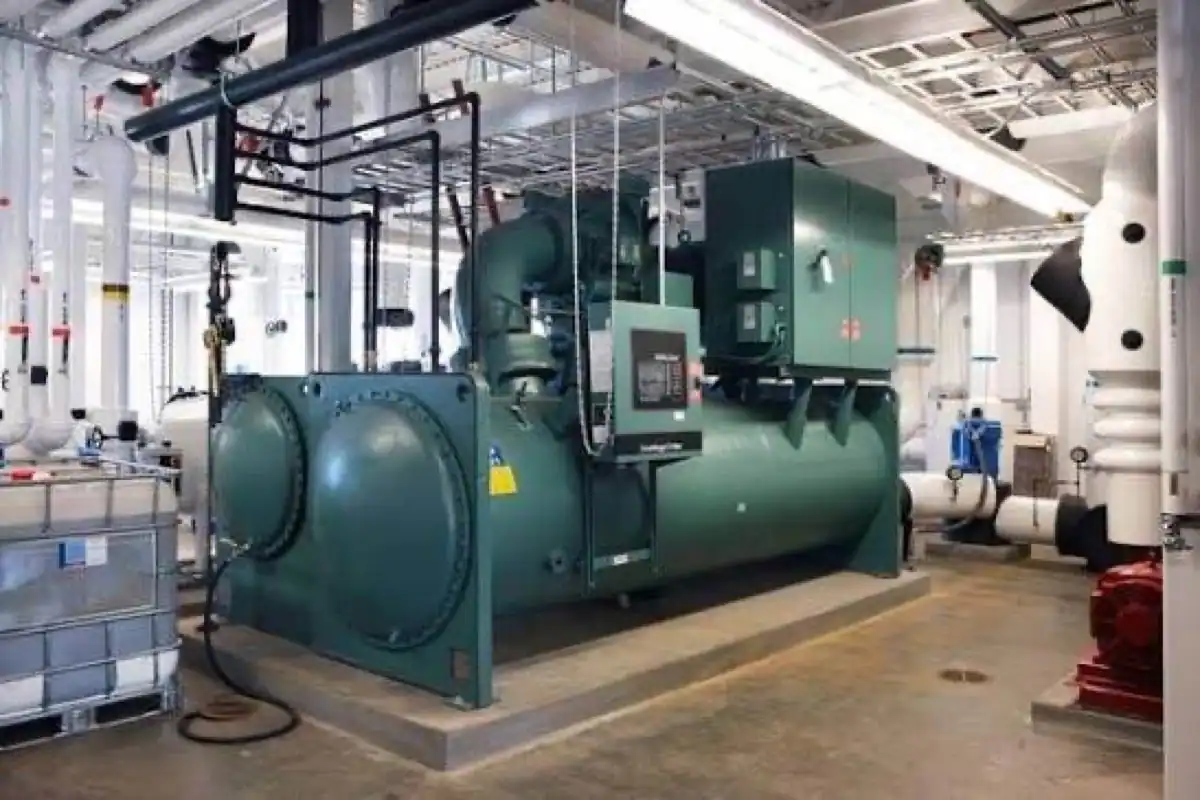
When you're buying a used chiller, the single line on the nameplate that predicts the machine's future value the best isn't tonnage or brand — it's the refrigerant. A machine charged with a current refrigerant is an asset you can run for years. A machine charged with a phased-out gas is a core with a countdown clock. We buy and resell chillers of every vintage, and the refrigerant is the first thing we check, because it drives everything downstream — service cost, resale, and how long the unit stays practical to run.
Here's the plain-English version, aimed at buyers, not chemists.
Why refrigerant decides value
Refrigerants get phased down over time as regulations tighten around ozone impact and global warming potential. As a gas gets phased out, it gets harder to buy and more expensive to top off, which quietly raises the cost of owning any machine that runs it. That's the whole game: a chiller on a current refrigerant is cheap to service and holds resale value; a chiller on an obsolete refrigerant is cheap to buy and expensive to keep.
So when you compare two used machines, the refrigerant often matters more than the price tag. A slightly pricier R-134a unit can be the far better buy than a cheap R-22 one.
The current refrigerants — buy with confidence
These are the ones you want to see on a machine you plan to run for years.
R-134a. The workhorse of modern chillers, found on the vast majority of used York, Carrier, Trane, McQuay, and Daikin machines from the last two decades. Widely available, easy to service, strong resale. If a machine runs R-134a and checks out mechanically, it's a safe buy.
R-513A. A newer low-GWP refrigerant, often used as a drop-in replacement for R-134a. You'll see it on newer machines and reconditioned units. Excellent long-term value.
R-1234ze. A very low-GWP refrigerant used on premium, newer centrifugal machines. These are the most future-proof units on the used market — if you find one at a fair price, it's the best long-term hold you can make.
The transitional refrigerant — buy with eyes open
R-123. A low-pressure refrigerant common on older Carrier and Trane centrifugal machines. It's efficient and still serviceable, but it's being phased down, so availability will keep tightening and price will keep climbing. An R-123 machine can be a fine buy today if you get it cheap and you're realistic about a service horizon of years, not decades. Price it as a transitional asset, not a forever machine.
The obsolete refrigerants — buy as a core
These machines still have value, but not as long-term keepers.
R-22. The classic old-school refrigerant. Production is largely gone, so what's left is recovered or reclaimed and expensive. An R-22 chiller is worth its copper, its compressor core, and maybe a season or two of service if it's already charged and tight. Don't buy one as a machine you'll run for a decade — buy it as a core, a short-term stopgap, or for parts.
R-11 and older CFCs. Anything on these is a genuine antique. Value is scrap and cores, full stop.
If a machine's refrigerant lands here, that's not automatically a no — it's a price reset. We break down how that plays into offers in used chiller prices in Florida.
How to check the refrigerant before you buy
Read the nameplate. Refrigerant type is stamped right on it, along with the charge weight. Get a clear photo — it's the same photo that matters for every other part of the deal, as we cover in what to inspect before buying a used chiller.
Confirm the charge is intact. A machine that's been sitting with a slow leak may be low or empty. Ask when it last ran and whether it holds pressure.
Match refrigerant to your plan. Buying a primary plant machine you'll run for 15 years? Insist on R-134a, R-513A, or R-1234ze. Buying a cheap spare or a process unit you'll swap in a few years? An R-123 or even R-22 machine can pencil out fine.
Use it as a filter early, and it saves you inspecting machines that were never going to fit your horizon. Our full used chiller buying checklist puts refrigerant near the top of the list for exactly this reason.
The Florida angle
Florida's cooling season is long, so chillers here run more hours per year and burn through service more often than the same machine up north. That amplifies the refrigerant question — a phased-out gas that's merely annoying in a mild climate becomes a real operating cost when the machine runs nine-plus months a year. On the flip side, Florida's constant demand means there's deep local supply of current-refrigerant machines coming out of decommissions, so you rarely have to settle for an obsolete unit unless the price genuinely justifies it.
Coastal humidity and salt also stress the machine harder, so pairing a current refrigerant with a solid tube-bundle inspection matters more here than almost anywhere.
A few refrigerant myths worth killing
"A drop-in refrigerant fixes an obsolete machine." Sometimes, not always. Converting an R-22 machine to a replacement gas can work, but it often costs efficiency and may require component changes. Don't buy an R-22 chiller on the assumption a cheap conversion is waiting — price it as what it is today.
"Low charge just means top it off." A machine that's low is a machine that leaked, and a leak means a repair somewhere. On an obsolete refrigerant, topping off is also expensive. Find the leak before you value the unit.
"Refrigerant type doesn't affect resale." It's the biggest single factor after condition. When you eventually sell — or when we make an offer — the refrigerant is one of the first lines we price against. That works in your favor if you bought a current-gas machine and against you if you didn't.
Getting these straight up front keeps you from overpaying for a machine that looks like a bargain until the first service call.
Bottom line
Read the refrigerant first. R-134a, R-513A, and R-1234ze are safe long-term buys. R-123 is a transitional machine — fine if you buy it cheap and plan around a shorter horizon. R-22 and older are cores, spares, and parts, priced accordingly. Get this one line off the nameplate right and you'll never overpay for a machine with a hidden countdown clock.
Not sure what you're looking at? Send us the nameplate photo and we'll tell you straight what the refrigerant means for the deal — start here or reach out directly.
Looking for used equipment?
We move chillers, boilers, generators, and cooling towers across Florida and nationwide. Tell us what you need.
Ask About Available UnitsMore in Buying Guides
Buying Used Machine Tools From a Plant Closure
Machine tools from a closing facility can be the best value in industrial equipment, provided you evaluate wear, controls and what it takes to move.
Inspecting a Used Industrial Boiler Before You Buy
Pressure vessel condition, jurisdiction paperwork and burner package all decide whether a used boiler is a bargain or an ornament.
Load Testing a Used Generator Before You Buy
Hours mean little without a load test. What to test, what to look for, and what a generator's history tells you.