
What to Inspect Before Buying a Used Chiller
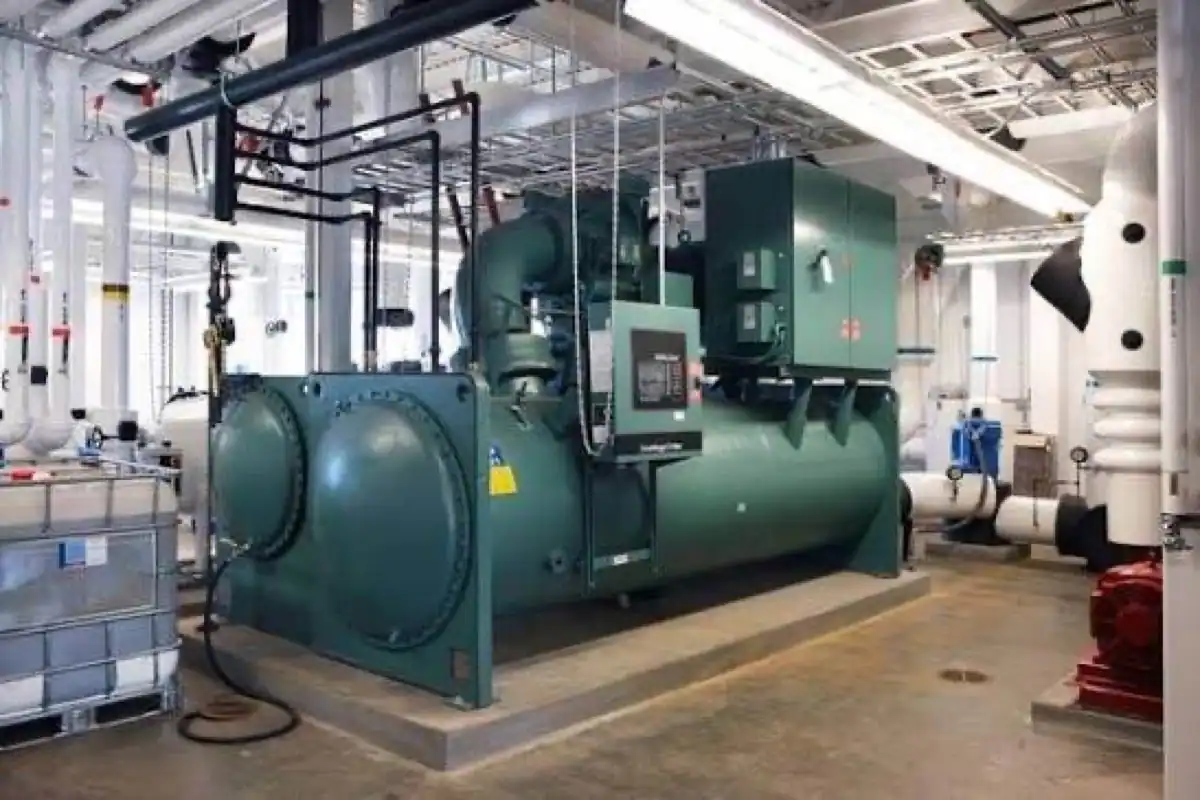
A fresh coat of paint on a used chiller tells you exactly one thing: the seller owns a paint gun. Everything that actually determines whether the unit runs another 15 years is on the inside, and this is the inspection we run before we put money on any chiller we buy to resell. Learn these points and you'll never overpay for a shiny cabinet again.
We're talking about commercial units here — 150 to 1,500 tons, centrifugal and screw, from brands like York, Carrier, Trane, McQuay, Daikin, and Johnson Controls. The inspection scales down to smaller units too, but the stakes are highest where the price tag is.
Start with the compressor
The compressor is the heart and the most expensive thing to replace. You can't see wear directly, so you test for it.
- Oil analysis is the single most valuable test on a centrifugal or screw chiller. A lab sample reveals bearing wear metals, moisture, acid, and refrigerant dilution. Elevated iron or copper means the bearings or gears are grinding themselves apart. This one test has killed more of our purchase decisions than any other — and saved us from more bad units.
- Listen and feel on a running unit if you can — unusual bearing noise, vibration, or surging on a centrifugal is a warning sign.
- Check the compressor for oil staining around seals and joints, which points to leaks.
Test the tube bundles
The evaporator and condenser bundles are heat exchangers full of thin-walled tubes. When tubes fail, refrigerant and water mix and you have a very expensive problem.
- Eddy-current testing measures tube-wall thickness and finds thinning, pitting, and cracks before they become leaks. On a large centrifugal unit, this is worth every dollar.
- Look for prior tube plugging — a few plugged tubes is normal maintenance; dozens means a bundle nearing the end of its life.
- Check for scale and fouling, especially on condenser bundles that ran on open cooling-tower water. Heavy scaling kills efficiency.
Inspect the coils and cabinet — especially in Florida
This is where coastal Florida units separate from the pack. Salt air is relentless.
- Air-cooled condenser coils near the coast corrode fast. Look for fin degradation, coating breakdown, and refrigerant leaks at the coil. A corroded coil is a real cost to re-coil or replace.
- Cabinet and structural corrosion — surface rust is cosmetic; structural rust on the base rails or tube sheets is not.
- Insulation condition on the evaporator and lines — waterlogged or missing insulation causes sweating and, in Florida humidity, ongoing moisture problems.
If you're weighing an air-cooled unit for a coastal site, our comparison of air-cooled vs water-cooled used chillers covers the corrosion trade-off.
Check the electrical and controls
A stripped or dead control package can cost as much to fix as a compressor.
- VFDs, starters, and safeties present, intact, and functional. Missing components are a big deduction.
- Control board and interface power up and communicate. Obsolete proprietary controls can be hard and expensive to source.
- Megger test the motor — insulation resistance tells you whether the compressor motor windings are healthy. This is standard in a proper test; see how a used chiller is tested.
- Wiring condition — no scorching, no aftermarket rat's-nest repairs.
Verify the refrigerant story
Refrigerant history reveals how the unit was treated.
- What refrigerant, and how's the charge? R-134a, R-513A, and R-1234ze are modern; R-22 and R-123 carry future service cost. See used chiller refrigerants explained.
- Leak history — a unit that's been chronically topped off has a problem someone never fixed.
- Moisture and acid in the oil analysis point to a system that's been open or contaminated.
Don't skip the paperwork inspection
The documents are part of the mechanical picture.
- Service records showing regular maintenance.
- Last operational date — recent is good, long-idle needs scrutiny.
- Reason for removal — upgrade or closure is fine; chronic failure is not.
Run the whole thing against our used chiller buying checklist so nothing slips, and know the red flags that should end a deal.
Inspect the removal path too
This one gets skipped because it's not mechanical, but it hits your wallet just as hard. Before you buy, look at how the unit actually comes out of the source building.
- Access route — a straight pull out a louvered wall is cheap; a basement mechanical room with a tight, turning rigging path is expensive and sometimes needs a temporary wall opening.
- Weight and lift — a 500-ton chiller runs 15,000 to 25,000 pounds and needs crane or heavy-rigging capacity.
- Rooftop vs grade — a rooftop pull in downtown Miami or Orlando can mean street permits and closures that cost more than the unit.
When you buy as-is with removal included, this is baked into the offer. When you buy the unit only and handle rigging yourself, a bad access path can quietly double your total cost. See used chiller delivery and rigging in Florida.
What a clean inspection looks like
A used chiller worth buying shows: clean oil analysis, tube bundles passing eddy-current with minimal plugging, intact coils without heavy corrosion, a complete and functional control package, a healthy megger reading, modern or well-supported refrigerant, and a paper trail proving it ran recently on maintenance. Hit all of those and you've found a unit that'll earn its price.
Bottom line
The inspection that matters happens inside the machine, not on its paint. Oil analysis, eddy-current tube testing, coil and corrosion check, electrical and control verification, and refrigerant history are the five that predict the next 15 years. Skip them and you're buying a lottery ticket.
When we resell a chiller, we've already run this inspection and we hand you the results — because a tested unit is worth more to a serious buyer than a mystery box ever will be. Tell us what you're looking for and we'll match you to an inspected unit or make a cash offer on yours, or reach out here.
Looking for used equipment?
We move chillers, boilers, generators, and cooling towers across Florida and nationwide. Tell us what you need.
Ask About Available UnitsMore in Buying Guides
Buying Used Machine Tools From a Plant Closure
Machine tools from a closing facility can be the best value in industrial equipment, provided you evaluate wear, controls and what it takes to move.
Inspecting a Used Industrial Boiler Before You Buy
Pressure vessel condition, jurisdiction paperwork and burner package all decide whether a used boiler is a bargain or an ornament.
Load Testing a Used Generator Before You Buy
Hours mean little without a load test. What to test, what to look for, and what a generator's history tells you.