
How a Used Chiller Is Tested Before Sale
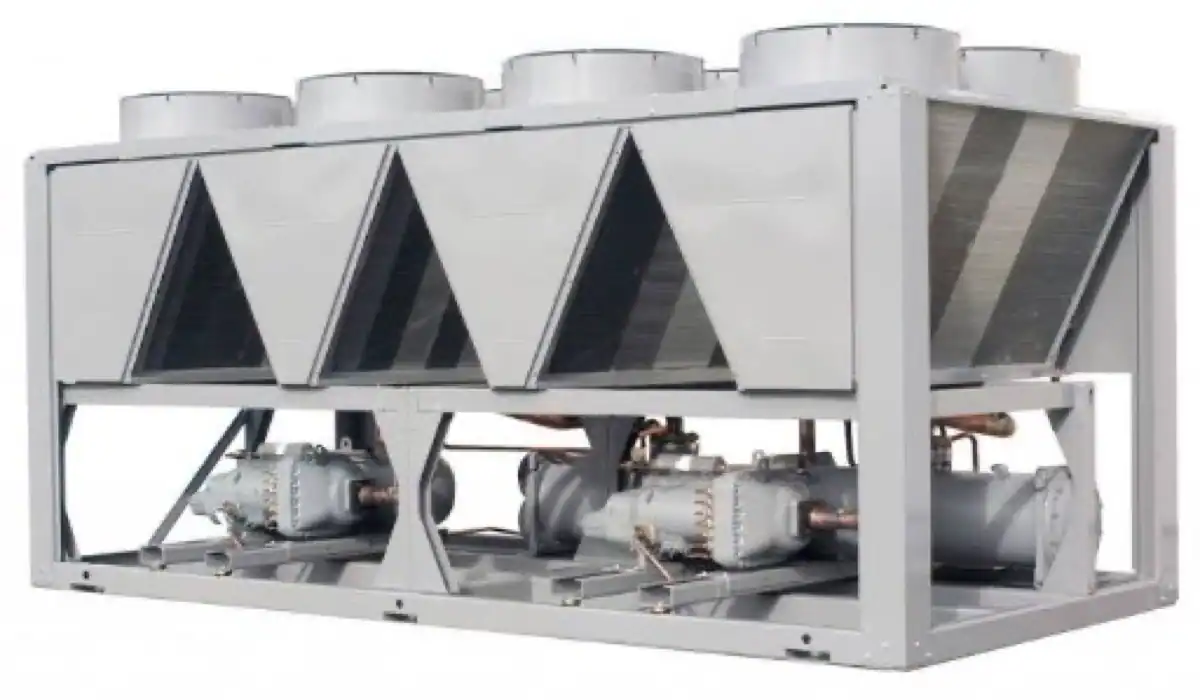
"Ran when pulled" is the most dangerous phrase in the used-chiller business. It means nobody actually tested anything — they watched it make cold water once and shut it off. We don't sell on that standard, and you shouldn't buy on it. A real test tells you the compressor motor is sound, the tubes aren't leaking, the oil is clean, and the controls come alive. Here's exactly what that process looks like when we do it.
Electrical: megger the motor first
The compressor motor is the single most expensive component in the machine, and it's the one you cannot inspect by eye. So the first real test is electrical.
- Megohmmeter (megger) test. We measure insulation resistance from each motor winding to ground. On a hermetic centrifugal, healthy readings are typically in the tens to hundreds of megohms; anything trending toward zero means the windings are failing or contaminated. A grounded motor turns a 90,000-dollar chiller into a scrap-value shell overnight.
- Winding resistance and balance. We check resistance across the three phases for balance. A large imbalance flags a developing winding fault.
- Starter and contactors. On units with the original starter, we verify contactors, overloads, and the solid-state or across-the-line starter function.
No megger reading, no confidence. This is the test buyers skip most and regret most. It's also item one on our pre-purchase inspection guide.
Refrigerant circuit: pressure, leaks, and charge
A chiller is a sealed refrigeration loop, and its integrity is everything.
- Standing pressure check. We verify the unit holds a refrigerant or nitrogen holding charge. A machine that lost its charge in storage has a leak, full stop, and the leak has to be found before the unit is worth buying.
- Leak search. Electronic leak detection and, where warranted, a pressure decay test on the shells and tube joints. Coastal Florida storage is hard on units — salt and humidity find weak joints.
- Refrigerant identification. We confirm what's actually in the machine (R-134a, R-123, R-513A, R-22) because it drives long-term serviceability and value. Our refrigerants explainer covers why this matters for phase-down exposure.
Oil analysis: the compressor's blood test
Compressor oil is a lab-grade window into the machine's health, and it's cheap insurance.
- Spectrometric oil analysis looks for metals — high copper, iron, or aluminum means internal wear or bearing breakdown.
- Moisture and acid numbers flag a system that ingested water or is chemically degrading. High acid on an R-123 unit is a serious red flag.
A clean oil sample on a low-hour unit is one of the strongest buy signals there is. A metal-loaded sample tells us to walk away before we ever put it on a truck to a customer.
Heat exchangers: tubes, eddy current, and coils
The evaporator and condenser tube bundles are the second most expensive part of the machine.
- Eddy-current testing on the tube bundle, where the unit's history warrants it, finds thinning and pitting before a tube ruptures. A failed tube floods refrigerant into the water loop — an expensive, disruptive repair.
- Waterbox and endbell inspection for scale, erosion, and prior tube plugging. A dozen plugged tubes tells a story about the unit's water treatment history.
- Air-cooled condenser coils get inspected for corrosion and fin damage, which matters a lot on coastal units — see the air-cooled vs water-cooled comparison.
Controls, actuators, and a power-up where possible
Finally, we bring the brains to life.
- Controls power-up. We energize the control panel to confirm the microprocessor boots, sensors read plausibly, and there are no locked-in fault codes hiding a known problem.
- Actuator and vane check. On centrifugals, we exercise the inlet guide vanes and verify the actuator responds.
- Nameplate verification. Model, serial, tonnage, voltage, full-load amps, and refrigerant all confirmed against the physical tag — not a spec sheet someone typed from memory.
Where a facility has power and water available, a short run test under load is the gold standard. It isn't always possible on a decommissioned unit sitting in a yard, which is exactly why the megger, oil, and pressure tests matter so much — they let us stand behind a unit even when a full load test isn't feasible.
Why a yard test beats a load test that never happened
Buyers often ask why we don't just run every unit under full load before selling it. The honest answer is that a decommissioned chiller sitting in a yard usually has no chilled-water loop, no condenser water, and no matched electrical service to run against — staging all that costs more than it proves. What a disciplined bench of tests gives you instead is arguably better: a megger reading is a hard number, oil analysis is a lab result, and a standing pressure check is objective. Those tell you the three things a brief load test often hides — motor insulation, internal wear, and circuit integrity. A unit that idles fine for five minutes can still have a marginal winding or a slow leak. We'd rather hand you the meter readings than a thumbs-up.
What you should get in writing
A real test produces a document, not a shrug. When you buy from us you get the nameplate data, megger readings, oil analysis results, refrigerant type and charge status, and notes on tube and coil condition. If a seller can't produce that, you're buying blind — and that's the number-one warning in our red flags guide.
Bottom line
Testing a used chiller is electrical, mechanical, and chemical — megger the motor, prove the refrigerant circuit holds, run an oil analysis, check the tubes, and power up the controls. Do that and a used unit becomes a known quantity instead of a gamble. Skip it and "ran when pulled" can cost you the price of the whole machine.
Every chiller we sell goes through this before it ships, and you get the report with it. Tell us what you're cooling and we'll match you to a tested unit — start here or reach out directly.
Looking for used equipment?
We move chillers, boilers, generators, and cooling towers across Florida and nationwide. Tell us what you need.
Ask About Available UnitsMore in Buying Guides
Buying Used Machine Tools From a Plant Closure
Machine tools from a closing facility can be the best value in industrial equipment, provided you evaluate wear, controls and what it takes to move.
Inspecting a Used Industrial Boiler Before You Buy
Pressure vessel condition, jurisdiction paperwork and burner package all decide whether a used boiler is a bargain or an ornament.
Load Testing a Used Generator Before You Buy
Hours mean little without a load test. What to test, what to look for, and what a generator's history tells you.