
How Much Does a Used Commercial Chiller Cost?
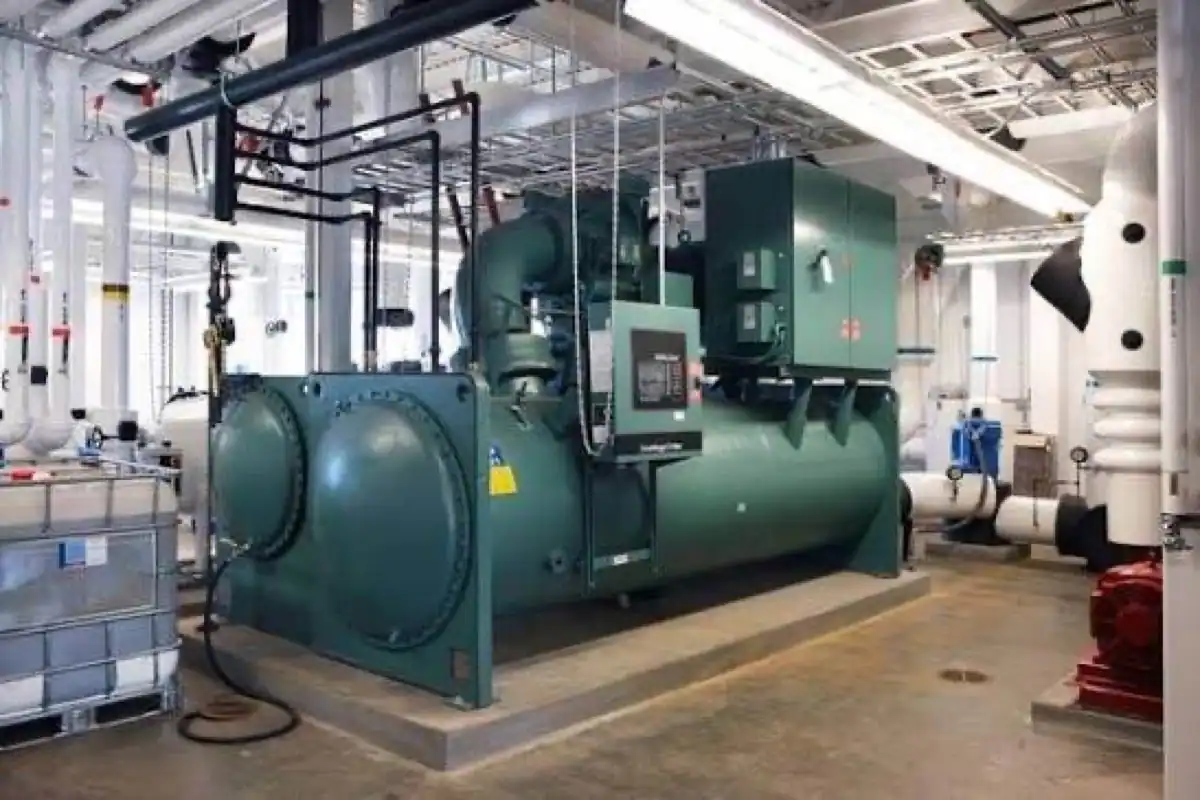
The honest answer to "how much does a used commercial chiller cost" is: it depends, but not as much as sellers want you to think. After years of buying and reselling these units, we can give you working ranges that are close enough to budget against. This post lays out real dollar figures by tonnage, type, refrigerant, and condition — then covers the costs that don't show up on the price tag.
A used chiller in the core resale band typically runs 40 to 70 percent below new. The trick is knowing where a fair price lands so you can spot a rip-off and a steal.
Used chiller price ranges by tonnage
These are working market ranges for units in reasonable, serviceable condition. Non-running or corroded units drop below the low end; low-hour, recently-serviced units with modern refrigerant push the high end.
| Tonnage | Type | Ballpark price (USD) |
|---|---|---|
| Under 100 tons | Air-cooled packaged | 8,000 – 30,000 |
| 100 – 250 tons | Air or water-cooled scroll/screw | 20,000 – 55,000 |
| 250 – 500 tons | Water-cooled screw | 35,000 – 90,000 |
| 500 – 800 tons | Water-cooled centrifugal | 60,000 – 150,000 |
| 800 – 1,500 tons | Water-cooled centrifugal | 100,000 – 250,000 |
Two quick reads on this table. First, the 150-to-500-ton band has the deepest supply, so that's where you find the best value per ton. Second, small units under 100 tons don't discount as hard because they compete with cheap new equipment.
What moves the price up or down
Condition and run history. This is the biggest single lever. A unit that ran within the last 12 months on a maintenance contract commands a premium. One that sat idle for three years gets discounted hard, because idle time dries out gaskets and degrades electrical components.
Refrigerant. Modern refrigerants — R-134a, R-513A, R-1234ze — hold value. Older R-22 and R-123 units sell cheaper because the long-term service cost is higher. That discount is real, but so is the future cost. See used chiller refrigerants explained.
Brand. York, Carrier, Trane, McQuay, Daikin, Johnson Controls, and Multistack all hold value on the resale market because parts and service techs are everywhere. Off-brand and heavily proprietary units are cheaper up front but can cost you on service. Here are the best used chiller brands to buy.
Reconditioned vs as-is. A reconditioned unit — cleaned, tested, worn parts replaced, often with a short warranty — costs more than an as-is pull, and it's usually worth it if you don't have your own service crew. We compare the two in reconditioned vs used chiller.
Completeness. A chiller with its original VFDs, starters, controls, and safeties in place is worth thousands more than a partially stripped shell.
The costs that aren't on the sticker
This is where "cheap" chillers get expensive. Budget these separately:
- Rigging and removal from the source: 3,000 to 20,000 dollars depending on access and weight. A 500-ton unit weighs 15,000 to 25,000 pounds.
- Delivery: freight scales with distance and weight; in-state Florida moves are cheaper than cross-country.
- Installation and piping: water-cooled units need condenser water piping, pumps, and a cooling tower tie-in. See cost to install a used chiller in Florida.
- Refrigerant top-off or conversion: an older-refrigerant unit may need a charge that costs real money.
- Florida sales tax on the equipment purchase — factor it in unless you qualify for a manufacturing exemption.
Add it all up and the installed cost of a used chiller often lands 30 to 60 percent below a comparable new install — still a strong number, but not the sticker price alone.
Is used actually cheaper than new?
Usually, yes — but run the full comparison, not just the purchase price. A new 500-ton centrifugal chiller installed can run 250,000 to 500,000 dollars once you count equipment, rigging, and controls. A comparable reconditioned used unit installed often lands at 120,000 to 220,000 dollars. We break down the full comparison in new vs used chiller cost.
The case for new gets stronger when you factor energy efficiency over a long ownership horizon. A high-efficiency new unit can pay back part of its premium through lower kilowatt draw, which matters in Florida's year-round run climate. For most warehouses, hotels, and process loads, though, a well-chosen used unit wins on total cost.
Why prices swing so much within a tonnage band
Two 500-ton chillers can be priced 40,000 dollars apart, and it's not random. When a unit sits at the top of its range, it usually checks these boxes:
- Ran within the last 12 months on a documented maintenance contract.
- Modern refrigerant — R-134a, R-513A, or R-1234ze.
- Complete controls — VFDs, starters, and safeties all present and tested.
- Clean inspection — passing oil analysis and eddy-current tube results.
- Strong brand with easy parts and service.
A unit at the bottom of the range is usually the opposite: idle for years, older refrigerant, partially stripped, no test data, or corroded from coastal exposure. Same tonnage, completely different value. This is why a nameplate photo and a price alone tell you almost nothing — you have to know the story behind the number.
What a fair deal looks like
A fair used-chiller price leaves room for both sides. You're paying meaningfully less than new, and the seller is getting more than scrap value. When someone quotes you a number that's suspiciously low, it's almost never a gift — it's a unit with a problem you haven't found yet, or a removal cost you're about to inherit. When it's suspiciously high, you're paying broker margin on a unit that changed hands twice before it got to you. Buying direct from the company that pulled and tested the unit is how you land in the fair middle without either surprise.
Bottom line
A used commercial chiller runs roughly 8,000 dollars for a small air-cooled unit up to 250,000 dollars for a large centrifugal — with the 150-to-500-ton band offering the best value per ton. But the sticker is only part of the story. Rigging, install, refrigerant, and Florida sales tax decide whether a "cheap" chiller is actually cheap. Price the installed total, not the unit alone.
We buy and resell across every tonnage band, so we can tell you what a specific unit should cost and whether the one you're eyeing is priced fairly. Send us the nameplate and we'll give you a straight number or a cash offer, or reach out here to talk it through.
Looking for used equipment?
We move chillers, boilers, generators, and cooling towers across Florida and nationwide. Tell us what you need.
Ask About Available UnitsMore in Buying Guides
Buying Used Machine Tools From a Plant Closure
Machine tools from a closing facility can be the best value in industrial equipment, provided you evaluate wear, controls and what it takes to move.
Inspecting a Used Industrial Boiler Before You Buy
Pressure vessel condition, jurisdiction paperwork and burner package all decide whether a used boiler is a bargain or an ornament.
Load Testing a Used Generator Before You Buy
Hours mean little without a load test. What to test, what to look for, and what a generator's history tells you.