
Buying a Used Process Chiller: A Practical Guide
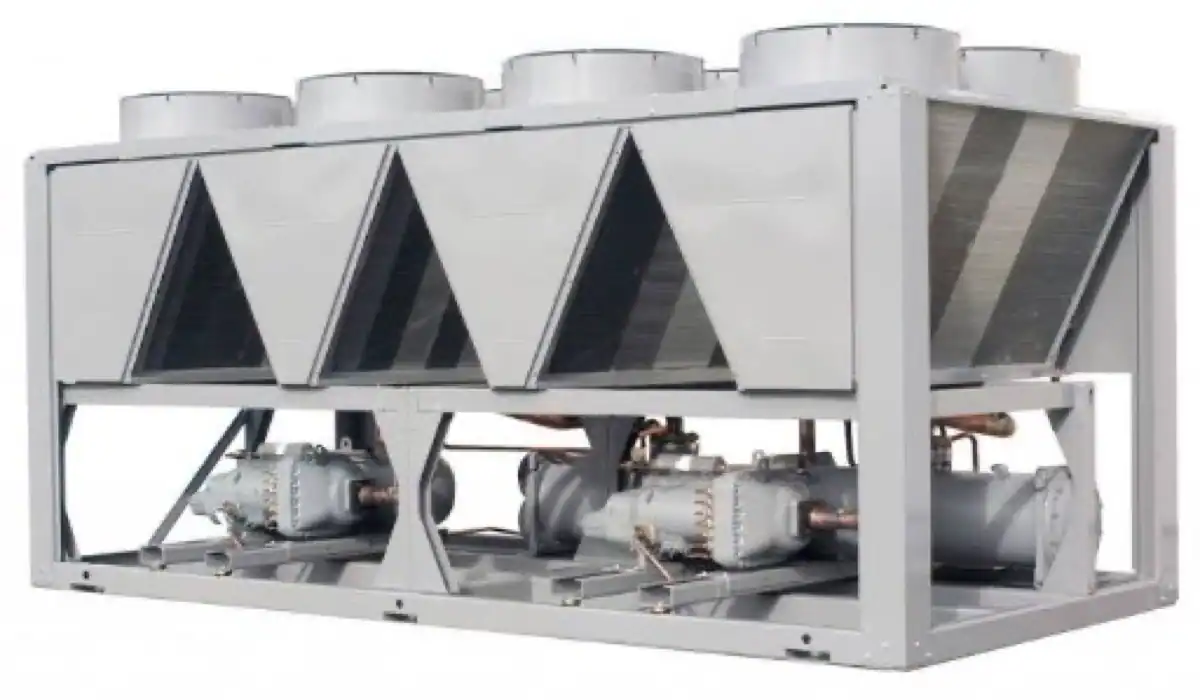
A process chiller is a different animal from a comfort-cooling machine, and buying one used means paying attention to different things. A comfort chiller keeps a building around 75 degrees and nobody notices a two-degree swing. A process chiller holds a precise setpoint on a plastic injection molder, a laser, a brewery, a plating line, or a plasma cutter — and a two-degree swing can scrap a production run. Same basic refrigeration, very different priorities.
We source and resell industrial chillers, including process units, so we know what separates a process machine that earns its keep from one that fights your production line. Here's the practical guide to buying used process cooling — in Florida or anywhere.
Process cooling is about stability, not just tonnage
The number that matters most on a process chiller isn't peak tonnage — it's how tightly it holds temperature. A molding line or a laser needs a stable setpoint, often within a degree or two, regardless of how the load fluctuates through a cycle.
- Ask about temperature control tolerance. Precision processes need tight control; a machine built for loose comfort duty may not hold your setpoint.
- Match the temperature range. Process chillers run a wide span — some hold standard 45-to-55-degree loop temps, others go well below freezing with glycol for low-temp applications. Confirm the used unit was built for your range.
- Watch the load profile. A process that cycles hard between high and near-zero heat rejection needs a machine that modulates well and won't short-cycle. Steady loads are easier on any chiller.
Get the tonnage right too — undersized and you never hit setpoint under full production, oversized and you short-cycle and hunt. Our how to size a used chiller guide covers the calculation; process loads especially reward sizing off real heat rejection numbers rather than rules of thumb.
Glycol, fluid loops, and materials
Most process chillers run a glycol loop rather than plain water, both for low-temp capability and freeze protection. When buying used, check:
- Fluid compatibility. Confirm the unit's evaporator, pump, and wetted materials suit your fluid — some plating and chemical processes are corrosive and need specific materials.
- Loop temperature and pump head. The pump has to move your fluid at the flow and pressure your process needs. A mismatched pump undercuts an otherwise good machine.
- Evaporator condition. On any older unit, ask about scaling, fouling, or corrosion in the evaporator, especially if the prior process ran hard water or aggressive fluids.
Air-cooled vs water-cooled for process work
Process chillers come both ways, and the choice tracks your facility.
Air-cooled units are self-contained, install fast, and need no cooling tower — ideal for a plant floor or a site without condenser water. The trade-off is lower efficiency in Florida heat and heat rejection dumped into or around the building. Water-cooled units are more efficient for larger continuous process loads but need a tower and condenser loop. For most standalone Florida process applications, air-cooled is the pragmatic path; large continuous loads justify water-cooled. Our air-cooled vs water-cooled used chiller guide compares them.
Brands, compressors, and refrigerant
Stick with names that have parts and service support — Trane, Carrier, York, McQuay, Daikin, Multistack, and dedicated process brands. For the tonnage most process applications need, scroll and screw compressors dominate; scroll units are common in smaller precision chillers, screws in the mid-range. Very large process loads move into centrifugal territory — see buying a used screw chiller.
On refrigerant, favor R-134a, R-513A, or R-1234ze so the machine stays serviceable through years of production. An R-22 unit is a poor bet for a production-critical machine — the refrigerant is phased out and expensive when you need a fast repair. Our used chiller refrigerants explained guide covers it.
Reliability and downtime math
A process chiller failure often stops production, not just comfort — which raises the stakes on run history and, for critical lines, redundancy.
- Prioritize documented run history. A unit that ran continuously under maintenance and came out documented is worth far more than an idle machine that seized seals sitting still.
- Consider a standby. For a production line where downtime is expensive, a second reconditioned unit as backup is cheap insurance — and the used market makes that affordable.
- Confirm controls are complete. Process chillers often integrate with line controls; a stripped control panel is a real problem here.
The Florida angle
Florida's heat and humidity raise condenser loads and push efficiency down on air-cooled process units, so size with the local ambient in mind, not a spec-sheet rating at 95 degrees. Coastal plants near the coasts face salt-air corrosion — inspect condensers and cabinets on any coastal-sourced unit; our what to inspect before buying a used chiller guide covers it. And hurricane season tightens rigging and freight June through November, so buy production-critical capacity ahead of the season, not during an outage. Factor Florida sales tax and separate rigging and delivery costs into your total.
Buy documented, buy direct
Because a process chiller is tied to production, you want to know its real history before it hits your floor. When we resell a unit pulled during plant decommissioning, the run history and removal photos come with it — so you're matching a documented machine to your process instead of gambling on a broker-flipped listing.
Bottom line
Buying a used process chiller comes down to stability, fluid match, and reliability more than raw tonnage. Confirm the temperature control tolerance and range fit your process, check glycol and materials compatibility, size off real heat rejection, favor serviceable brands and current refrigerants, and prioritize documented run history — with a standby unit for any line where downtime is expensive. Do that and a used process chiller will hold setpoint through years of production at a fraction of new-equipment cost.
Run your candidate through our used chiller buying checklist, and when you're ready, tell us your process temperature, fluid, and load and we'll match you to the right machine — or if you're clearing a plant, we buy used process chillers and industrial gear for cash.
Looking for used equipment?
We move chillers, boilers, generators, and cooling towers across Florida and nationwide. Tell us what you need.
Ask About Available UnitsMore in Buying Guides
Buying Used Machine Tools From a Plant Closure
Machine tools from a closing facility can be the best value in industrial equipment, provided you evaluate wear, controls and what it takes to move.
Inspecting a Used Industrial Boiler Before You Buy
Pressure vessel condition, jurisdiction paperwork and burner package all decide whether a used boiler is a bargain or an ornament.
Load Testing a Used Generator Before You Buy
Hours mean little without a load test. What to test, what to look for, and what a generator's history tells you.