
Buying a Used Screw Chiller
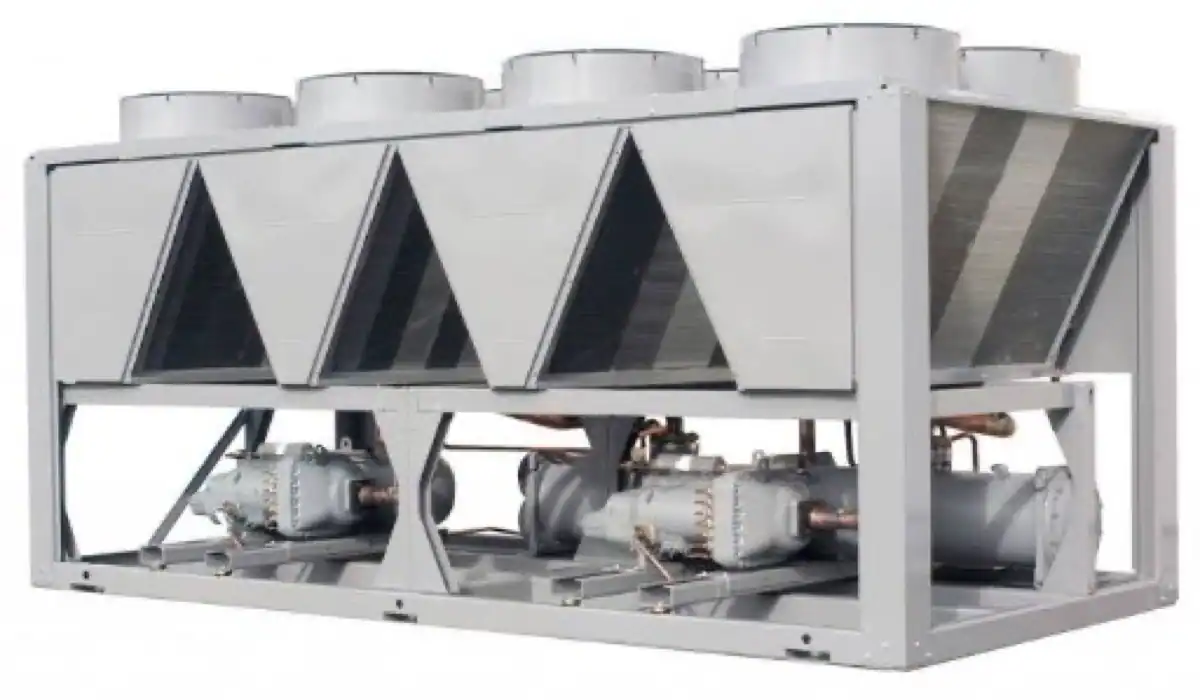
If a centrifugal chiller is the machine for the biggest plants, the screw chiller is the machine for everything in the middle. Screw compressors handle the 70 to 500-ton range better than anything else, they tolerate part-load and frequent cycling well, and they hold up to the on-off-on rhythm that a lot of real buildings actually run. We move a steady stream of used screw machines through our yard, and they're one of the easiest used buys to get right if you know where to look.
Here's what a used screw chiller is really about — the tonnage sweet spot, the rotor and bearing checks that matter, and what you should expect to pay.
Where a screw chiller fits
Screw compressors use two interlocking rotors to squeeze refrigerant. That design gives them a flat efficiency curve, so they stay efficient even when the building isn't calling for full cooling. That makes them ideal for:
- Buildings with swinging loads — offices, retail, mixed-use
- Process cooling that cycles through the day
- Warehouse and light-industrial applications — see buying a used chiller for a warehouse
- Redundancy in a plant where a big centrifugal carries the base load
Below about 70 tons you're into scroll territory. Above 500 tons a used centrifugal chiller usually wins on efficiency per ton. The screw owns the middle.
Air-cooled vs water-cooled
This is the first real decision on a screw machine, and it changes the whole install.
Air-cooled screw chillers sit outside, reject heat straight to the air, and need no cooling tower. Simpler install, lower maintenance, popular on Florida rooftops where mechanical-room space is tight. The trade-off is lower efficiency, which matters more in Florida's long cooling season.
Water-cooled screw chillers pair with a cooling tower, run more efficiently, and make sense for buildings that run heavy loads most of the year. More components to maintain, but lower energy cost per ton.
We lay out the full trade-off in air-cooled vs water-cooled used chiller. In Florida, air-cooled wins on simplicity for smaller loads; water-cooled wins on operating cost anywhere the machine runs hard.
What to inspect on a used screw chiller
The heart of the machine is the rotor set and its bearings. That's where your inspection dollars go.
Oil analysis. Same rule as any compressor — metal in the oil means wear. On a screw machine, bearing wear leads to rotor contact, and rotor damage is the one repair that can total the unit. Insist on a recent oil sample.
Bearing hours and run history. Many screw compressors have a rated bearing life. Ask for the run hours and compare them against the install date. A machine with modest hours and clean oil is a strong buy.
Slide valve and unloader. Screw chillers modulate capacity with a slide valve. Confirm it moves through its full range — a stuck unloader means the machine can't part-load, which defeats half the reason you'd buy a screw in the first place.
Coils or tubes. Air-cooled units have condenser coils that corrode in coastal Florida salt air — inspect for fin damage and leaks. Water-cooled units need the tube bundle eddy-current checked like any other. Our what to inspect before buying a used chiller checklist covers the nameplate and paperwork side.
Refrigerants on screw machines
Most screw chillers you'll find used run:
- R-134a — extremely common on screw machines, strong resale, easy service
- R-513A — a newer low-GWP drop-in, best long-term value
- R-407C — found on some units, still serviceable
- R-22 — older machines only; treat as a core, not a keeper
The full breakdown is in used chiller refrigerants explained. Stick to R-134a or R-513A and you won't get stuck chasing a phased-out gas.
What a used screw chiller costs
Screw machines are more affordable per ton than centrifugals because they play in a smaller tonnage band. Rough guide for running units:
- 70 to 150 tons: roughly 8,000 to 22,000 dollars
- 150 to 300 tons: roughly 18,000 to 40,000 dollars
- 300 to 500 tons: roughly 35,000 to 65,000 dollars
Air-cooled units generally sit a bit lower than water-cooled of the same tonnage because they give up efficiency. Tested and reconditioned machines with a warranty run at the top of the range; as-is "buyer removes" units at the bottom. Compare against used chiller prices in Florida across all types, and remember Florida equipment sales tax plus rigging apply — see cost to install a used chiller in Florida.
Reconditioned or as-is
If this is the primary machine for a building you can't afford to have go dark, buy reconditioned and tested with a warranty. If it's a spare, a process-cooling unit, or you've got your own HVAC crew, an as-is machine saves real money. The trade-offs are spelled out in reconditioned vs used chiller.
One Florida-specific note: because so many buildings here run air-cooled screw units on rooftops, the used supply is deep and delivery inside the state is fast. If you're near the coast, weight the coil and corrosion inspection heavier than you would inland.
Brands and what they signal
The nameplate name tells you something about serviceability. Trane and Carrier screw machines are everywhere in Florida, so parts and techs are easy to find. York and Johnson Controls units are common on the commercial side and hold value well. McQuay and Daikin screw chillers are strong performers, particularly the air-cooled rooftop packages. Multistack modular units are worth a look when you want redundancy — a bank of small modules means one dead module doesn't take the whole plant down, which is a real advantage for a building that can't tolerate a full outage.
Off-brand or heavily proprietary machines are buyable, but price them lower and confirm you can get parts before you commit. Our rundown of the best used chiller brands goes deeper on who makes what and why it matters on the resale market.
Bottom line
A used screw chiller is the easy button for mid-tonnage cooling. Nail down air-cooled vs water-cooled for your load, pull an oil analysis and the bearing hours, confirm the slide valve moves, and stick to a current refrigerant. Do that and you'll get a machine that part-loads efficiently for years at a fraction of new cost.
Looking for a specific tonnage, or clearing a screw machine out of a decommission? Tell us what you're after and we'll match inventory or make a cash offer. Questions first? Get in touch.
Looking for used equipment?
We move chillers, boilers, generators, and cooling towers across Florida and nationwide. Tell us what you need.
Ask About Available UnitsMore in Buying Guides
Buying Used Machine Tools From a Plant Closure
Machine tools from a closing facility can be the best value in industrial equipment, provided you evaluate wear, controls and what it takes to move.
Inspecting a Used Industrial Boiler Before You Buy
Pressure vessel condition, jurisdiction paperwork and burner package all decide whether a used boiler is a bargain or an ornament.
Load Testing a Used Generator Before You Buy
Hours mean little without a load test. What to test, what to look for, and what a generator's history tells you.