
Buying a Used Centrifugal Chiller
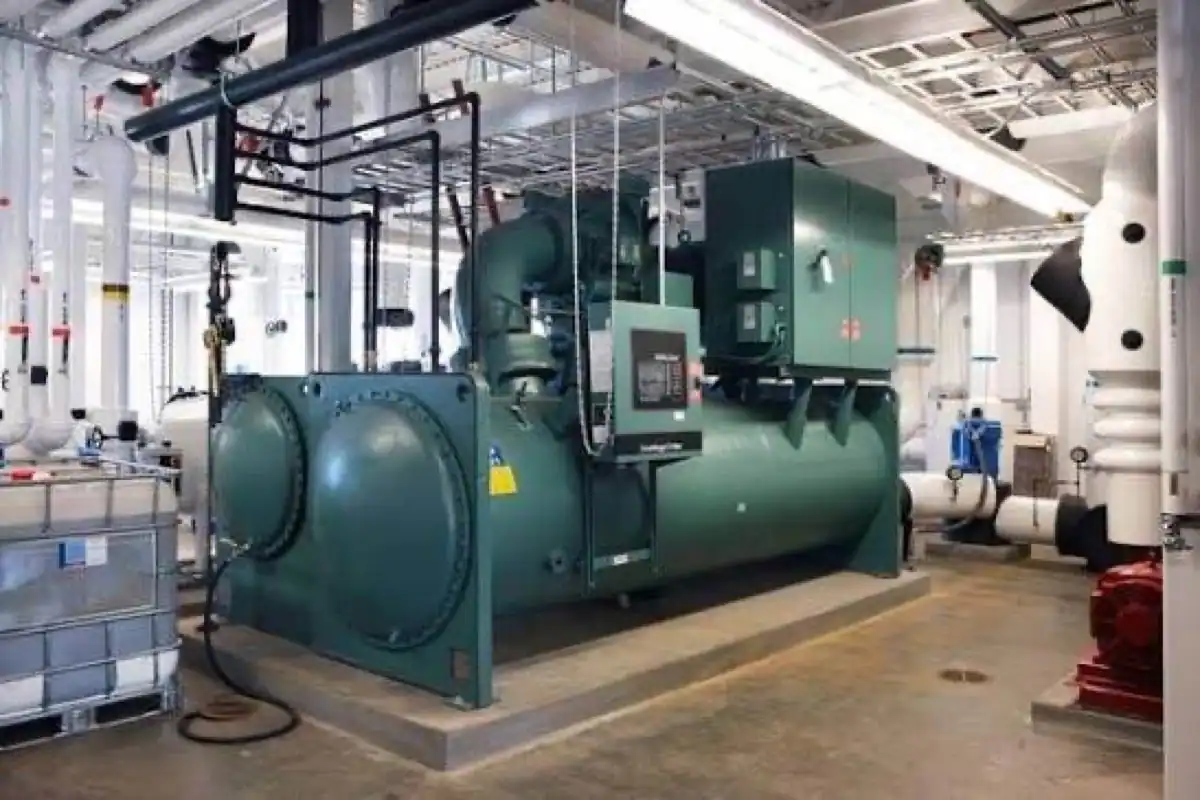
A centrifugal chiller is the machine that cools the big buildings — hospitals, high-rises, universities, data halls. When one of those facilities decommissions, the chiller that comes out is often a 300 to 2,000-ton unit with plenty of life left, and it can be bought used for a fraction of new. We pull these units out of plants every month, recondition the good ones, and resell them, so we see exactly what separates a smart buy from a money pit.
This is the operator's version of the story: what actually matters on a used centrifugal machine, what the numbers look like, and where the risk hides.
Why centrifugal, and where it fits
Centrifugal chillers use a spinning impeller to compress refrigerant, which makes them efficient at scale and smooth to run. They dominate the 300-ton and up range. Below about 200 tons, screw and scroll machines usually make more sense — if you're sizing a smaller load, read our take on buying a used screw chiller before you commit.
The strongest used market sits in the 500 to 1,500-ton band. That's where you find the most inventory coming out of commercial decommissions, and where a reconditioned York, Carrier, Trane, or McQuay machine competes hard against new equipment that would run six figures more.
Where they shine:
- Central plants serving one or more large buildings
- Constant, heavy cooling loads that run most of the year
- Florida applications where humidity keeps the load high nine months out of twelve
What to inspect before you buy
The three most expensive things to go wrong on a centrifugal machine are the compressor bearings, the impeller, and the tube bundle. Everything else is comparatively cheap.
Bearings and the compressor. Ask for an oil analysis report. Metal in the oil means bearing wear, and a bearing job on a centrifugal compressor is a serious spend. If the seller can't produce a recent oil sample, budget for one before you close.
The tube bundle. Eddy current testing tells you the condition of the condenser and evaporator tubes. Coastal Florida units suffer more here — salt air and hard cooling-tower water pit tubes over time. A bundle with a handful of plugged tubes is fine; a bundle that's been re-tubed or is losing tubes fast is a red flag.
The impeller and volute. Look for erosion or damage. This shows up in a vibration analysis and in the machine's approach temperatures.
Controls and starters. A machine with its original solid-state or VFD starter, safeties, and controls intact is worth far more than a stripped shell. Our full what to inspect before buying a used chiller walkthrough covers the nameplate and paperwork side in detail.
Refrigerant matters more than buyers think
The refrigerant a centrifugal chiller runs on tells you how future-proof it is.
- R-134a — the workhorse of modern centrifugals. Widely available, strong resale, easy to service.
- R-1234ze and R-513A — newer low-GWP refrigerants. Premium machines, best long-term value.
- R-123 — common on older low-pressure Carrier and Trane machines. Still serviceable, but it's being phased down, so price the unit accordingly.
- R-22 — obsolete. If you see it on a centrifugal, treat the machine as a core, not a long-term asset.
We break the whole subject down in used chiller refrigerants explained. The short version: a running R-134a machine holds value; an R-123 or R-22 machine is priced for its copper and cores.
What a used centrifugal chiller costs
Prices swing on tonnage, condition, refrigerant, and whether the unit is sold as-is or reconditioned and tested. Rough guide for running commercial machines:
- 300 to 500 tons: roughly 18,000 to 45,000 dollars
- 500 to 800 tons: roughly 35,000 to 75,000 dollars
- 800 to 1,500 tons: roughly 60,000 to 140,000 dollars
- Over 1,500 tons: specialist market, priced per unit
A tested, reconditioned machine with a warranty sits at the top of those ranges. An as-is unit sold "buyer removes" sits at the bottom. Compare that to new, where a 1,000-ton centrifugal plus installation clears 300,000 dollars easily, and the used case makes itself. For more detail see used chiller prices in Florida and new vs used chiller cost.
Remember Florida sales tax applies to equipment purchases, and rigging plus install adds real money — we cover that in cost to install a used chiller in Florida.
Buying reconditioned vs as-is
Two honest paths:
Reconditioned and tested. The machine has been run under load, the tubes checked, the oil changed, seals replaced as needed, and it comes with a limited warranty. You pay more up front and inherit far less risk. Best for a primary plant you can't afford to have down.
As-is, buyer removes. Cheaper, faster, and fine if you have your own HVAC crew and can absorb a repair. Best for redundancy units, process cooling, or buyers who want a spare in the yard.
If you want the difference spelled out, reconditioned vs used chiller lays out who each one is for.
The Florida angle
Florida runs its chillers harder than almost anywhere. The cooling season barely stops, so a used machine here has usually logged more run hours per calendar year than the same unit up north — check the hour meter against the install date. Coastal humidity and salt also mean cooling-tower and condenser components see more corrosion, so the tube-bundle inspection carries extra weight on any unit sourced near the coast.
The upside: because so many Florida facilities cycle equipment, there's a deep local supply of good used centrifugals, and delivery inside the state is quick and cheap compared to freighting a machine down from out of state.
Bottom line
A used centrifugal chiller is one of the best-value moves in commercial cooling if you buy the right one. Confirm the refrigerant is current, get an oil analysis and an eddy current report, check the impeller and starter, and decide honestly whether you want a tested-and-warrantied machine or an as-is core. Get those five things right and you'll spend a fraction of new for a machine that runs for years.
If you're sourcing a centrifugal unit — or clearing one out of a plant you're decommissioning — tell us what you need and we'll match you to inventory or make you a cash offer. Prefer to talk it through first? Reach out here.
Looking for used equipment?
We move chillers, boilers, generators, and cooling towers across Florida and nationwide. Tell us what you need.
Ask About Available UnitsMore in Buying Guides
Buying Used Machine Tools From a Plant Closure
Machine tools from a closing facility can be the best value in industrial equipment, provided you evaluate wear, controls and what it takes to move.
Inspecting a Used Industrial Boiler Before You Buy
Pressure vessel condition, jurisdiction paperwork and burner package all decide whether a used boiler is a bargain or an ornament.
Load Testing a Used Generator Before You Buy
Hours mean little without a load test. What to test, what to look for, and what a generator's history tells you.