
Buying a Used Chiller for a Warehouse or Plant
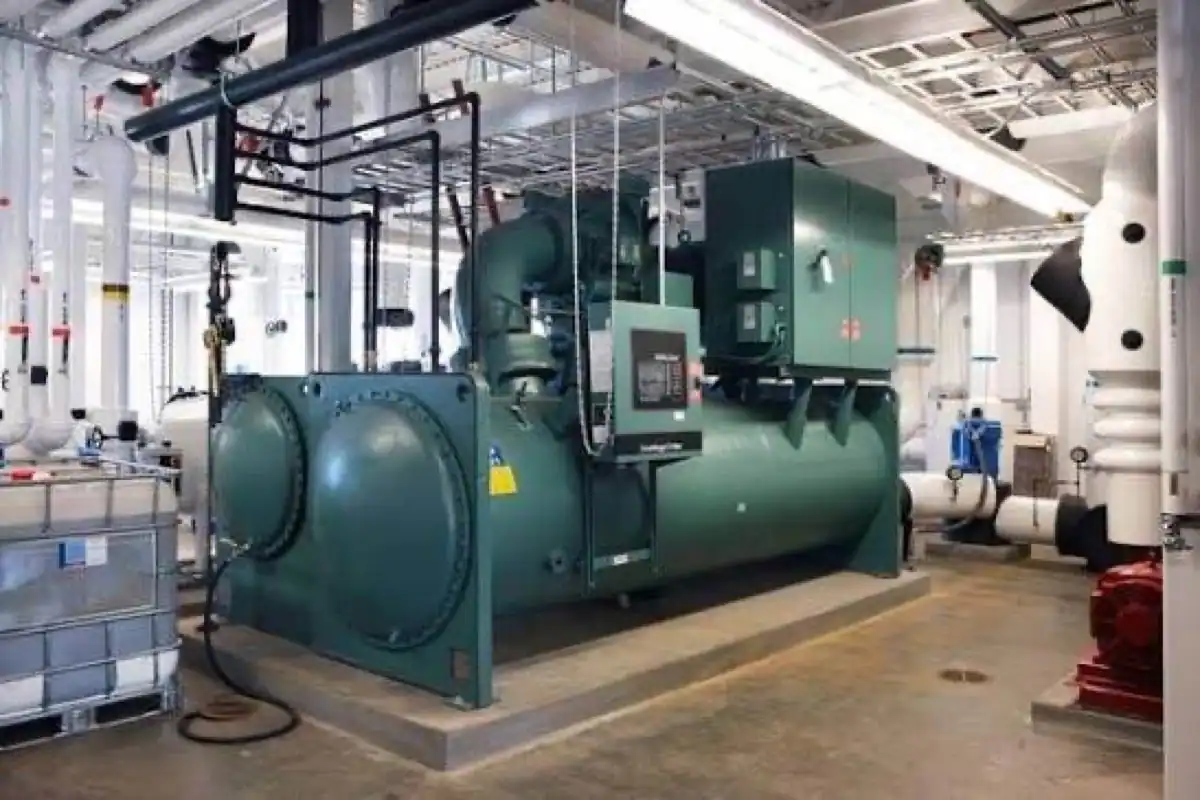
Cooling a warehouse or industrial plant is a different problem than cooling an office tower, and it calls for a different used chiller. You're dealing with high ceilings, big open volumes, heat-generating processes or equipment, loading docks that leak conditioned air all day, and a budget that has to make operational sense. The good news: this is exactly the application where a used chiller shines, because you rarely need the premium redundancy a hospital or data center demands.
We source and resell industrial chillers, and warehouses and plants are one of our most common buyers. Here's how to size, select, and install a used unit for industrial space without overpaying or coming up short in a Florida summer.
Size for the real load, not the floor area
Warehouse cooling loads don't scale off square footage the way office space does. High ceilings mean big air volume; process equipment, forklift traffic, packaging lines, and constantly-opening dock doors all add heat and, in Florida, a serious latent (moisture) load. A rule-of-thumb ton-per-400-square-feet number that works for an office will leave you short in a plant.
The right approach:
- Get an actual load calculation that accounts for process heat, occupancy, ventilation, dock infiltration, and Florida humidity — not just floor area.
- Account for latent load specifically. Florida air carries moisture that a dry-climate estimate ignores. Undersize here and you'll hold temperature but never control humidity, which wrecks packaging, electronics, and stored goods.
- Don't wildly oversize either. An oversized chiller short-cycles, controls humidity poorly, and costs more to run. Our how to size a used chiller guide walks the math.
Most warehouse and light-industrial applications land somewhere in the 50-to-500-ton range. Larger plants with real process cooling can run well past 1,000 tons.
Air-cooled vs water-cooled for industrial space
This is the first real fork for warehouse buyers.
Air-cooled packaged chillers sit outside, need no cooling tower or condenser water loop, and install faster and cheaper. For a lot of warehouses that don't already have a water infrastructure, this is the pragmatic choice. The trade-off is lower efficiency in Florida's heat and a bigger outdoor footprint.
Water-cooled chillers are more efficient and better for larger, continuous loads, but they need a cooling tower, condenser pumps, and water treatment — more infrastructure to buy, install, and maintain. They make sense once you're pushing serious continuous tonnage or already have the water loop.
We break the full comparison down in air-cooled vs water-cooled used chiller. For most standalone Florida warehouses without existing condenser water, a used air-cooled screw chiller is the sweet spot.
What to buy: brands, compressors, refrigerant
Stick with names that have parts support and technician familiarity — York, Carrier, Trane, McQuay, Daikin, and Multistack. For the mid-range tonnage most warehouses need, screw compressors are the workhorse: durable, efficient at part load, and cheaper to service than centrifugals. Very large plant loads move into centrifugal territory; see buying a used centrifugal chiller and buying a used screw chiller.
On refrigerant, favor R-134a, R-513A, or R-1234ze so the unit stays serviceable. An R-22 machine may look cheap up front but the refrigerant is phased out and expensive to source for repairs.
What a used warehouse chiller costs to buy and install
Rough resale ranges for solid running units:
- 50–150 tons air-cooled: 8,000 to 25,000 dollars
- 150–300 tons: 15,000 to 40,000 dollars
- 300–500 tons water-cooled: 25,000 to 60,000 dollars
Then budget for installation. A used chiller in Florida typically runs another 15,000 to 60,000 dollars installed depending on rigging, electrical, piping, controls integration, and whether a cooling tower is involved. Our cost to install a used chiller in Florida guide breaks it out. Factor Florida sales tax and separate delivery and rigging line items into your total.
The industrial buyer's advantage
Warehouses and plants have three things going for them that make used chillers a smart buy:
- You usually don't need N+1 redundancy. A warehouse can tolerate a few hours of warm-up during a service call in a way a hospital OR cannot. That means you can buy one good used unit instead of two premium ones.
- You have room and access. Industrial sites typically have crane access, tall doors, and open mechanical areas — which keeps rigging cost down on both install and any future removal.
- The load is often steady. Steady industrial loads let a used unit run in its efficient range instead of constantly cycling, which is easier on the machine.
Those advantages are exactly why buying direct — from equipment pulled during plant decommissioning rather than flipped through brokers — pays off. You get documented, recently-run tonnage matched to a forgiving application, at a price that makes the whole project pencil out.
Common warehouse-chiller mistakes to avoid
We see the same handful of errors on industrial buys, and each one costs money. Sizing off floor area leaves plants short on the hottest, most humid days when the dock doors have been cycling all afternoon — run a real load calc instead. Ignoring the latent load means holding temperature but never controlling humidity, which quietly damages packaging, electronics, and stored inventory in Florida's climate. Buying an R-22 machine to save a few thousand up front turns into a repair headache the first time the unit needs service, because the refrigerant is phased out and expensive to source. Skipping the rigging walkthrough on install day surprises buyers with crane and access costs that a five-minute site check would have caught. And over-chasing efficiency ratings on a warehouse that runs intermittently rarely pays back the premium — match the machine to how the space actually operates, not to a spec sheet. Run any candidate through our what to inspect before buying a used chiller guide before you commit.
Bottom line
For a warehouse or plant, a used chiller is often the smartest cooling dollar you can spend — provided you size for the real process and latent load, not the floor area, and pick air-cooled or water-cooled based on your existing infrastructure. Stick with serviceable brands and current refrigerants, budget honestly for installation and rigging, and take advantage of the fact that industrial space rarely needs premium redundancy.
Run your target unit through our used chiller buying checklist and know the red flags first. When you're ready, tell us the tonnage and access at your site and we'll match you to the right machine — or if you're clearing a plant, we buy used chillers and industrial equipment for cash.
Looking for used equipment?
We move chillers, boilers, generators, and cooling towers across Florida and nationwide. Tell us what you need.
Ask About Available UnitsMore in Buying Guides
Buying Used Machine Tools From a Plant Closure
Machine tools from a closing facility can be the best value in industrial equipment, provided you evaluate wear, controls and what it takes to move.
Inspecting a Used Industrial Boiler Before You Buy
Pressure vessel condition, jurisdiction paperwork and burner package all decide whether a used boiler is a bargain or an ornament.
Load Testing a Used Generator Before You Buy
Hours mean little without a load test. What to test, what to look for, and what a generator's history tells you.