
Used Chillers for Hotels and Hospitality in Florida
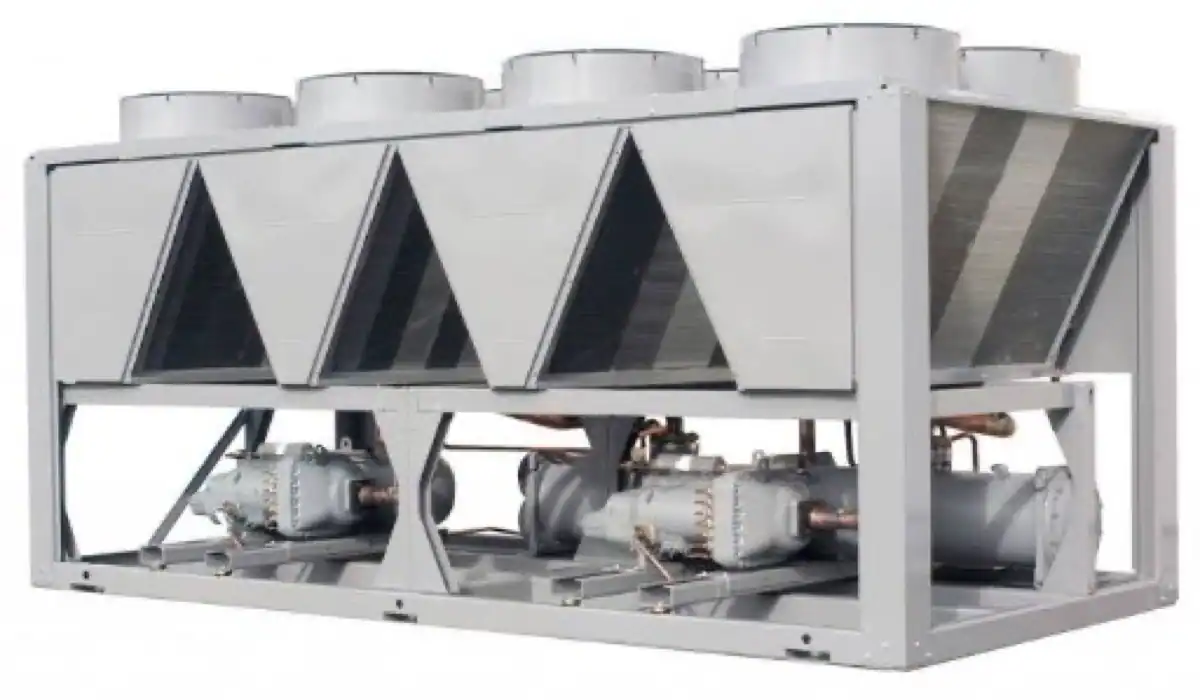
A Florida hotel chiller has one of the hardest jobs in the building. It runs nearly year-round, fights constant humidity, handles occupancy that swings from half-empty on a Tuesday to sold-out on a holiday weekend, and it can't be loud or it wakes the guests. Replace it new and you're looking at a six-figure capital project. Buy the right used unit and you get the same comfort for a fraction of the cost — if you buy correctly.
We source and resell industrial chillers, and hospitality is a market we know well. Here's how to buy a used chiller for a Florida hotel, resort, or condo tower without gambling on guest comfort or your maintenance budget.
Size for humidity and occupancy, not just square footage
Hotel loads are unusual. Guest rooms cycle on and off as occupancy changes, common areas and ballrooms spike hard during events, kitchens and laundries dump heat all day, and the whole thing sits in Florida air that's carrying serious latent load. Size off floor area alone and you'll either come up short during a full house or oversize and waste money short-cycling half the year.
- Get a real load calculation built around peak occupancy, event spaces, kitchen and laundry heat, and Florida's latent (moisture) load — not a square-footage shortcut.
- Prioritize humidity control. Guests notice clammy rooms and mildew smells long before they notice a two-degree temperature difference. A chiller that holds humidity is worth more to a hotel than raw tonnage.
- Plan for the swing. A machine that modulates well down to part load handles the Tuesday-to-Saturday occupancy swing without cycling itself to death.
Most mid-size Florida hotels land in the 150-to-600-ton range; large resorts and convention properties run well past 1,000 tons and often multiple units. Our how to size a used chiller guide covers the math.
Redundancy: the hospitality non-negotiable
Here's where hotels differ from a warehouse. A guest paying 300 dollars a night on a July weekend will not tolerate a warm room, and a full property has no grace period during a compressor failure. That argues for redundancy — either two smaller chillers instead of one big one, or a used standby unit alongside your primary.
The beauty of the used market is that redundancy is affordable here. Buying two reconditioned 300-ton units often costs less than one new 600-ton machine and gives you N+1 coverage. If one goes down mid-summer, the other carries the critical load while you service it. For a revenue property, that resilience usually pays for itself the first time it's needed.
What to buy: brands, sound, refrigerant
Brands. Stick with York, Carrier, Trane, McQuay, Daikin, or Johnson Controls — parts support and technician familiarity matter when you need a fast repair during peak season. See best used chiller brands.
Compressor and sound. Centrifugal chillers are common in larger hotels and run relatively quiet and smooth, which matters when guests are nearby. Screw chillers cover the mid-range well. Whatever you choose, ask about sound and vibration if the unit is near occupied space.
Refrigerant. Favor R-134a, R-513A, or R-1234ze for serviceability. An R-22 machine is cheaper up front but the refrigerant is phased out and costly for repairs — a bad bet on a unit you need running every day. Our used chiller refrigerants explained guide covers the trade-offs.
The Florida realities that hit hotels hardest
Coastal corrosion. Beachfront properties in Miami, Fort Lauderdale, and along both coasts expose chillers to salt air that eats condensers and cabinets. Inspect tube bundles and cabinet bases hard on any coastal unit, and ask for eddy-current results on older machines. Our what to inspect before buying a used chiller guide walks it.
Hurricane season and lead times. Rigging crews and freight tighten from June through November — exactly your peak cooling and peak occupancy window. Buy and install before the season, not during an outage. Emergency replacements in August cost a premium you don't want to pay.
Year-round runtime. Florida hotels don't get a winter break for the chiller. That continuous duty makes documented run history and recent maintenance even more important than in a seasonal climate.
Buy documented, buy direct
Because a hotel chiller can't afford surprises, documentation is everything. When we resell a unit pulled during plant cleanup and decommissioning, the service records and removal photos come with it, so you know what you're installing before it hits the pad. That beats a broker-flipped unit with a stale nameplate photo and no run history — especially for a property where downtime costs real revenue.
Rough resale ranges for solid running hospitality units: 150–300 tons at 15,000 to 40,000 dollars, 300–600 tons at 30,000 to 75,000 dollars. Budget install, rigging, and Florida sales tax on top; see cost to install a used chiller in Florida.
Timing the buy around your season and renovation
Hotels have natural windows to swap cooling equipment, and using them saves money and guest complaints. The best time to install a used chiller is the shoulder season — spring or fall, before the summer heat and before hurricane-season rigging delays — when occupancy is softer and a brief outage in a wing is easier to absorb. If you're already doing a renovation or a PIP (property improvement plan), fold the chiller swap into that project while crews, cranes, and permits are already mobilized. And if you're pulling an old unit as part of the upgrade, that machine still has value — a running or even non-running chiller carries real resale and core worth, so don't let it go to scrap without checking. We buy those units too, which can offset the cost of the replacement. Plan the timing deliberately and a chiller upgrade becomes a routine capital project instead of a mid-summer emergency.
Bottom line
A used chiller is an excellent buy for a Florida hotel — the trick is buying for humidity control and redundancy rather than raw tonnage, and doing it before hurricane season instead of during a mid-summer outage. Size off real occupancy and latent load, favor serviceable brands and current refrigerants, inspect coastal units hard for corrosion, and lean on the used market's affordability to build in the N+1 redundancy that guest comfort demands.
Run any candidate through our used chiller buying checklist and the questions to ask when buying a used chiller. When you're ready, tell us your property's tonnage and access and we'll match you to documented units — or if you're renovating and pulling old equipment, we buy used chillers for cash.
Looking for used equipment?
We move chillers, boilers, generators, and cooling towers across Florida and nationwide. Tell us what you need.
Ask About Available UnitsMore in Buying Guides
Buying Used Machine Tools From a Plant Closure
Machine tools from a closing facility can be the best value in industrial equipment, provided you evaluate wear, controls and what it takes to move.
Inspecting a Used Industrial Boiler Before You Buy
Pressure vessel condition, jurisdiction paperwork and burner package all decide whether a used boiler is a bargain or an ornament.
Load Testing a Used Generator Before You Buy
Hours mean little without a load test. What to test, what to look for, and what a generator's history tells you.