
How Equipment Recovery Offsets Demolition Cost
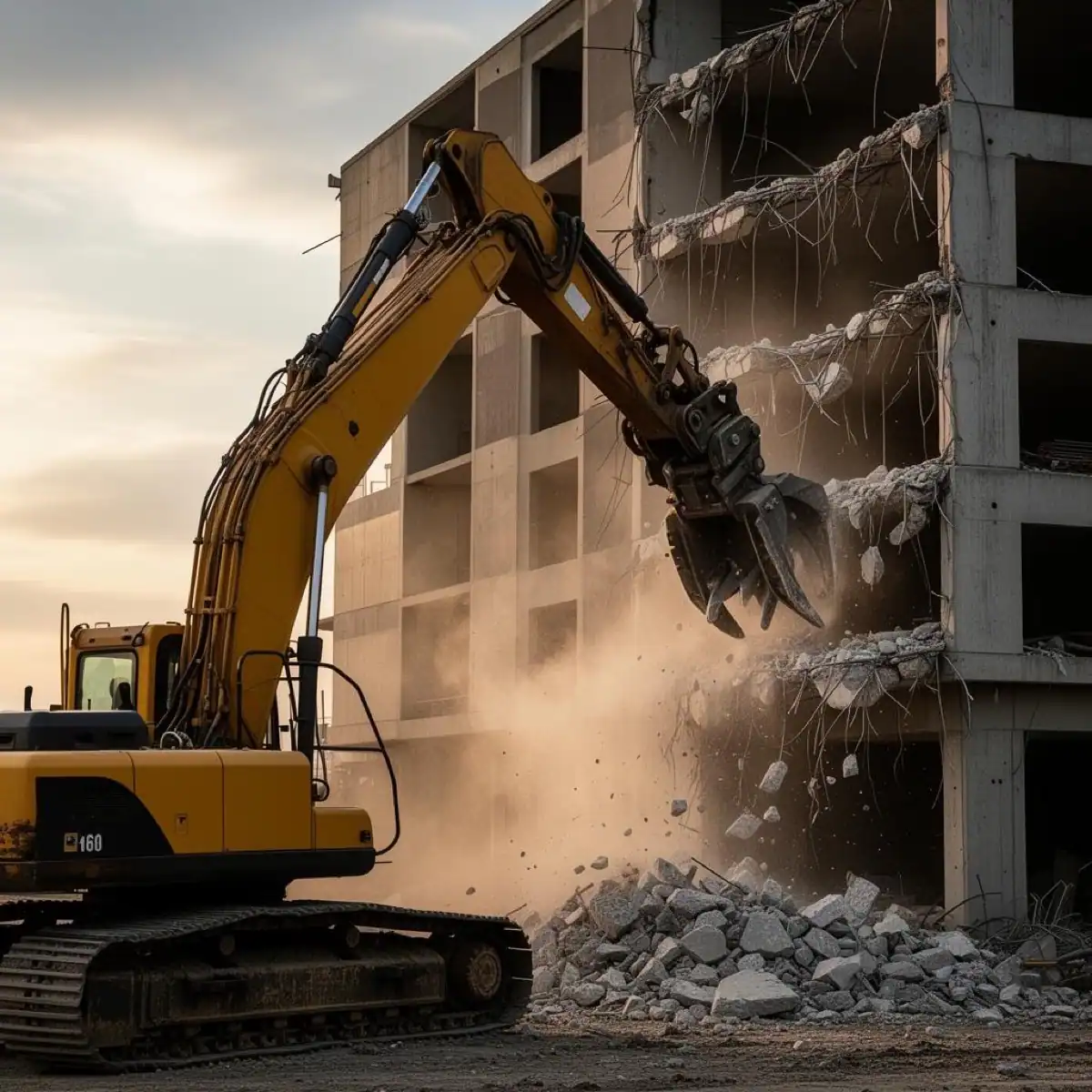
For an investor or owner facing an industrial demolition, the headline number on the bid is rarely the number you actually pay. The equipment inside the building has value, and when that value is captured and applied against the demolition cost, the net figure can drop dramatically — sometimes to near zero. The catch is that this only happens when recovery and demolition are run as one integrated deal. Treat them as separate projects and the recovery value leaks away. Here is the math and the method.
We run recovery and demolition together through our industrial demolition and plant cleanup work. Here is how it pencils out.
The two-column math
Every industrial teardown has two columns: what it costs to take the building down, and what the contents recover. The net is the difference.
The cost column — demolition labor and equipment, hazmat abatement, hauling and disposal, permits, and documentation.
The recovery column — resale value of working equipment, component value of partially reusable gear, and scrap value of the metal (copper, aluminum, ferrous steel).
The mistake most owners make is looking only at the cost column, because that is what the demolition bid shows. But a plant full of chillers, boilers, generators, switchgear, and transformers has a recovery column that can rival or exceed the demolition cost. Ignore it and you overpay by the entire value of the equipment.
The numbers that matter
Facilities that systematically inventory, market, and sell their equipment recover 30 to 60 percent of their gross demolition cost through asset sales. Facilities that treat everything as scrap recover 5 to 15 percent. That gap — roughly 20 to 50 points of the gross cost — is pure return on running recovery deliberately.
Put concrete numbers on it. Say a plant's gross demolition cost is 400,000 dollars. Run as scrap-only, recovery might cover 40,000, leaving a net of 360,000. Run with deliberate equipment recovery, the same building might recover 180,000 in asset sales, leaving a net of 220,000. Same building, same demolition — a 140,000 dollar swing that comes entirely from how the equipment was handled.
Where the recovery value lives
Not all equipment recovers equally. The value concentrates in a few categories:
- Chillers, boilers, and generators — direct end-buyers pay resale value on working units, often multiples of scrap.
- Switchgear and MCCs — the breakers and buckets carry more resale value than the copper bus they sit on.
- Transformers — tested units sell for several times their metal content; we buy them directly through our transformer program.
- Cooling towers — sound FRP and stainless units resell whole; even corroded ones yield a valuable mechanical package.
We buy most of these categories directly through the sell hub, which is what lets the recovery value get applied straight against the demolition instead of disappearing into a broker's margin or a scrap yard's spread. For the underlying resale-versus-scrap logic, see scrap versus resale value of industrial equipment.
Why "one deal" matters
The recovery only offsets the cost if the same party handles both sides. Here is why that is not just convenient but financially load-bearing:
Sequencing. When one contractor runs both, the high-value equipment comes out first, undamaged, while the site is clean — then demolition proceeds. Split the work between two parties and the demolition schedule pressures the equipment removal, which damages assets and shrinks offers.
Applied value. With one integrated deal, the recovered equipment value is credited directly against the demolition invoice. You see a single net number. Split it up, and you get a big demo bill from one party and a separate, smaller equipment check from another — and the psychological and accounting reality is that the two rarely get reconciled into the true net.
No double margins. A recovery-plus-demolition contractor does not take a broker's cut on the equipment, because they are the end-buyer. That margin stays in your pocket.
How to run it
- Inventory early — before a demo date is set, walk the floor and identify every resellable asset.
- Get recovery quotes fast — a good buyer quotes from photos and nameplates inside 48 hours, so you know the recovery column before you commit.
- Integrate the bid — have the contractor price demolition and credit recovery in one net figure.
- Sequence high-value first — pull the chillers, transformers, and switchgear before the strip-out.
The deeper operational detail lives in our guide on selling equipment during a plant closure.
Get your net number
Based in Auburndale and working statewide across Florida, we price the demolition, inventory the equipment, and give you one net figure with the recovery already applied. Call (689) 323-4676 or start through the plant cleanup page, or send equipment photos through the sell hub to see the recovery side first.
The demolition bid is not the price — it is only the cost column. Capture the recovery column, run it as one deal, and the equipment inside the building will pay for a large share of tearing it down.
Fix-and-flip or rehab portfolio?
House gut-outs in 2–5 days. Volume pricing for repeat investors.
Get an Investor QuoteMore in Investor Guides
What It Costs to Get an Industrial Parcel Development-Ready
Between buying a closed plant and putting something new on it sits a set of costs that are predictable if you ask for them.
Buying a Closed Industrial Plant: What to Check First
Closed plants trade at a discount for reasons. Environmental status, structure, equipment and demolition cost decide whether the discount is real.
Gutting a House After Water Damage in Florida
Flooded and storm-damaged houses need a specific kind of gut-out, fast. What comes out, how far up the wall, and why the clock matters in Florida's climate.