
Gut Renovation Cost per Square Foot: The Demolition Half
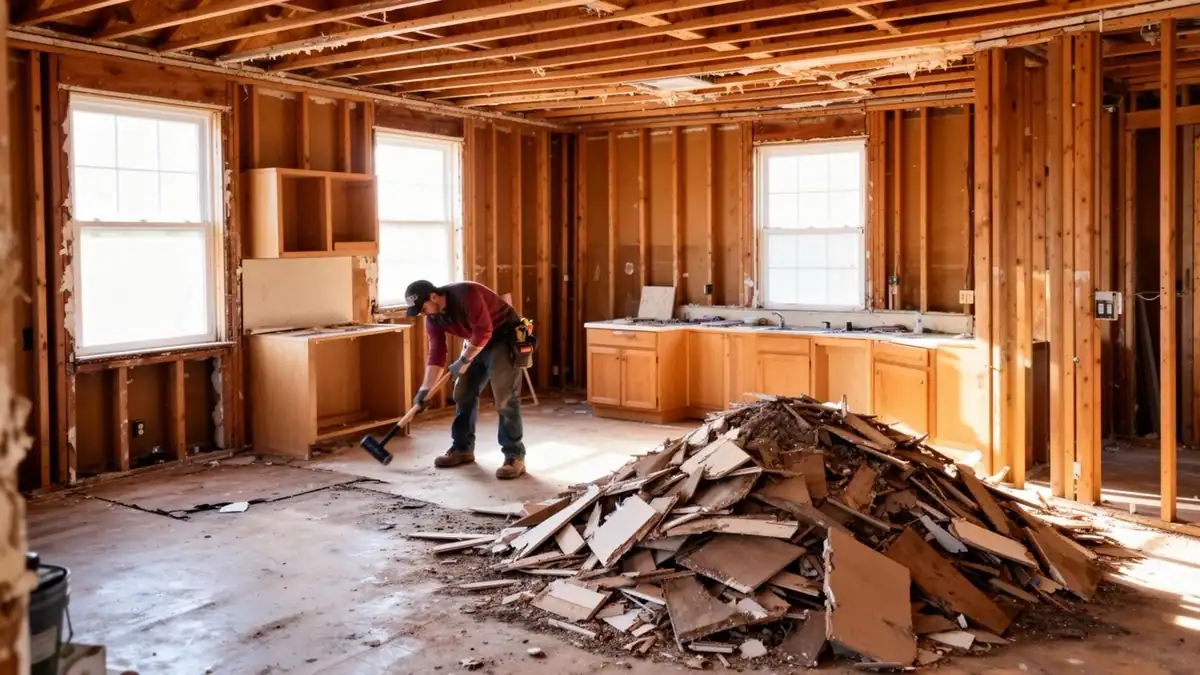
Every investor budgets the finish work carefully and eyeballs the demo. Then the demo line runs over, the schedule slips two weeks, and the whole project's math gets worse — because on a rehab, the demolition is not just a cost, it is the gate everything else waits behind.
Here is how to budget it properly.
What "gut" actually means — pick one
The word covers four different scopes, and they are not close in price:
Cosmetic strip. Flooring, fixtures, cabinets, appliances, and paint prep. The walls stay closed. Fast and cheap.
Partial gut. Kitchen and baths to studs, plus selective walls. Mechanical systems partly out. This is the most common flip scope.
Full gut to studs. All drywall and plaster, all flooring down to subfloor, ceilings, all cabinetry and fixtures, all mechanical, electrical, and plumbing removed. Structure and sheathing remain.
Gut to frame. Everything above, plus interior non-structural walls removed for a new layout, and sometimes sheathing or roof deck.
Before you get a number, decide which one you are buying — and put it in writing. Half the disputes on rehab demo start with an owner who said "gut it" meaning the third definition and a crew that priced the first.
The real cost drivers
Debris volume, not floor area. Plaster-and-lath generates several times the debris weight of drywall. A house with three layers of flooring over a 1940s subfloor produces far more than a house with one. Old heavy cabinetry, tile set in mud beds, and multiple roof layers all add tonnage. You pay by the container.
Access. Ground-floor with a driveway where a dumpster can sit next to the door is the cheap case. Third-floor walkup, no parking, permit needed for a dumpster on the street, or an HOA restricting hours — each of those adds labor hours to move the same material.
Hazardous materials. Pre-1978 means lead paint and RRP rules if the work disturbs painted surfaces. Pre-1990 means asbestos is likely in floor tile, mastic, popcorn ceilings, pipe insulation, and siding. Testing is cheap. Discovering it mid-demo is not, because the work stops.
Structural work. Removing a load-bearing wall means an engineer, a beam, temporary shoring, and an inspection. That is not demo pricing, that is structural pricing, and it belongs in a separate line.
Mold and water damage. Frequently discovered rather than expected. Budget a contingency for it on any property with a history of leaks — see mold remediation vs. demolition gutting.
Where the budget actually breaks
Three things blow up demo budgets on rehabs, and all three are avoidable:
- Scope creep during demo. Walls come down, the layout suddenly seems changeable, and one more wall becomes five. Every change adds days and often adds structural work.
- Undiscovered conditions. Knob-and-tube wiring, cast iron drain lines that crumble, termite damage, a roof deck that fails inspection. This is what the contingency is for — a rehab demo budget without a contingency is not a budget.
- Schedule drag. Demo delays push every trade behind it, and on a flip, carrying cost per day is real money. A crew that finishes a gut in four days instead of twelve is worth paying more per hour.
How to buy it well
Get a fixed price on a defined scope, with the debris disposal included and the container count stated. Time-and-materials demo on a rehab is an invitation to drift.
Test before you buy the house, if you can, or immediately after closing. Lead and asbestos results change the number.
Pay for speed. On an investor project, the demo contractor who mobilizes a real crew and clears the building in days is cheaper in total than the cheap two-person outfit that takes three weeks while you pay carrying costs.
Ask about volume pricing if you run multiple properties. We price repeat investor work differently than one-off jobs, because scheduling predictability is worth something to us too — see house gutting.
What the demo crew should hand back
A property ready for the next trade: everything specified removed, the building swept, debris gone, no dumpster left sitting, and any surprises documented with photos so you can price the change intelligently rather than argue about it.
Related reading
We gut houses and commercial interiors across Florida on investor timelines, with fixed scopes and volume pricing for repeat clients. Call (689) 323-4676 or request a quote.
Fix-and-flip or rehab portfolio?
House gut-outs in 2–5 days. Volume pricing for repeat investors.
Get an Investor QuoteMore in Investor Guides
What It Costs to Get an Industrial Parcel Development-Ready
Between buying a closed plant and putting something new on it sits a set of costs that are predictable if you ask for them.

Buying a Closed Industrial Plant: What to Check First
Closed plants trade at a discount for reasons. Environmental status, structure, equipment and demolition cost decide whether the discount is real.
Gutting a House After Water Damage in Florida
Flooded and storm-damaged houses need a specific kind of gut-out, fast. What comes out, how far up the wall, and why the clock matters in Florida's climate.