
Boiler Room Decommissioning: What Comes Out and in What Order
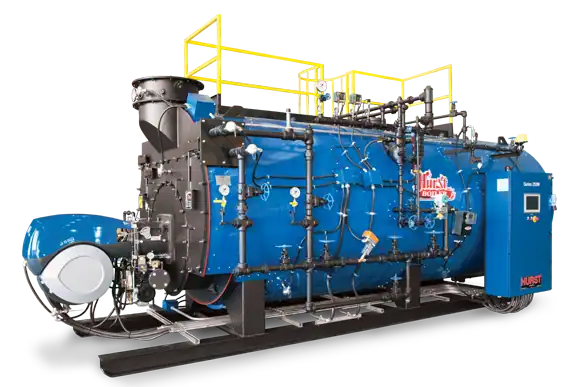
Boiler rooms are among the most system-dense spaces in a facility. Fuel comes in, water comes in, steam or hot water goes out, combustion gases go up the stack, and everything is at pressure and temperature when it is running. Decommissioning one is a matter of taking those systems down in the right order, and then deciding what the boiler itself is worth.
Isolation first
Nothing is unbolted until the boiler room is dead.
Fuel. Natural gas is isolated at the meter and the line to the burner is capped. Fuel oil is isolated at the tank, the day tank and lines are drained, and the oil is removed. If the plant has an underground oil tank, that tank enters its own closure process, described in underground storage tank closure in Florida.
Electrical. Burner controls, feedwater pumps, combustion air fans, and controls are locked out at the source.
Water. Makeup water is isolated. The boiler and all connected vessels are cooled and drained. Boiler water contains treatment chemicals and is handled accordingly, not discharged to a storm drain.
Steam and condensate. The distribution system is depressurized, drained, and its isolation valves closed and tagged. On a large plant the steam network extends throughout the building, and the boiler room work does not begin until the network is confirmed dead at every point a crew will be working.
The general approach to this phase is in utility isolation and lockout during a plant decommissioning.
Asbestos on older boilers
Boilers installed before the 1980s are frequently insulated with asbestos-containing material, and the steam piping around them almost always is. Gaskets, refractory, and door seals can also contain it. The asbestos survey has to cover the boiler room specifically, and abatement happens before any removal work disturbs the insulation. This is the one item that most often surprises owners on a boiler decommission and it should be planned from the start.
Deciding what the boiler is worth
Firetube boilers, condensing hot water boilers, and packaged watertube units all have a secondary market when they are serviceable. What determines the value is age, capacity and pressure rating, fuel type, burner condition, and whether the pressure vessel has a current inspection record. A unit that was running last month with a clean inspection is a very different proposition from one that has sat cold for years.
We buy used boilers directly and appraise them before the decommissioning is priced. The appraisal is credited against the work. A boiler that does not have resale value is scrapped, and a boiler is a lot of steel, so even that has some value. The factors that drive the number are laid out in what is a used boiler worth.
Getting it out
Boilers are heavy, and boiler rooms are often in basements or in the interior of the building with no direct route to a dock. Removal is a rigging problem. Packaged units that fit through an opening are skated and lifted out whole. Larger units or units in constrained rooms are cut into sections, which ends any resale and makes the choice for you. This is another reason to make the value decision early: a boiler that is going to be sold is removed intact through whatever opening it takes, and that is planned with the demolition so a wall or roof section is opened at the right time.
Stack, breeching, and auxiliaries
The stack and breeching are removed as scrap after the boiler. Feedwater tanks, deaerators, blowdown tanks, chemical feed systems, and pumps are removed and either sold or scrapped. Water softeners and chemical storage are emptied and the chemicals handled by a licensed hauler.
Frequently Asked Questions
Can a boiler be sold if it has been off for a while?
Sometimes. Value drops with time cold and with a lapsed inspection. A boiler that was drained and stored properly is easier to sell than one that sat with water in it.
Does the boiler room need an asbestos survey?
Yes, and older boiler rooms are the most likely area of a building to test positive. Budget for abatement.
Who removes the fuel oil?
A licensed hauler. We coordinate it as part of the isolation phase.
What if the boiler will not fit out the door?
Then it either goes out through an opening created for it or it is cut in place. The first option preserves resale; the second does not. We plan that with the rest of the project.
Demo Dynasty handles boiler room and full plant cleanup projects across Florida and the Southeast from Auburndale, FL. Call (689) 323-4676 or request a quote.
Decommissioning a facility?
Full plant cleanup — equipment recovery, hazmat-aware, turnkey scopes.
Get a Plant Cleanup QuoteMore in Plant Cleanup
Utility Isolation and Lockout During a Plant Decommissioning
Every energy source in a facility has to be identified, isolated and verified before removal work starts. This is the plan that prevents the serious incidents.
What to Do With Process Piping
Miles of pipe in an industrial facility is either a disposal cost or a recovery, depending on what ran through it and how it comes out.
Closing Out a Plating Line or Process Tank System
Process tanks, plating lines and waste treatment systems have to be emptied, cleaned and documented before anything structural happens. The order is not negotiable.