
Chiller Removal and Rigging Cost
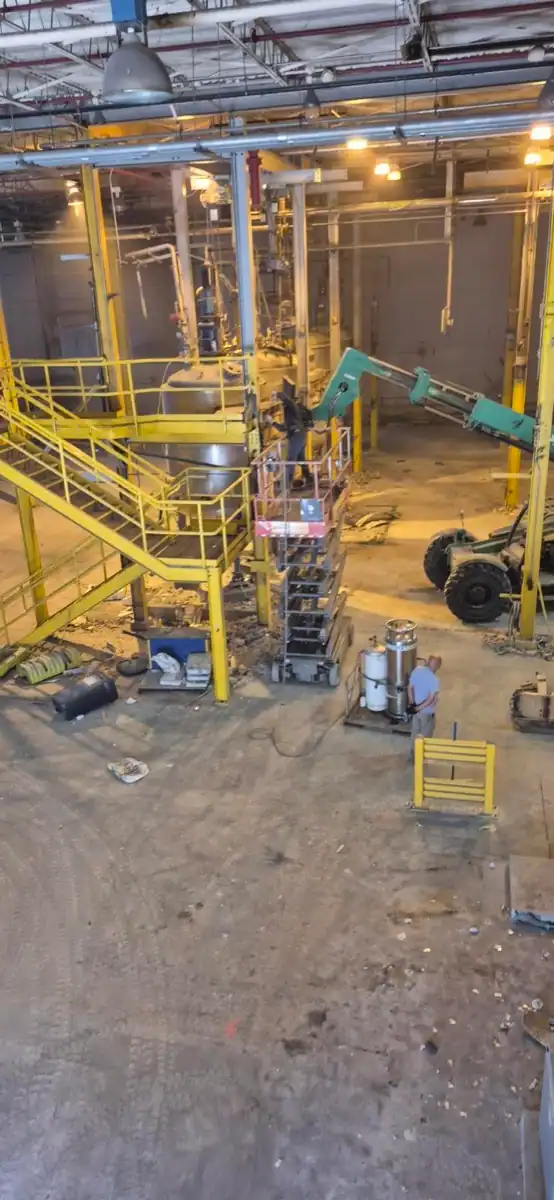
Removal and rigging is the line item that quietly decides what your chiller is actually worth to you. Two identical 500-ton units can carry very different net values purely because one sits on a roof with clear crane access and the other is buried in a basement mechanical room down a narrow corridor. When a buyer prices your chiller, they're subtracting the removal cost from the resale value — so understanding what rigging really costs tells you why offers land where they do.
Here's how removal actually prices out, and why selling to a buyer who folds it into the offer usually beats doing it yourself.
What goes into a removal job
A chiller removal is several jobs stacked together, and each one is a cost:
- Refrigerant recovery. EPA Section 608 requires a certified tech to recover the charge before the unit is opened. On a large chiller that's a meaningful chunk of time.
- Electrical disconnection. De-energizing, disconnecting feeds, and handling the starter and VFD safely.
- Piping disconnection and draining. Cutting and capping chilled- and condenser-water lines and draining the barrels.
- The rig itself. Skates, jacks, gantries, or a crane to move a machine that can weigh 10,000 to 40,000-plus pounds.
- Transport. Flatbed or lowboy freight to the buyer or yard.
- Disposal. Any debris, insulation, or non-salvageable material left behind.
Skip any of these and the job isn't done — the pad isn't clear and your books aren't closed.
What drives the price up or down
Access is everything. A rooftop unit a crane can reach in a single pick is the cheap end. A basement or interior mechanical-room unit that has to be skated through corridors, around corners, and possibly out through a temporary wall opening is the expensive end. The difference between those two scenarios can be several times the cost.
Weight and size. Bigger tonnage means heavier machines, larger cranes, and more rigging. A 150-ton packaged unit is a different job than a 1,200-ton centrifugal.
Rigging method. A single crane pick with good access is efficient. Machine skates, gantry systems, and multi-stage moves through a building take crew hours and add up fast.
Site conditions. Floor loading limits, tight docks, active operations next door, and restricted work windows all add cost.
Distance to disposal or delivery. Freight scales with weight and miles.
Rough cost ranges
Every job is specific, but to set expectations: a straightforward rooftop or ground-level chiller with crane access can run into the low four figures for removal and rigging. A larger unit, or one with difficult interior access requiring skating and a temporary opening, climbs well into the mid four figures or higher once you stack recovery, rigging, freight, and disposal. Very large or badly-accessed machines can exceed that meaningfully.
The point isn't the exact figure — it's that this cost comes out of your chiller's value one way or another. See what is my used chiller worth for how access difficulty factors into an offer.
Why a direct buyer folding it in usually wins
If you sell "as-is, buyer removes," a direct buyer prices the removal into their offer and eats the logistics — the crane, the certified recovery tech, the freight, the disposal, and the liability. You get a single net number and an empty pad.
Compare that to running it yourself: you're hiring a rigging company, coordinating a refrigerant tech, arranging freight, and carrying the liability, all to sell a unit you then still have to market. Unless you're an HVAC contractor with in-house rigging, the direct-buyer path nets more and takes far less of your time. A broker who doesn't do the removal is guessing at your access difficulty and tends to underpay to protect their downside — that guess is exactly the uncertainty a direct buyer removes. See how to sell your used chiller in Florida and how to decommission a chiller.
A realistic removal timeline
Once an offer is accepted, a straightforward chiller removal is a one-day job, sometimes two. The crew arrives, a certified tech recovers the refrigerant, the electrical and piping come off, the unit is rigged out and loaded, and the pad is swept. A rooftop unit with a single crane pick can be done in a morning. A large interior centrifugal that has to be skated through a building, or one needing a temporary wall opening cut and patched, runs longer and may involve a second mobilization for the crane. The mistake that blows up a timeline is discovering the rigging path is worse than assumed on removal day — a doorway that's two inches too narrow, a floor that won't take the load, a dock that's been closed off. Walking the actual path before the offer is finalized is what keeps the removal to a day. This is also why a buyer who does their own rigging can commit to a firm pickup window while a broker often can't.
The Florida angle
In Florida, a lot of chillers sit on rooftops or ground-level pads with decent crane access, which keeps rigging costs reasonable on many jobs. Coastal and multi-story facilities are the harder cases, and salt-air corrosion on older mounting hardware occasionally adds a wrinkle. Either way, our chiller offers include full rigging and removal, and when a removal is part of a larger plant cleanup the whole thing is one coordinated job instead of three separate vendors.
Bottom line
Removal and rigging can range from a modest four-figure job on an accessible rooftop unit to a substantial one on a buried, hard-access machine — and that cost comes straight out of your chiller's net value. The smart move for most sellers is to sell as-is to a direct buyer who folds rigging, recovery, freight, and disposal into a single number. Get a cash offer or contact us and let the crew that does this every week handle it.
Got equipment to sell?
Cash offers in 24–48 hours. Nationwide pickup. Any condition.
Get a Cash OfferMore in Selling Equipment
Selling a Chiller Plant: Whole or Piece by Piece?
A complete central plant sometimes sells better as a system than as components. Here is how to tell which case you are in.
Why Removal Access Changes What Your Equipment Is Worth
A buyer prices the equipment and the extraction together. What you can do about access, and what it is worth.
What Actually Determines Used Equipment Resale Value
Age matters less than most sellers assume. Condition, documentation, removal difficulty and market depth matter more.