
Parking Lot and Asphalt Removal: What Drives the Cost
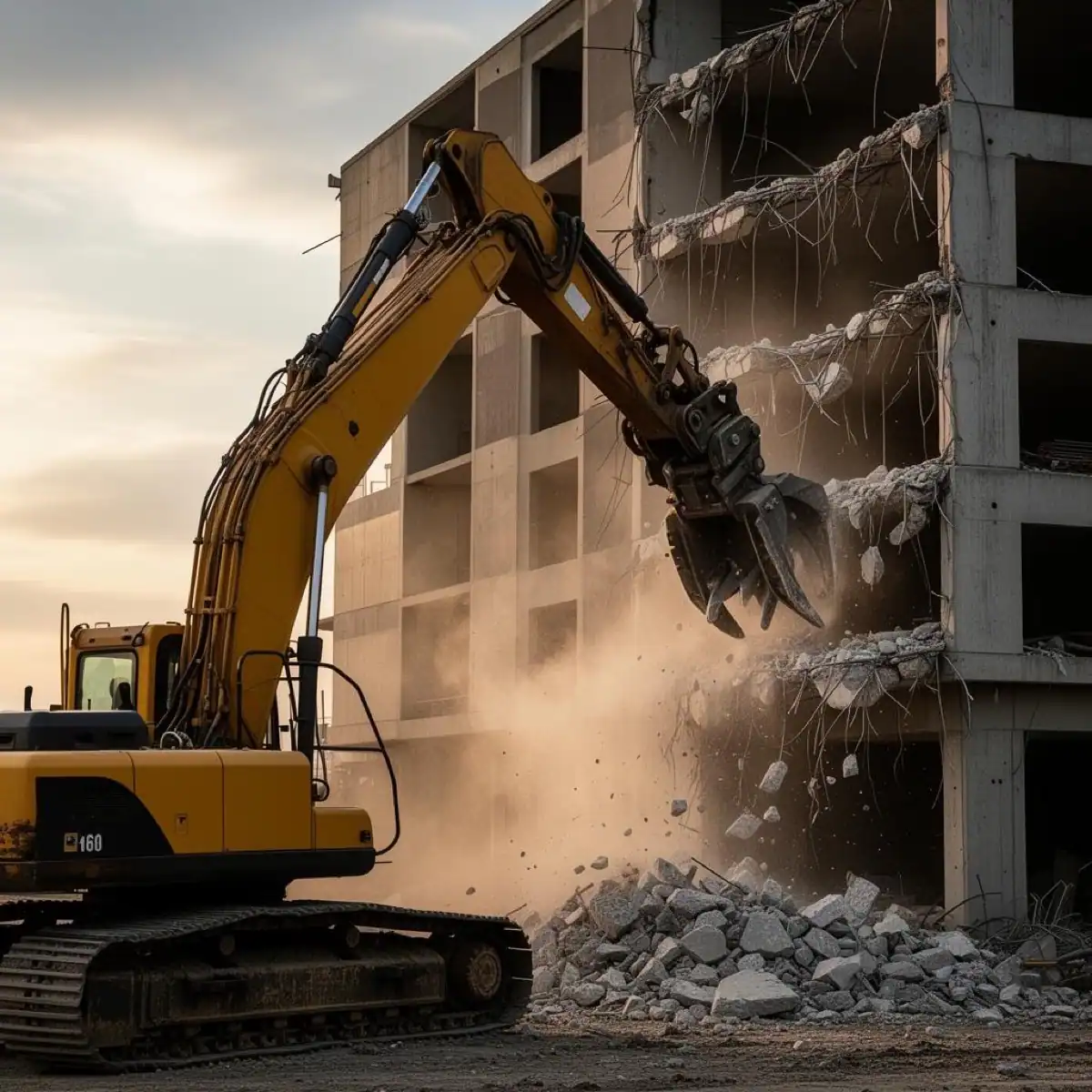
On a lot of redevelopment sites in Florida, the pavement covers more ground than the building did. A single-story retail or industrial property might sit on a two-acre parking field, and every square foot of it has to be dealt with before the site is buildable. Here is how pavement removal is scoped and what moves the price.
Full-depth removal versus milling
There are two fundamentally different jobs that both get called "removing the parking lot."
Milling grinds off the top layer of asphalt so a new surface can be laid on the existing base. It is fast, the millings are recyclable, and the base stays. This is a paving job, not a demolition.
Full-depth removal takes out the asphalt or concrete and, usually, the limerock or crushed base beneath it, down to native soil, so the site can be regraded and rebuilt. This is demolition, and it is what a redevelopment needs.
Confirm which one the site plan calls for before taking bids. The numbers are not close.
Asphalt versus concrete
Asphalt lots in Florida are typically a few inches of asphalt over a compacted limerock base. The asphalt is broken and loaded quickly, and it goes to an asphalt plant for recycling at a low rate or a credit. The base is heavier and bulkier and is either reused on site as fill or hauled.
Concrete lots and truck aprons are thicker, heavier, and often reinforced. Concrete is broken with an excavator-mounted hammer or a processor, the rebar or wire mesh is separated for scrap, and the concrete goes to a crushing facility. The tonnage is much higher than asphalt for the same area.
What is embedded in the lot
The pavement is never just pavement. A typical commercial lot also has:
- Concrete curbs, gutters, and landscape islands, each removed separately from the field paving.
- Light poles on concrete bases, with conduit runs between them that are often live until the service is disconnected.
- Storm inlets, pipe, and sometimes an underground detention system that the site engineer may or may not want kept.
- Wheel stops, bollards, signage bases, and dumpster enclosures.
- Irrigation lines in the islands.
Each of these adds labor and disposal that a per-square-foot number does not capture. A site walk is how these get counted.
Reusing the material on site
On a large site the most economical move is often not to haul anything. Asphalt millings make excellent temporary road and staging material. Crushed concrete makes structural fill and base. If the redevelopment needs fill, crushing on site can turn a disposal cost into a material credit. We lay out that decision in crush it on site or haul it away.
The limerock base is frequently reused as well. If the site is being regraded rather than excavated, that base material stays and is reshaped, which cuts the hauling to the asphalt alone.
Sequencing with the building demolition
Pavement removal is generally the last thing to happen, after the building is down and hauled, because trucks need somewhere to stage and a lot is the best staging area a site has. On some projects the pavement stays until the site contractor mobilizes, and the demolition scope stops at the building and slab. That is a legitimate way to save money, but it has to be written into the scope so everyone is bidding the same job. The same logic applies to slabs, covered in concrete slab removal cost.
Frequently Asked Questions
Is it cheaper to leave the parking lot and pave over it?
For a resurfacing, yes, milling and overlay is far cheaper than removal. For a redevelopment with a new building footprint and new stormwater, the pavement almost always has to come out.
What happens to the old asphalt?
It goes to an asphalt plant for recycling into new mix, or it is ground on site into millings for temporary roads and staging.
Do the light poles have value?
The poles and fixtures are typically scrapped for the aluminum and steel. Newer LED fixtures occasionally have resale value. The copper in the conduit runs is worth recovering.
Can the base material stay?
Often, if the site is being regraded rather than excavated. Confirm with the civil engineer; leaving the base can substantially cut the hauling.
Demo Dynasty handles pavement removal as part of full-site demolition and debris removal across Florida and the Southeast from Auburndale, FL. Call (689) 323-4676 or request a quote.
Need an interior stripped?
Nationwide interior demolition crews. Fast scheduling. Clean hand-offs.
Request a Demo QuoteMore in Demolition
Strip Mall and Retail Center Demolition in Florida
Older retail centers are coming down across Florida for redevelopment. Here is what drives the cost and schedule on a strip mall teardown.
Gas Station Demolition: What Is Actually Involved
A gas station teardown is a tank closure, a canopy removal, and a building demolition rolled into one regulated project. Here is how it sequences.

Hotel and Motel Demolition in Florida
Florida's aging roadside motels and mid-century hotels are prime redevelopment sites. What drives cost and schedule when one comes down.