
What to Do Before the Demolition Crew Arrives
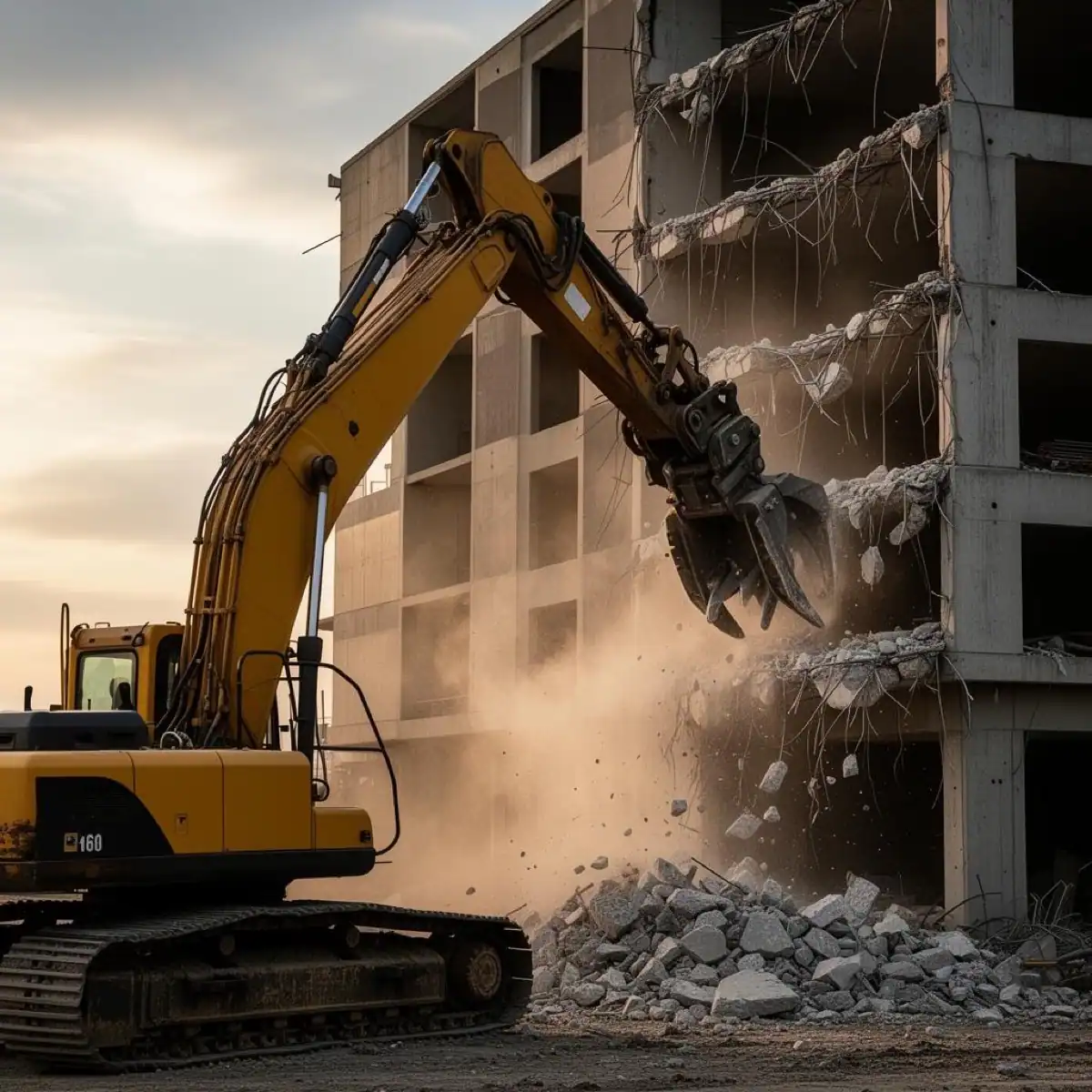
A demolition contract covers the building. What is in the building, what is connected to it, and who has access to it are the owner's responsibility until the handover, and how well that handover goes affects the schedule and the invoice more than most owners expect. Here is what to have done before the first machine arrives.
Utilities: confirmed off, not just requested
Power, gas, water, sewer, and communications all have to be formally disconnected by the provider and, for most jurisdictions, documented before the permit closes. This is not the same as turning off the breaker. The utility removes the meter, pulls the service, or caps the line at the main, and issues a confirmation.
Start this process the day the building is vacated. It is the most common reason a demolition start slips, and we explain why in utility disconnection: the step that delays everything. On demolition day, the crew will verify every service dead before touching anything, but they cannot start if the provider has not finished.
Contents: out, sold, or explicitly included
Decide what happens to everything inside. Furniture, inventory, files, tenant fixtures, racking, and equipment either leave before the crew arrives, get sold, or get written into the demolition scope as included debris. Anything in the building on demolition day that is not in the scope is a change order.
Equipment deserves particular attention. Mechanical and electrical equipment often has more value than owners assume, and it is worth far more intact than crushed. If the building has chillers, generators, transformers, switchgear, compressors, or process machinery, get it appraised before the schedule is set. We buy that equipment and credit its value against the demolition, but only if it is still standing when we look at it.
Hazardous and regulated items
Some things cannot go in the general debris stream and need to be identified before the job.
- The asbestos survey, completed and the abatement done or scheduled.
- Refrigerant in any air conditioning or refrigeration equipment, reclaimed by a certified technician.
- Fluorescent lamps and ballasts, which are handled as universal waste.
- Fuel in tanks, generators, and vehicles. Above-ground tanks need to be emptied. Underground tanks are a separate closure process entirely.
- Chemicals, paints, solvents, propane cylinders, fire extinguishers, and batteries.
- Mercury switches and thermostats in older buildings.
An owner who walks the building with a list and deals with these items ahead of time avoids a stop-work when the crew finds them.
Access and staging
The crew needs a place for machines, trucks, and dumpsters, and trucks need a clear route in and out. Confirm gate keys or codes, remove vehicles from the lot, and identify where the staging area will be. If the site shares access with a neighbor or an operating tenant, agree on the route and hours before the job, not on the morning of.
Neighbors and notice
Tell adjacent property owners and tenants what is happening and when. Demolition is loud and dusty, and a neighbor who knew it was coming is far easier to work next to than one who did not. Some jurisdictions require formal notice; even where they do not, a short conversation is worth the time. If the work is close to an occupied building, the contractor may want to document the neighbor's existing conditions first, which is covered in demolishing next to an occupied building.
Documentation to hand over
The demolition contractor will want: the permit (or the information to pull it), the asbestos survey and abatement clearance, utility disconnect confirmations, any drawings of the building and site, records of underground tanks or lifts, and a contact who can make decisions during the job. A single decision-maker with a phone that gets answered is the most valuable thing on this list.
Frequently Asked Questions
What if I cannot get everything out in time?
Tell the contractor before demolition day. Contents can be added to the scope as debris, but the price and schedule need to reflect it.
Does the contractor handle the utility disconnects?
We coordinate them on most jobs, but the account holder has to authorize each one, and the provider controls the timing. Start early.
Can equipment be sold after the demolition starts?
It is much harder. Once the building is opened up, equipment is exposed and access changes. Appraise and sell before mobilization.
What should be left for the crew?
The building, the site, the keys, and the paperwork. Everything else should be gone or explicitly in the scope.
Demo Dynasty handles demolition, equipment recovery, and debris removal across Florida and the Southeast from Auburndale, FL. Call (689) 323-4676 or request a quote.
Need an interior stripped?
Nationwide interior demolition crews. Fast scheduling. Clean hand-offs.
Request a Demo QuoteMore in Demolition
Strip Mall and Retail Center Demolition in Florida
Older retail centers are coming down across Florida for redevelopment. Here is what drives the cost and schedule on a strip mall teardown.
Gas Station Demolition: What Is Actually Involved
A gas station teardown is a tank closure, a canopy removal, and a building demolition rolled into one regulated project. Here is how it sequences.
Hotel and Motel Demolition in Florida
Florida's aging roadside motels and mid-century hotels are prime redevelopment sites. What drives cost and schedule when one comes down.