
The Scrap Value of a Commercial Chiller
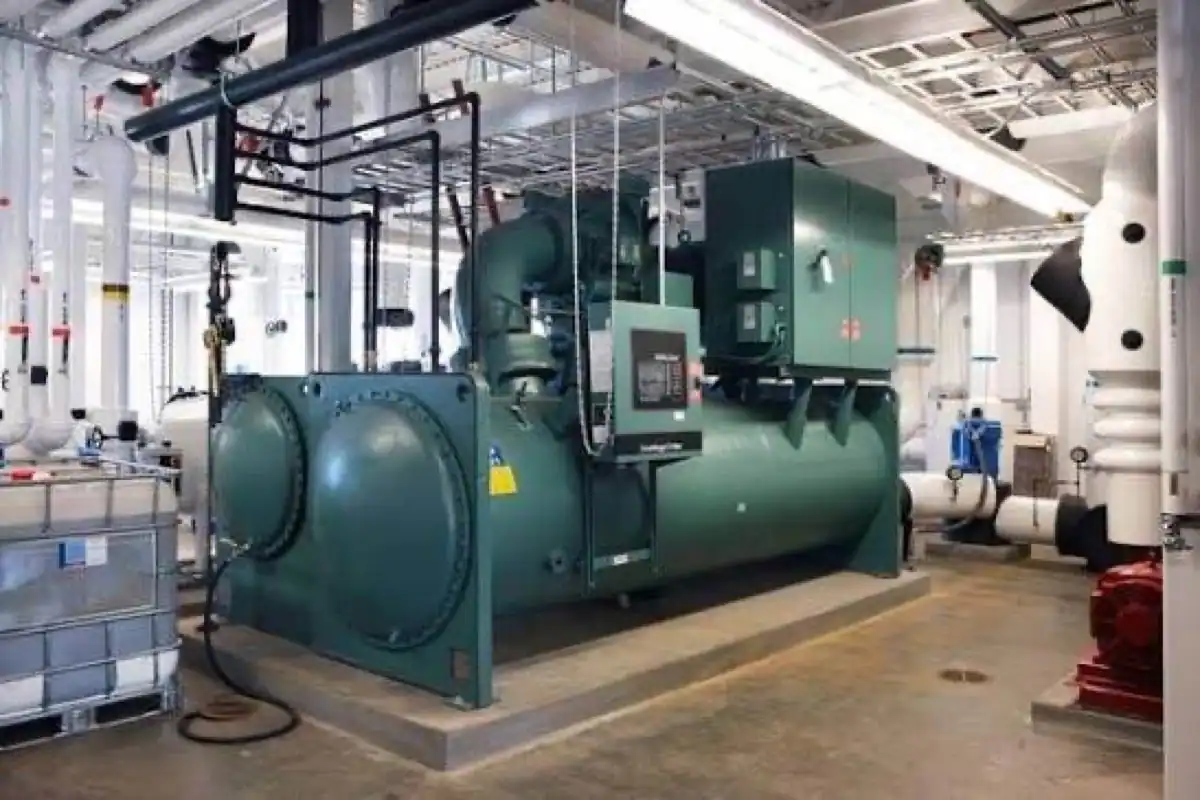
When a facility manager calls a scrap yard about an old chiller, the quote comes back based on one thing: metal weight. Copper, steel, aluminum, priced by the pound at that day's market rate. It's a real number, and for a genuinely dead unit it might be the right one. But for most chillers, the scrap quote is the floor on value, not the ceiling — and taking it without checking resale leaves money on the loading dock. We buy chillers both ways, for resale and for scrap-plus-core, so here's an honest look at how scrap actually prices out.
How scrap value is calculated
A chiller is mostly recoverable metal, and the scrap value is the sum of those metals by weight at current market prices:
- Copper — the big one. Tube bundles, motor windings, and wiring. Copper carries the highest per-pound value, so a chiller with large copper tube bundles is worth more as scrap than a comparable unit with fewer.
- Steel — the frame, shells, and structure. High weight, low per-pound price. It's the bulk tonnage.
- Aluminum and brass — smaller amounts in various components.
- Electric motors and compressors — often bought as separate "core" categories rather than shredded, because they're worth more whole.
Scrap prices swing with the commodity market, so the same chiller is worth more when copper is high and less when it's soft. A yard nets you the metal value minus their handling and their margin.
Where scrap value lands
For rough scale: the scrap metal in a mid-to-large commercial chiller often comes to a few hundred up to low four figures depending on size, copper content, and where the metals market sits that week. A very large machine with heavy copper bundles can be more. But notice what that range ignores — it's the value of the chiller reduced to raw material, with zero credit for the fact that it might still run.
Why resale usually beats scrap
Here's the gap that costs sellers money. A working or rebuildable chiller is worth its resale value, which is almost always a multiple of its scrap value.
- A running unit on a current refrigerant (R-134a, R-513A, R-1234ze) sells as a machine, and a machine is worth far more than its metal.
- Even a non-running unit often has value as a rebuildable core — the compressors, tube bundles, and controls are worth more reinstalled or rebuilt than melted down.
- Completeness matters: a chiller with its controls, VFD, and starter intact is a resale unit; strip those and you've pushed it toward being scrap.
This is exactly why a direct buyer runs three calculations in parallel — resale value, core value, and scrap value — and pays you on whichever nets highest. Most of the time resale or core wins. See what is my used chiller worth for the full picture.
When scrapping actually makes sense
Scrap is the right answer in specific cases, and we'll tell you when it is:
- The unit runs an obsolete refrigerant (R-22, R-123) and is old enough that no one wants the platform.
- It's been sitting idle for years, with dried gaskets, corroded internals, and no service history.
- It's heavily stripped or damaged, so there's no complete machine or usable core left.
- The tonnage is tiny (under 50 tons), competing with cheap new equipment.
In those cases, the scrap-plus-core number is honest and there's no point pretending otherwise.
The mistake to avoid
The costly move is scrapping a resale-grade chiller because the scrap quote came fast and easy. Before you send a unit to the yard, spend fifteen minutes on a nameplate photo and five shots and get a real offer from a direct buyer. If the chiller is genuinely dead, the offers will converge near scrap value and you've lost nothing. If it isn't, you'll see the difference immediately — often thousands of dollars. Don't pre-strip it either; pulling the copper and controls to "help" the scrap weight destroys any resale or core value the unit had. See how to sell your used chiller in Florida and how to decommission a chiller.
Timing and the metals market
Two clocks affect scrap value, and neither favors waiting. The first is the commodity market — copper prices swing week to week, so the same chiller is worth noticeably more when copper is strong and less when it's soft. If scrap genuinely is the right path, a soft-metals week is a bad week to sell. The second clock is the unit's own condition: a chiller that's resale-grade today slides toward scrap-only the longer it sits idle, so waiting can quietly convert your resale unit into a scrap unit without you touching it. The combination is why the worst outcome is a unit that sat for two years, lost its resale value, and then got scrapped during a soft copper market. If you're going to scrap, do it while metals are up; if the unit still runs, sell it as a machine before it degrades. Either way, get the resale-versus-scrap read early rather than defaulting to the yard because it's the quickest call.
The Florida angle
Florida's active resale market works in your favor here — with steady demand for used cooling equipment, a lot of units that a seller assumed were scrap-only find a working-unit buyer locally, skipping the freight. When we clear a plant, we sort the resale-grade equipment from the true scrap on site as part of plant cleanup, so nothing valuable gets shredded by mistake.
Bottom line
Scrap value is the floor on a commercial chiller, calculated from copper, steel, and aluminum by weight — usually a few hundred to low four figures. It's the right number for a dead, obsolete, or stripped unit, and the wrong number for anything that still runs or has a usable core. Before you scrap, get a cash offer or contact us and let the resale-versus-scrap math decide. It costs you fifteen minutes and often pays for itself many times over.
Got equipment to sell?
Cash offers in 24–48 hours. Nationwide pickup. Any condition.
Get a Cash OfferMore in Selling Equipment
Selling a Chiller Plant: Whole or Piece by Piece?
A complete central plant sometimes sells better as a system than as components. Here is how to tell which case you are in.
Why Removal Access Changes What Your Equipment Is Worth
A buyer prices the equipment and the extraction together. What you can do about access, and what it is worth.
What Actually Determines Used Equipment Resale Value
Age matters less than most sellers assume. Condition, documentation, removal difficulty and market depth matter more.