
Using the Holiday Shutdown Window for Decommissioning Work
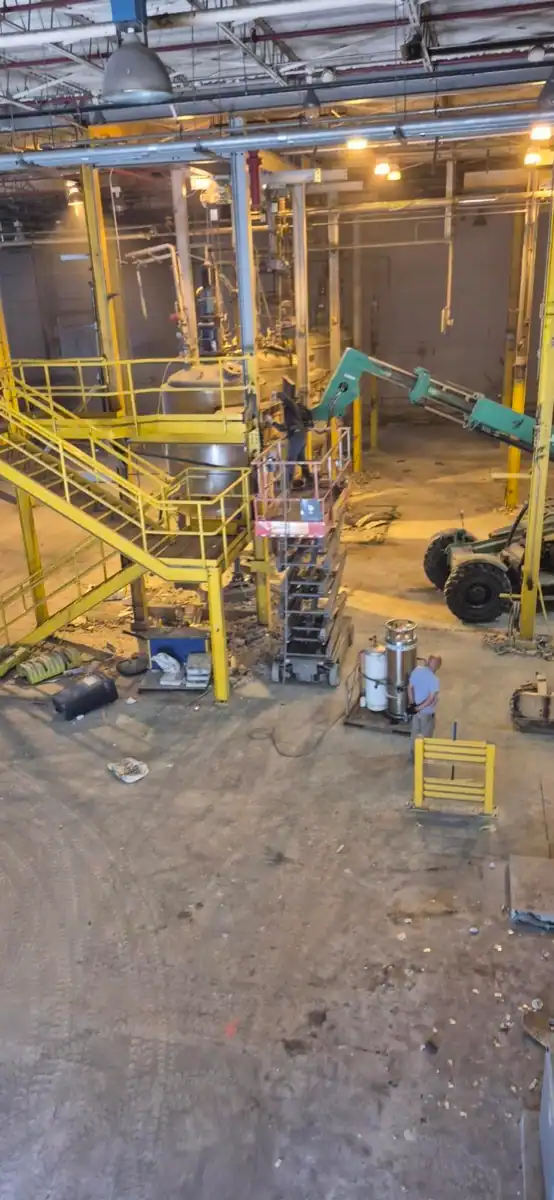
A lot of plants in Florida go quiet between Christmas and New Year. Lines stop, most of the staff is off, and the building sits there for a week or more. For anyone who has been staring at an idle production line, a switchgear lineup that should have been retired years ago, or a chiller that was replaced but never removed, that quiet week is the best chance all year to get the work done without fighting production.
The problem is that the shutdown window is short and it does not move. If the planning starts the week before Christmas, the window usually gets wasted. Most of what makes holiday shutdown decommissioning work happens in November, and that is where this post focuses.
Why the shutdown week works so well
During normal operation, removing equipment means working around forklifts, operators, and live processes. Crews have to stage carefully, keep aisles open, and stop for anything that might affect production. When the plant is dark, a lot of that friction goes away.
- Rigging paths can run through areas that are normally busy.
- Utility tie-ins can be cut and capped without interrupting a running line.
- Electrical outages that would be impossible on a production day become manageable.
- Debris and scrap can be staged on the floor instead of hauled out piece by piece.
The tradeoff is that everything has to be ready on day one. There is rarely time to wait on a missing drawing or a decision from someone who is out of town.
Pick the scope you can actually finish
The most common mistake is trying to do too much. A week sounds like plenty, but holidays cut into it, and the plant usually needs a day or two at the end to restart and verify that nothing was disturbed. Be realistic about what fits.
Good candidates for a shutdown window tend to be equipment that is already out of service: an abandoned packaging line, a retired chiller sitting next to its replacement, a section of conveyor nobody uses, or an old electrical room feeding loads that no longer exist. Work that touches equipment still needed after the restart is riskier and needs more margin. If the scope is large, it is often better to pick the pieces that require a full outage and leave the rest for normal weekends.
What has to happen in November
This is the part that decides whether the week goes well. By the end of November, you want answers to the following.
- Confirmed dates. Exactly when the plant goes dark, when crews can enter, and when the building has to be handed back.
- Walkthrough done. We need to see the equipment, the rigging path, door sizes, floor conditions, and where a truck or crane can set up.
- Utilities identified. Every electrical feed, water, steam, gas, compressed air and refrigerant line connected to the equipment needs to be traced and tagged. Our post on utility isolation and lockout during decommissioning covers how that process should go.
- Refrigerant and fluids. Chillers need refrigerant recovered, and transformers and hydraulic systems may hold oil. Schedule that early, since it has to happen before cutting.
- Equipment value decided. If the chiller, switchgear or generator has resale value, it needs to be removed intact rather than cut up. That changes the method and the schedule.
- Internal approvals. Purchase orders, safety signoffs and site access for the holiday period. People leave for vacation in December, and approvals stall.
For a broader list of items to sort out before any teardown, see our plant decommissioning checklist.
Electrical work needs the most lead time
Removing old switchgear or transformers is often the reason a plant wants a full shutdown in the first place. It is also the piece most likely to slip. The utility or your electrical contractor may need to schedule the outage, and the new or remaining loads have to be confirmed so nothing downstream gets dropped by mistake.
Before the window opens, someone should know which breakers feed what, which sections are being removed, and how the remaining gear will be backfed or terminated. If you are planning this kind of job, our post on electrical room decommissioning for switchgear and transformers walks through the steps. In short, the outage plan needs to be in writing before December, not drawn up on site.
How the week usually runs
A typical shutdown project follows a simple order. The first day goes to lockout verification, final isolation, and confirming that every line is dead and drained. Then crews disconnect and cap utilities, remove guarding and controls, and start rigging the largest items out. Equipment with resale value is pulled out intact. Scrap is cut, sorted and loaded. The last days go to debris removal, floor cleanup, and a walkthrough with your maintenance team so the area is ready for restart.
We plan the schedule backward from the hand-back date and leave buffer for things that come up, like a hidden conduit run or a stuck anchor bolt. That buffer matters more than anything else in a fixed window.
Offsetting the cost with equipment value
Retired chillers, boilers, transformers, switchgear, generators and cooling towers can have real secondary market value. Because Demo Dynasty also buys used industrial equipment, we can look at what is coming out and tell you which pieces are worth selling and which are scrap. In some cases that offsets part of the removal cost. That decision should be made during the November walkthrough so the crew knows what to protect.
Start planning now
If your plant shuts down for the holidays and you have idle lines, old electrical gear or a retired chiller to clear out, late November is the time to get it on the schedule. Our crews work across Florida, from Tampa and Lakeland to Orlando, Winter Haven and Plant City. Call Demo Dynasty or request a quote, and we will set up a walkthrough while there is still time to plan the job properly.
Frequently asked questions
How far ahead should we schedule holiday shutdown decommissioning?
Ideally the walkthrough and scope are settled by the end of November. That leaves time for utility tracing, outage planning, refrigerant recovery scheduling and internal approvals before people leave for the holidays.
Can a chiller or switchgear be removed in a single shutdown week?
Often yes, if the equipment is already out of service, utilities are identified in advance and the rigging path is clear. Larger scopes may need to be split so the parts requiring a full outage get done during the shutdown.
Will you buy the equipment we remove?
Demo Dynasty buys used chillers, boilers, transformers, switchgear, generators and cooling towers. We can assess what is coming out during the walkthrough and tell you which items have resale value and which are scrap.
Decommissioning a facility?
Full plant cleanup — equipment recovery, hazmat-aware, turnkey scopes.
Get a Plant Cleanup QuoteMore in Plant Cleanup
Decommissioning a Citrus Processing Plant
Closed citrus plants hold a mix of resellable equipment and stainless scrap. Here is how we sort evaporators, tank farms, refrigeration and piping during a teardown.
Utility Isolation and Lockout During a Plant Decommissioning
Every energy source in a facility has to be identified, isolated and verified before removal work starts. This is the plan that prevents the serious incidents.
What to Do With Process Piping
Miles of pipe in an industrial facility is either a disposal cost or a recovery, depending on what ran through it and how it comes out.