
Industrial Equipment Removal in Florida
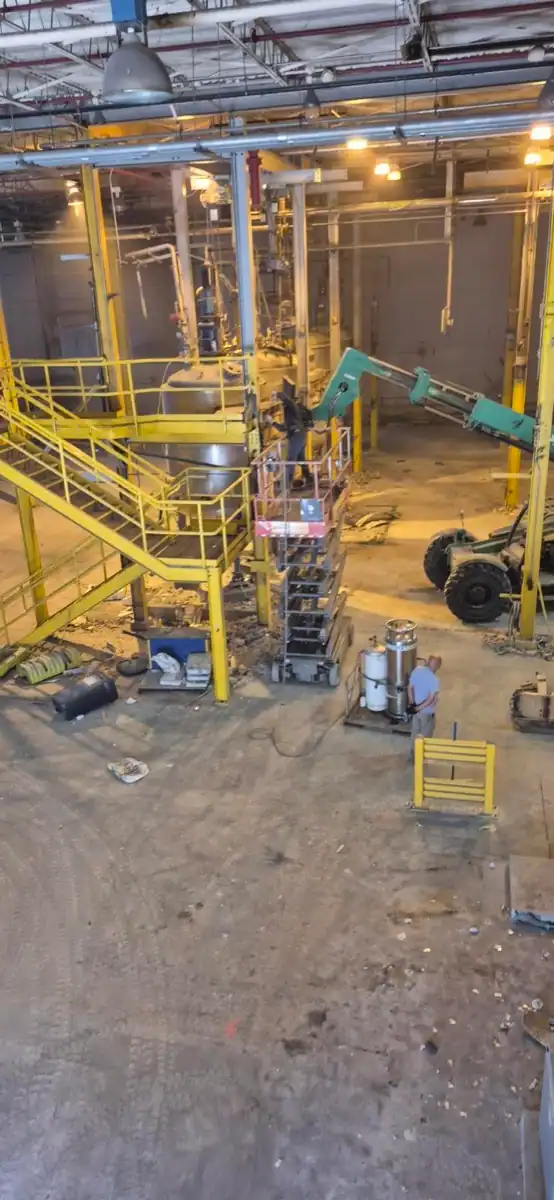
Removing heavy industrial equipment is a different animal from hauling office furniture. A centrifugal chiller, a 750 kW genset, or a switchgear lineup weighs tons, is bolted into live services, and sits somewhere awkward — a mechanical mezzanine, a rooftop, a below-grade vault. Do it wrong and you damage the building, hurt someone, or destroy the resale value of the very equipment you're moving. Do it right in Florida and the removal can pay you instead of costing you.
We remove industrial equipment across Florida and, when it's worth reselling, we buy it — which is what flips the economics. Here's what the job actually involves.
What "removal" really includes
When a competent crew quotes equipment removal, the price should cover the whole chain, not just the truck.
- Disconnect and de-energization. Electrical lockout at the main, gas and process-line isolation and purge, refrigerant recovery, and draining of fluids. This is licensed work, not something to improvise.
- Rigging. Matching crane or forklift capacity to the actual weight, plus slings, chains, and dunnage. A 500 ton centrifugal chiller can run 15,000 to 25,000+ lbs; a large genset 10,000 to 18,000 lbs.
- Cutting and breakdown where a machine won't fit through the door in one piece — done cleanly to preserve value, not hacked apart.
- Transport. Flatbed or lowboy, with overwidth or overweight permits for the big stuff.
- Site cleanup. Pad, penetrations, and mechanical room left broom-clean.
If a quote doesn't clearly cover all five, ask what's excluded — that's where surprise costs hide.
The rigging is the whole ballgame
Most equipment-removal problems trace back to rigging that wasn't planned. The questions a serious crew asks up front:
- How much does it weigh, exactly? Off the nameplate, not a guess.
- What's the path out? Door widths, corridor turns, floor load ratings, and whether a wall panel has to come out.
- Roof or basement? Elevated and below-grade installs usually need a crane pick, and a street pick may need a municipal permit.
- Does it come out in one piece or get broken down? This decision directly affects resale value.
A buyer who never asks how the machine leaves the building hasn't priced the removal and will renegotiate on arrival. That warning applies whether you're moving a chiller, a boiler, or a tower — see chiller removal and rigging cost for the detailed version.
Where removal turns into a payout
Here's the part owners miss. If the equipment being removed has resale value, the removal stops being a pure cost. A direct buyer who wants the machine will fold the removal into the purchase — you get a net check instead of a removal invoice.
- Chillers from York, Carrier, and Trane, especially recent centrifugal and screw units.
- Generators from Caterpillar, Cummins, Kohler, and Generac.
- Switchgear, transformers, and boilers from name brands in working condition.
- Cooling towers in FRP or stainless.
The pattern: if it's a major brand, under roughly 20 years old, and working or recently offline, get a resale quote before you pay anyone to scrap it. We explain how that recovery credit stacks up against demolition in industrial demolition vs equipment salvage. For equipment with no resale life left, we still handle the debris removal and haul it out.
Florida logistics that matter
- Port access. Tampa, Jacksonville, and Miami make it practical to move large recovered equipment out of state or overseas, which widens the buyer pool and lifts your number.
- Hurricane rebuild demand. Replacement chillers, gensets, and switchgear stay in short supply across Florida after major storms, so recovered equipment sells fast and strong.
- Corridors we cover. The I-4 industrial belt (Tampa–Lakeland–Orlando), the phosphate corridor around Bartow and Mulberry, the citrus-processing belt through the central counties, and the Jacksonville and South Florida markets. Based in Auburndale, we mobilize across the state without long-haul travel charges padding the quote.
- Permits and weight. Overweight and overwidth loads need Florida DOT permits; a competent removal crew handles that paperwork, not you.
Safety and liability you can't skip
Heavy equipment removal is where injuries and property damage happen, and both land on the site owner when the crew cuts corners. A few things a professional removal never skips:
- Lockout/tagout on every energy source — electrical, gas, pressurized, and stored mechanical — before anyone touches the machine. Refrigerant is recovered by EPA-certified technicians, not vented.
- Load-rated rigging. Slings, shackles, and spreader bars matched to the actual weight with a real safety margin, not "it'll probably hold."
- Floor and roof load verification before a crane or heavy machine stages on a structure that may already be compromised.
- Insurance and licensing. The crew carries its own general liability and workers' comp so an incident isn't your problem.
An outfit that shows up without a written rigging and lockout plan is an outfit that's going to improvise on your property. That's a risk not worth saving a few dollars on.
A clean removal timeline
- Day 0: send nameplate photos, location, and access details.
- Day 1 to 3: written removal quote or purchase offer.
- Day 4 to 7: accept and schedule the crane and crew.
- Day 10 to 21: removal day. If it's a purchase, payment on-site; equipment leaves; site swept.
Bottom line
Industrial equipment removal in Florida is a rigging-and-logistics job first — weight, path, crane, transport, cleanup. But the smarter move is to check resale value before you treat removal as a cost, because a name-brand chiller, genset, or switchgear lineup can turn the whole job into a payout. Send us the equipment list and site details and we'll tell you what's a check and what's a haul-off — one number, removal included.
Decommissioning a facility?
Full plant cleanup — equipment recovery, hazmat-aware, turnkey scopes.
Get a Plant Cleanup QuoteMore in Plant Cleanup
Utility Isolation and Lockout During a Plant Decommissioning
Every energy source in a facility has to be identified, isolated and verified before removal work starts. This is the plan that prevents the serious incidents.
What to Do With Process Piping
Miles of pipe in an industrial facility is either a disposal cost or a recovery, depending on what ran through it and how it comes out.
Closing Out a Plating Line or Process Tank System
Process tanks, plating lines and waste treatment systems have to be emptied, cleaned and documented before anything structural happens. The order is not negotiable.