
Industrial Demolition vs Equipment Salvage: What Pays More?
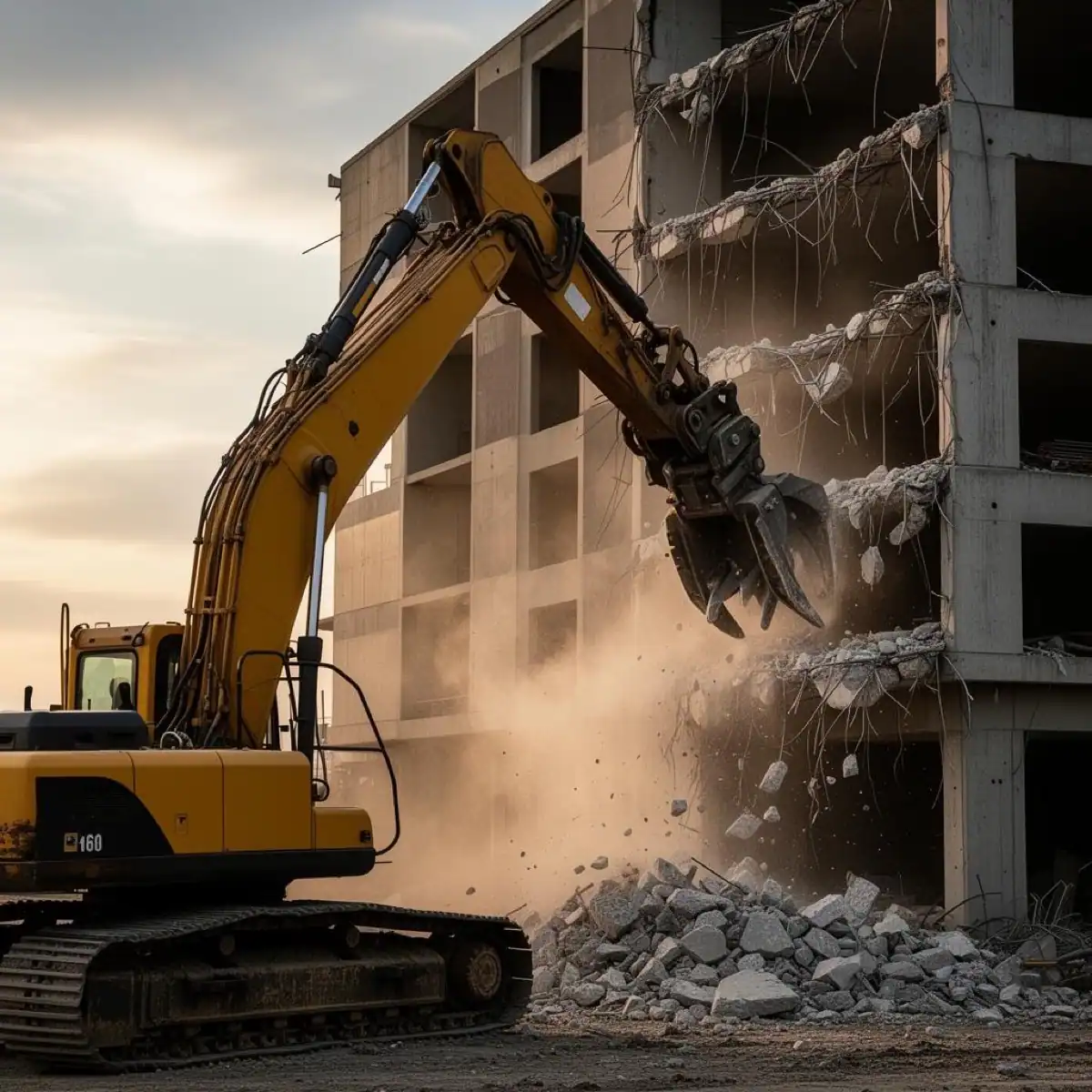
Owners of a closing industrial facility usually frame the decision as a choice: demolish the building, or salvage the equipment. It's the wrong frame. Demolition and salvage aren't competing options — they're two phases of the same project, and the money is in doing them in the right order. Treat them as an either/or and you either leave equipment value in the crusher or you strip a building you still have to pay to knock down. Here's how the economics really compare, and why the answer is almost always "both, in sequence."
We do industrial demolition and buy the recoverable equipment, so we quote these together every week. This is the operator's math.
What each one is
Industrial demolition is the teardown — structural demolition, interior strip-out, hauling, and disposal. It's a cost. On a mid-size industrial building in Florida you're looking at a range from the high tens of thousands into seven figures depending on structure, abatement, and disposal. We break those ranges down in commercial demolition cost in Florida.
Equipment salvage is recovering the valuable machines — chillers, generators, boilers, switchgear, transformers, cooling towers — and selling them into the secondary market. It's a credit. A single late-model 500 ton York or Trane centrifugal chiller can be worth tens of thousands intact; a low-hour Caterpillar or Cummins genset likewise. Multiply across a full plant and the salvage value can be very large.
Put simply: demolition is a bill, salvage is a check. The question isn't which to do — it's how to net the check against the bill.
The number that decides it
The deciding factor is what's inside the building and what condition it's in. Run the field test on every major machine:
- Major brand? Chillers (York, Carrier, Trane), generators (Caterpillar, Cummins, Kohler, Generac), cooling towers (BAC, Marley/SPX, Evapco), name-brand switchgear and transformers.
- Under about 20 years old?
- Working or recently offline?
The more machines that pass, the more salvage tilts the economics. An equipment-rich plant — full chiller plant, big gensets, switchgear lineups — can carry a salvage credit that offsets 15 to 50 percent of the demolition cost, sometimes more. An empty warehouse with nothing but the structure has little salvage value and is essentially a pure demolition job. For chiller value specifically, start with what's my used chiller worth.
Why the order matters — recovery first
Here's the mistake that costs the most money: letting the demolition crew start before the equipment is recovered. Once a high-reach machine or a torch crew is working, that 400 ton chiller becomes just mass to remove — and its resale value goes to zero. A demolition contractor whose only revenue is the teardown has no incentive to preserve equipment; that's not their business.
The correct sequence:
- Inventory and value the equipment.
- Recover the resellable machines intact, in the right order, preserving value.
- Then demolish the structure and haul the rest.
This is exactly the sequence in our plant decommissioning checklist, and it's why timing the sale matters — see selling equipment during a plant shutdown.
Why one party for both beats splitting it
Owners sometimes try to run salvage and demolition as two separate contracts — sell the equipment to a broker, hire a demo crew separately. It usually nets less. Two problems:
- Coordination gaps. The broker's rigging schedule and the demo crew's mobilization rarely line up, so equipment gets damaged, delayed, or crushed by accident. Nobody owns the handoff.
- No net pricing. You pay the full demolition invoice and separately collect a broker-discounted equipment check. When one party does both, the salvage value comes straight off the demolition price as a single net number — and you skip the broker's 15 to 30 percent margin.
That's how we price plant cleanup: equipment purchase and demolition combined into one figure, with the salvage credit already applied.
Don't overlook the mid-tier salvage
The headline machines get all the attention, but a big part of the salvage credit hides in the mid-tier and small copper. A thorough recovery sweep pulls:
- Motors and VFDs — copper-wound, sold by the each or by weight.
- Transformers — copper and, on oil-filled units, careful handling; strong scrap-plus value.
- Switchgear, breakers, and bus — name-brand gear resells; the copper bus alone is meaningful.
- Stainless piping, tanks, and pumps — stainless carries a real premium over carbon steel.
- Copper wire and cable — one of the highest-value-per-pound items in the building.
Individually these are small; across a full industrial plant they add up to a number that materially moves the net. The mistake is letting them get buried in mixed demolition debris where they're lost to the landfill instead of segregated and sold. A recovery-first crew separates them before the crusher runs; a pure demo crew does not.
When salvage wins, when demolition dominates
- Salvage-heavy job: modern equipment-rich plant, minimal structural demo, good access. The salvage credit can approach or exceed the demolition cost — the project nets close to break-even or better.
- Demolition-heavy job: old structure, little recoverable equipment, heavy abatement, deep foundations. Salvage trims the edges but demolition dominates the number.
- Most real projects sit in between — a meaningful salvage credit knocking a solid chunk off a real demolition bill.
Bottom line
Industrial demolition versus equipment salvage is a false choice — demolition is the bill, salvage is the check, and the smart play is to net one against the other by recovering the equipment before the teardown starts. On an equipment-rich Florida plant, salvage credit can erase a big share of the demolition cost, and running both through one party gives you a single net number with no broker margin and no coordination gaps. Send us your building and equipment details and we'll quote the demolition net of salvage — one number.
Need an interior stripped?
Nationwide interior demolition crews. Fast scheduling. Clean hand-offs.
Request a Demo QuoteMore in Demolition
Strip Mall and Retail Center Demolition in Florida
Older retail centers are coming down across Florida for redevelopment. Here is what drives the cost and schedule on a strip mall teardown.
Gas Station Demolition: What Is Actually Involved
A gas station teardown is a tank closure, a canopy removal, and a building demolition rolled into one regulated project. Here is how it sequences.
Hotel and Motel Demolition in Florida
Florida's aging roadside motels and mid-century hotels are prime redevelopment sites. What drives cost and schedule when one comes down.