
Plant Decommissioning Cost Drivers
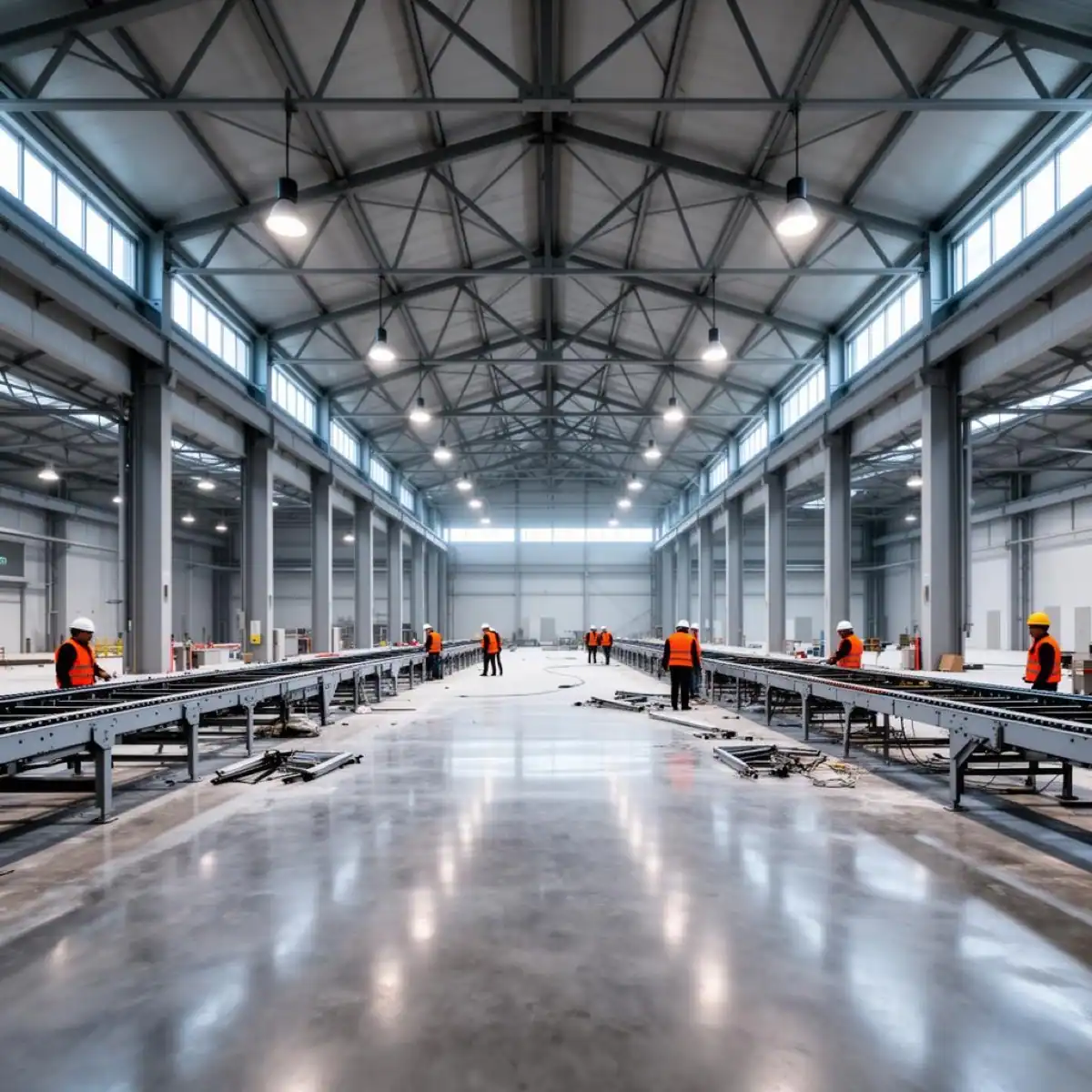
Ask three contractors what it costs to decommission an industrial plant and you will get three very different numbers, because the cost depends almost entirely on factors specific to your building. A clean facility with strong equipment recovery can net near zero after asset sales. A hazmat-heavy facility with little salvage value can run into serious per-square-foot money. Understanding what drives that spread lets you read a bid intelligently instead of trusting a round number. Here are the factors that actually move the cost.
We scope these projects through our plant cleanup service. These are the drivers we price against.
Driver 1 — hazmat abatement
This is the biggest single swing factor, and it is non-negotiable because it comes before any demolition.
- Asbestos in pipe insulation, floor tile, roofing, and firestop requires licensed abatement, negative-pressure containment, air monitoring, and waste manifesting. Older facilities are riddled with it.
- Lead paint on surfaces that will be disturbed adds abatement and disposal cost.
- PCBs in transformer oil, capacitors, and old caulk require testing and licensed disposal.
- Residual chemicals in tanks, piping, and process equipment must be characterized, profiled, and disposed through licensed facilities with manifests.
A facility with heavy thermal-system asbestos and contaminated process equipment can spend more on abatement than on the demolition itself. A clean, newer facility spends a fraction of that. The only way to know is a survey — and a preliminary hazmat review is what makes any cost estimate credible in the first place.
Driver 2 — equipment density and recovery value
Here is the driver that works in your favor. The more valuable, resellable equipment a facility holds, the lower its net decommissioning cost — because asset sales offset the demolition bill.
A plant packed with chillers, boilers, generators, switchgear, transformers, and process equipment has substantial recoverable value. A bare warehouse shell has none. Two buildings of identical size can have wildly different net costs purely because one is full of sellable machines and the other is empty. We buy most of that equipment directly through the sell hub, and the recovered value gets applied straight against the demolition. For the full mechanics, see how equipment recovery offsets demolition cost.
This is why "cost per square foot" alone is a misleading way to bid a plant — it ignores the recovery side entirely.
Driver 3 — structure type and demolition method
How the building comes down matters.
- Light steel and metal-panel structures disassemble relatively cheaply and yield ferrous scrap that offsets some cost.
- Heavy reinforced concrete — thick slabs, deep foundations, equipment pads — is slow and expensive to break and haul.
- Multi-story or congested sites near occupied neighbors require careful sequencing, dust control, and sometimes selective rather than mechanical demolition, all of which add cost.
- Foundations and below-grade structures — buried tanks, sumps, tunnels, and pits — are a common source of surprise cost because they are not visible during the walk-through.
The structure sets the demolition labor and equipment hours, and the scrap yield from the structure (ferrous steel, copper, aluminum) offsets part of it. Our industrial demolition scopes price the structure and the scrap recovery together.
Driver 4 — utility disconnects and site logistics
Every industrial decommissioning needs the utilities safely removed, and this carries both cost and schedule risk.
- Electrical service disconnect must be coordinated with the serving utility, often with a two to four week lead time. The whole equipment-removal sequence waits on it.
- Gas, water, and sewer disconnects and cappings each require coordination and permits.
- Site access — dock height, gate width, crane setup room, and haul-route restrictions — affects rigging and hauling cost.
These are not the largest line items, but poor coordination here creates standby time, which is expensive.
Driver 5 — regulatory and documentation load
Notifications, permits, and closeout documentation carry real cost and cannot be skipped. EPA NESHAP asbestos notification, state air-quality demolition notices, local demo permits, and hazmat waste manifests all take time and money. The closeout package — manifests, weight tickets, and haul-off receipts — is the record that protects the owner against future environmental claims, so it is cheap insurance rather than overhead.
Putting it together
Full decommissioning of a typical 100,000 square foot manufacturing facility runs 8 to 16 weeks of on-site work, but the net cost is highly variable:
- Clean facility, strong equipment recovery — net cost near zero or even positive after asset sales.
- Hazmat-heavy facility, limited salvage — meaningful net cost per square foot, driven mostly by abatement.
The spread comes almost entirely from two drivers: how much hazmat the facility carries, and how much recoverable equipment it holds. Hazmat pushes the cost up; equipment recovery pulls the net down. A good decommissioning plan attacks both — it minimizes surprise hazmat with a thorough survey and maximizes recovery by inventorying and selling equipment deliberately. See our plant decommissioning checklist for the full phase-by-phase scope.
Get a real scope
Based in Auburndale and working statewide across Florida, we walk the facility, price the hazmat and structure honestly, inventory the recoverable equipment, and give you a single net number instead of a round guess. Call (689) 323-4676 or start through the plant cleanup page.
Decommissioning cost is not a mystery — it is the sum of hazmat, structure, logistics, and documentation, minus what the equipment recovers. Understand those drivers and you can read any bid and know whether the number is real.
Decommissioning a facility?
Full plant cleanup — equipment recovery, hazmat-aware, turnkey scopes.
Get a Plant Cleanup QuoteMore in Plant Cleanup
Utility Isolation and Lockout During a Plant Decommissioning
Every energy source in a facility has to be identified, isolated and verified before removal work starts. This is the plan that prevents the serious incidents.
What to Do With Process Piping
Miles of pipe in an industrial facility is either a disposal cost or a recovery, depending on what ran through it and how it comes out.
Closing Out a Plating Line or Process Tank System
Process tanks, plating lines and waste treatment systems have to be emptied, cleaned and documented before anything structural happens. The order is not negotiable.