
Closing a Printing Plant: Equipment, Chemicals, and Cleanout
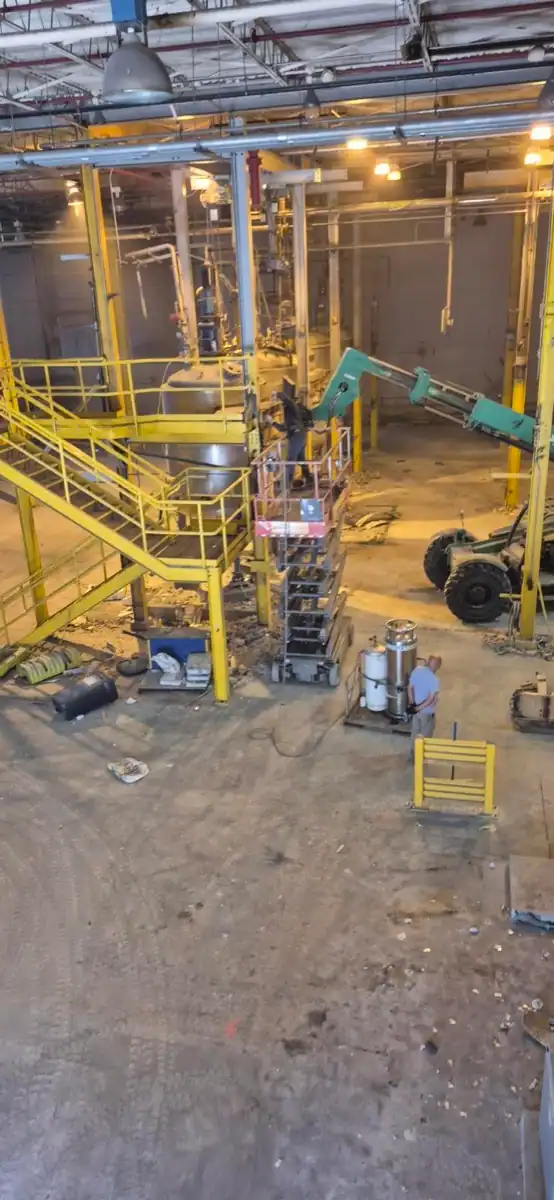
Commercial printing has been consolidating for years, and printing plants in Florida and across the Southeast continue to close or shrink into smaller spaces. A printing operation leaves behind a specific mix: very heavy equipment on engineered foundations, a chemical inventory, and a building full of compressed air, electrical, and ventilation infrastructure. Here is how the closure is handled.
Presses and finishing equipment
Web and sheetfed presses are among the heaviest pieces of equipment in a light industrial building, and they are usually set on isolated foundations with anchor bolts. Removing one is a rigging job: the press is broken into its units, each unit is lifted or skated to a dock, and the foundation is either left or broken out depending on what the next use of the building requires.
Whether a press has resale value depends on its age, format, and condition. Late-model presses in good order have a market. Older presses often do not, and they are dismantled for scrap, which is a meaningful tonnage of steel. Finishing equipment such as folders, cutters, stitchers, and binders is lighter and easier to sell, and it tends to move.
Whatever the outcome, the equipment decision should be made before any structural work, and the removal should happen while the dock doors and floor are intact.
Inks, solvents, and plates
The chemical inventory is where a printing plant closure differs from a warehouse cleanout. Inks, press wash, blanket wash, fountain solution, plate developer, and adhesives are stored in drums, totes, and cabinets throughout the plant, and each has a disposal path. Drums are consolidated, characterized, manifested, and removed by a licensed hazardous waste hauler.
Floor drains and sumps in the pressroom are cleaned out. Ink and solvent residue in press sumps is removed before the press moves. Aluminum printing plates are scrap aluminum and have value.
Do not leave this for the demolition crew to discover. A plant that hands over with its chemicals gone closes out clean and fast.
Compressed air and vacuum
Printing plants run extensive compressed air and vacuum systems for sheet handling and finishing. The compressors, dryers, and receivers are recoverable equipment; we buy used air compressors and appraise them as part of the cleanout. The piping network is removed as scrap. The process is the same as for any industrial air system, covered in decommissioning a compressed air system.
Electrical
Large presses draw substantial power, and the plant electrical room reflects it: a service transformer, switchgear or a large distribution panel, and motor control for the presses and air system. Those are recovered intact. The bus duct and conduit runs across the plant are removed as scrap copper and steel.
Ventilation and dryers
Heatset web presses have dryers with afterburners or oxidizers on the roof and large exhaust systems. Those are removed with the press. Any natural gas supply to the dryers is isolated and capped at the meter as part of the utility disconnect.
What the building looks like at handover
Most printing plant closures end with the building being returned to a landlord or sold as a shell. That means: equipment gone, foundations either left flush or broken out and patched, chemicals removed with manifests in the file, floors cleaned, utilities safed off, and the debris hauled. If the building itself is being demolished for redevelopment, the same steps happen first and the structural work follows. Either way, the checklist in plant decommissioning checklist applies.
Frequently Asked Questions
Is an old press worth anything?
Sometimes as equipment, always as scrap. Late-model presses in good condition have buyers. Older units are dismantled for steel.
Who handles the inks and solvents?
A licensed hazardous waste hauler, with the drums characterized and manifested. We coordinate that as part of the cleanout scope.
Do the press foundations have to come out?
Only if the next use of the floor requires it. A landlord returning the space as a warehouse usually wants them flush and patched, not removed.
Can the compressors and electrical be sold?
Yes. Compressors, dryers, transformers, and switchgear are recovered intact and appraised. That value is credited against the cleanout.
Demo Dynasty handles plant cleanup, equipment recovery, and building demolition for industrial closures across Florida and the Southeast, based in Auburndale, FL. Call (689) 323-4676 or request a quote.
Decommissioning a facility?
Full plant cleanup — equipment recovery, hazmat-aware, turnkey scopes.
Get a Plant Cleanup QuoteMore in Plant Cleanup
Utility Isolation and Lockout During a Plant Decommissioning
Every energy source in a facility has to be identified, isolated and verified before removal work starts. This is the plan that prevents the serious incidents.
What to Do With Process Piping
Miles of pipe in an industrial facility is either a disposal cost or a recovery, depending on what ran through it and how it comes out.
Closing Out a Plating Line or Process Tank System
Process tanks, plating lines and waste treatment systems have to be emptied, cleaned and documented before anything structural happens. The order is not negotiable.