
Used Industrial Generators for Sale in Florida
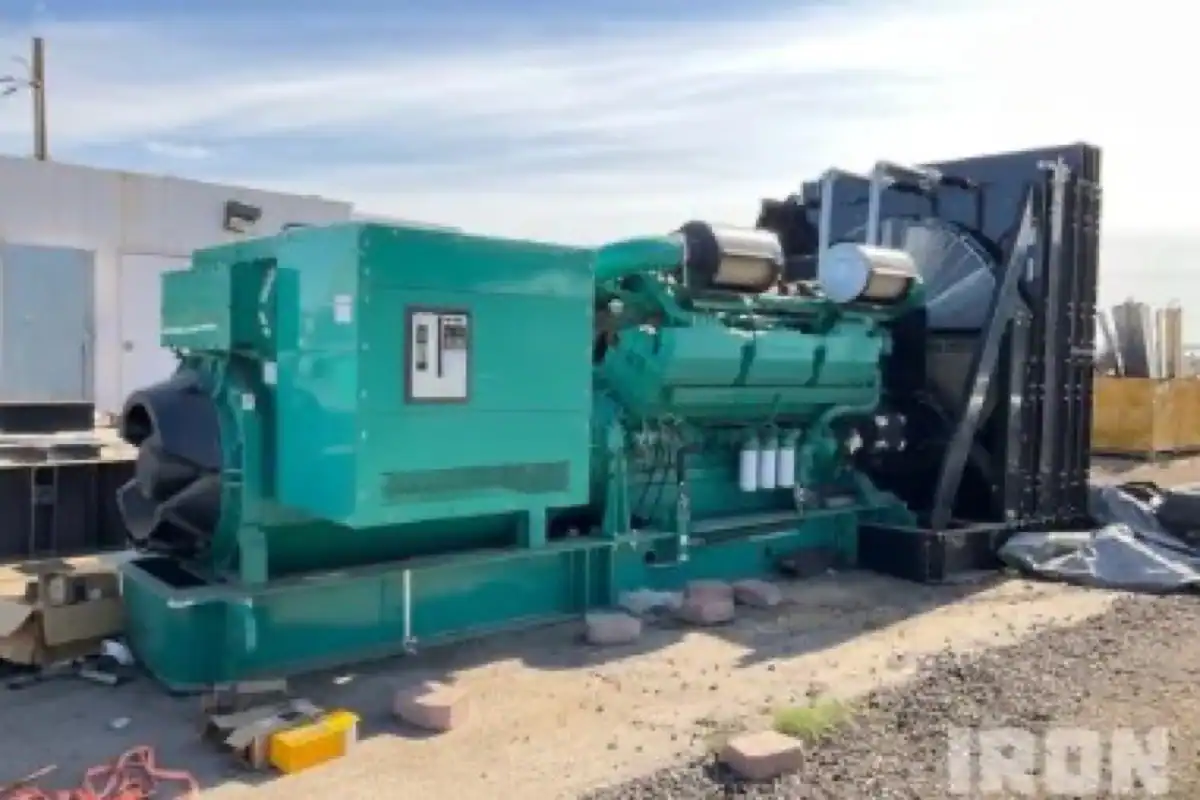
In Florida, a backup generator isn't a nice-to-have — it's the difference between staying open and losing a week of business every hurricane season. Demand spikes every June, prices on new gensets climb, and lead times stretch. That's exactly why the used generator market here is deep and worth knowing. We recover, test, and resell industrial gensets off decommissioned plants and facility upgrades, and here's how to buy one that'll actually start when the grid goes down.
What used industrial generators cost
Pricing tracks kW rating, engine hours, fuel type, and enclosure. Diesel gensets dominate industrial standby. Working ranges:
- Small (20 to 100 kW): roughly 6,000 to 25,000 dollars.
- Mid-size (150 to 400 kW): roughly 20,000 to 75,000 dollars.
- Large (500 to 1,500 kW): 60,000 to 250,000-plus dollars.
Discounts off new run 40 to 65 percent, and the lead-time savings are just as valuable — a new large genset can be 30 to 60 weeks out, while a tested used unit ships in days. For a facility that needs power before the next named storm, that timing is the whole deal.
The brands that hold up
Engine and alternator quality is everything in a standby unit, and a few names dominate the resale market because parts and service are everywhere:
- Caterpillar. The industrial gold standard. Cat gensets hold value strongly, and Cat dealer support in Florida is deep. Parts and techs are never far.
- Cummins. Excellent engines and Cummins/Onan controls, huge installed base, easy service. A favorite for hospitals and data centers.
- Kohler. Strong in the industrial and healthcare standby space with good parts support.
- Generac. Common in the smaller and light-commercial band; good value, widely serviced.
Buy a nameplate your local techs already support. An orphan brand with no parts pipeline is a bad bet for standby power you're counting on.
Engine hours and the real condition story
A generator's odometer is its hour meter, and it tells you most of what you need.
- Low-hour standby units are the prize. A standby genset that only ran during monthly exercise and a few outages might have 200 to 1,500 hours on a 20,000-plus-hour engine — barely broken in.
- Prime-power and rental-fleet units rack up hours fast. A unit with 15,000-plus hours is closer to a rebuild, and the price should reflect it.
- Sitting-too-long risk. A genset that sat for years without exercise can have degraded seals, stale fuel, and a dead battery. That's fixable but worth knowing going in.
Match the hours to the price, and favor low-hour standby pulls off plant decommissioning — that's the equipment we recover during a plant cleanup.
What to test before you buy
"It cranked in the yard" is the generator version of "ran when pulled" — not good enough. A real test proves it makes clean power under load, the same standard we apply to chiller testing.
- Load bank test. The single most important test. Run the genset against a resistive load bank at rated kW to confirm it holds voltage and frequency, doesn't overheat, and doesn't wet-stack. A unit that only idles at no-load hides its real condition.
- Engine inspection. Check for oil and coolant leaks, blowby, exhaust color, and hour meter validity. Pull an oil sample where warranted.
- Alternator and controls. Confirm the alternator makes clean, balanced three-phase power and the controller (Cat EMCP, Cummins PowerCommand, Deep Sea) boots without locked faults.
- Cooling and enclosure. Radiator condition, coolant, and — critical in Florida — the enclosure and exhaust for coastal corrosion.
- Transfer switch. If an ATS is included, verify its rating and function; if not, budget for one.
Florida-specific buying advice
- Buy before hurricane season, not during. Prices and availability are best from December through April. When a storm is in the Gulf in September, everyone wants a generator and the market is picked clean and marked up.
- Sizing matters. Size the genset to your actual connected load plus motor-starting inrush — undersizing causes voltage dips that trip equipment. Have your electrician confirm the kW and the starting kVA.
- Fuel and runtime. Confirm tank size and runtime. Diesel storage and stabilization matter for a unit that may sit between storms.
- Corrosion. Coastal salt air is hard on enclosures, radiators, and connections — inspect harder on any coastal unit.
- Rigging and sales tax. Large gensets are heavy; budget the move like other industrial iron per our delivery and rigging guide, and expect Florida sales tax unless an exemption applies.
Standby, prime, or continuous — buy the right rating
Gensets are rated for how hard they're meant to run, and buying the wrong rating is a costly mistake. A standby rating is for emergency backup — full output for the duration of an outage, a few hundred hours a year. A prime rating handles variable loads for unlimited hours where there's no utility. A continuous rating runs a constant load 24/7. For most Florida businesses, storm backup is a standby application, and a standby-rated unit is the right and cheaper buy. Don't overpay for a continuous-rated prime-power machine you'll only run during outages — but do confirm the used unit's rating matches your use, because a lightly built standby unit run as prime power will fail early. The nameplate states the rating; verify it against how you'll actually run the machine.
Bottom line
Backup power in Florida is hurricane insurance, and a used industrial generator delivers it for 40 to 65 percent off new and ships in days instead of months. Buy a well-supported brand — Caterpillar, Cummins, Kohler, Generac — favor low-hour standby pulls, and never skip the load bank test. Shop before the season, size it to your real load, and inspect the enclosure for coastal corrosion.
We recover, load-bank test, and resell gensets off decommissioned Florida plants. Tell us your kW, fuel, and location and we'll match a tested unit — start here or reach out directly.
Looking for used equipment?
We move chillers, boilers, generators, and cooling towers across Florida and nationwide. Tell us what you need.
Ask About Available UnitsMore in Buying Guides
Buying Used Machine Tools From a Plant Closure
Machine tools from a closing facility can be the best value in industrial equipment, provided you evaluate wear, controls and what it takes to move.
Inspecting a Used Industrial Boiler Before You Buy
Pressure vessel condition, jurisdiction paperwork and burner package all decide whether a used boiler is a bargain or an ornament.
Load Testing a Used Generator Before You Buy
Hours mean little without a load test. What to test, what to look for, and what a generator's history tells you.