
Demolishing a Fire-Damaged Commercial Building
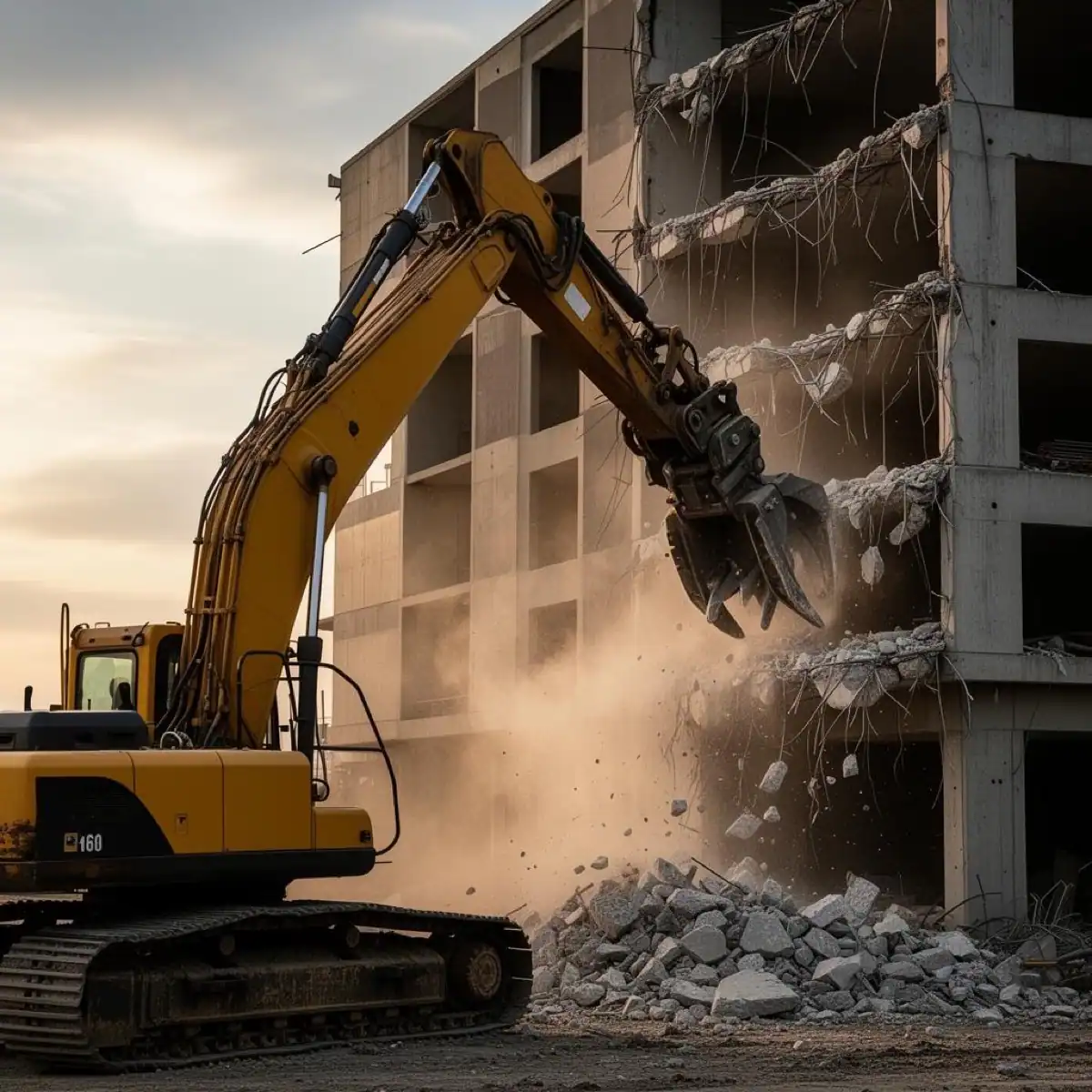
The fire is out, the fire marshal has released the site, and now someone has to decide what happens to the building. For owners of warehouses, plants, and commercial buildings, the weeks after a fire are full of competing pressures: the insurance adjuster wants documentation, the city wants the hazard secured, tenants or production schedules want answers, and the structure itself may still be moving.
We handle fire-damaged buildings across Florida, from packing houses in Polk County to light industrial space around Tampa and Orlando. The jobs that go smoothly are the ones where the owner understands the sequence before anyone starts pulling down walls. Here is how that sequence usually works.
Talk to your insurer before anything gets torn down
The single most expensive mistake after a fire is demolishing evidence. Your carrier, and sometimes the fire investigator, needs to see and document the damage before it changes. Until the adjuster signs off, limit work to what is needed for safety and security.
What that usually means in practice:
- Fence the site and board openings so nobody walks into an unstable structure
- Photograph and video everything, including equipment nameplates and areas that look undamaged
- Get written approval from the adjuster before demolition or debris removal starts
- Ask the carrier which costs fall under debris removal coverage, since policies often have separate limits for it
We can provide a detailed scope and quote that breaks out demolition, hauling, contaminated waste, and salvage credits as separate lines. Adjusters generally work faster with an itemized scope than a single lump number.
Structural stability comes first
Fire changes how a building carries load. Structural steel loses strength at high temperatures and can sag or twist even after it cools. Wood framing may look sound on the surface and be charred deep inside. Masonry walls that lost their roof diaphragm can stand unbraced, which is a real concern in Florida where a strong afternoon storm can push over a freestanding wall.
Before crews go inside, a structural engineer should evaluate the building, and the demolition plan should follow from that assessment. Sometimes that means we take down the most dangerous elements from the outside with an excavator before anyone enters. Sometimes it means shoring a section so salvage crews can safely reach equipment. Either way, the order of work is driven by what the structure can handle, not by what is most convenient.
Contaminated debris is not ordinary demolition waste
Burned building material is a different waste stream from clean construction debris. Fire can release or disturb asbestos in older roofing, flooring, pipe insulation, and joint compound. Ash and residue may contain heavy metals from coatings and wiring. Industrial sites add their own complications: stored chemicals, oils, refrigerants, and process materials that burned or leaked.
A few points we stress with every owner:
- An asbestos survey is still required before demolition, and fire does not cancel that obligation. Our post on the asbestos survey before demolition in Florida covers what the survey involves.
- Wet debris and firefighting runoff need to be managed so they do not wash into storm drains
- Some debris may need testing before a landfill will accept it
- Fluids left in damaged transformers, chillers, or tanks must be drained and handled separately
Sorting materials on site adds time up front but keeps disposal costs from spiraling and keeps the paperwork clean for your insurer.
Salvage the equipment that survived
Fires are rarely uniform. One end of a plant can be destroyed while switchgear, generators, boilers, or cooling towers in another area come through with smoke staining and little else. That equipment has value, and recovering it can offset part of the demolition cost.
Because Demo Dynasty buys used industrial equipment, we assess salvage as part of the demolition scope rather than as an afterthought. We look at heat exposure, water damage from suppression, and whether units can be tested or rebuilt. Equipment that is not worth reselling as a working unit may still have component or scrap value. Document anything you plan to sell with your adjuster first, since salvage value may affect your claim.
Partial or full demolition
Not every fire means losing the whole building. If the damage is confined to one bay, office wing, or roof section, and the engineer confirms the remaining structure is sound, selective demolition can remove the damaged portion and leave the rest ready for repair. That can shorten downtime considerably.
Full demolition makes more sense when the main structural frame is compromised, when repair costs approach replacement cost, or when code upgrades triggered by the rebuild would make keeping the old structure impractical. We compare both approaches in more detail in selective demolition vs full demolition.
Whichever route you take, permits still apply. Emergency conditions can sometimes speed things up, but utility disconnects and required documentation still take time. Our post on the demolition permit timeline explains the usual holdups so you can plan around them.
Get a plan in place
If you are dealing with a fire-damaged commercial or industrial building anywhere in Florida, call Demo Dynasty or request a quote through our site. We will walk the site, coordinate with your adjuster and engineer, and give you an itemized scope covering demolition, debris handling, and equipment salvage so you can make the decision with real numbers in hand.
Frequently asked questions
Can I start cleaning up or demolishing right after the fire?
Only for urgent safety and security work like fencing and boarding up. Wait for your insurance adjuster and any fire investigator to document the damage and give written approval before demolition or debris removal begins.
Is an asbestos survey still needed if the building already burned?
Yes. Fire can disturb asbestos-containing materials and make them more hazardous, and a survey is still required before demolition so those materials can be identified and handled properly.
Can equipment that survived the fire be sold?
Often it can. Generators, switchgear, boilers, chillers, and other equipment away from the worst damage may still have resale, rebuild, or scrap value. We assess it during the demolition walkthrough, and you should note any planned sale with your adjuster.
Need an interior stripped?
Nationwide interior demolition crews. Fast scheduling. Clean hand-offs.
Request a Demo QuoteMore in Demolition
Industrial Demolition and Plant Cleanup in Plant City, FL
Packing houses, cold storage and processing plants around Plant City have their own demolition patterns. Here is what comes out of them and where equipment recovery fits.
Strip Mall and Retail Center Demolition in Florida
Older retail centers are coming down across Florida for redevelopment. Here is what drives the cost and schedule on a strip mall teardown.
Gas Station Demolition: What Is Actually Involved
A gas station teardown is a tank closure, a canopy removal, and a building demolition rolled into one regulated project. Here is how it sequences.