
Factory Relocation: Equipment Teardown, Moving, and What Gets Left Behind
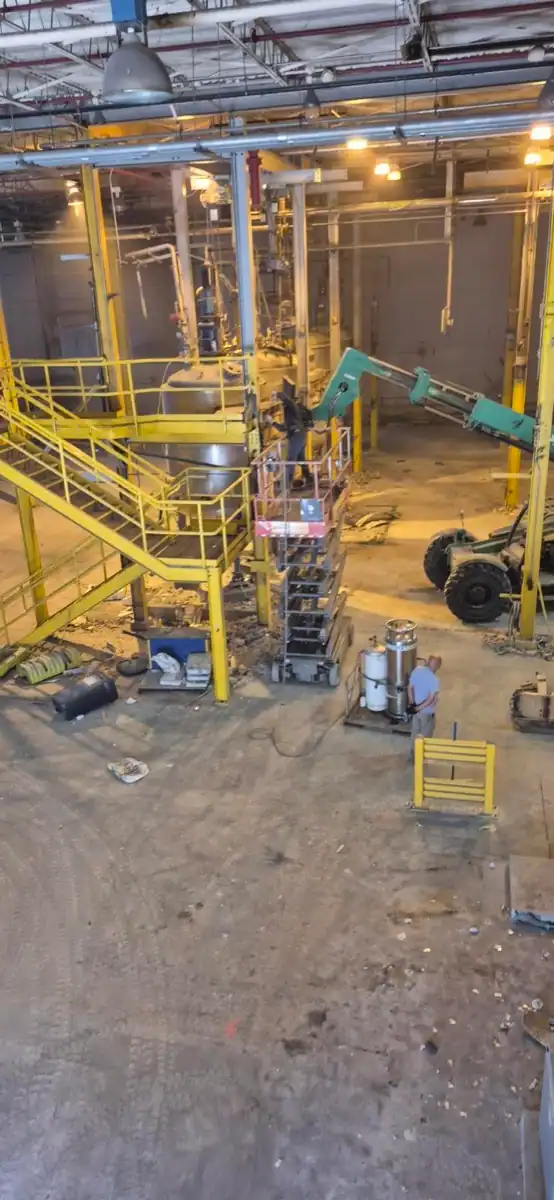
A plant relocation looks like a moving project and behaves like two simultaneous construction projects — one shutting a facility down, one standing another one up — with a production schedule stretched between them. The single decision that drives cost is deceptively simple and has to be made machine by machine: does this piece of equipment move, or does it stay?
The move-or-replace decision
For each significant machine, weigh the full cost of moving against the cost of replacing:
Cost to move includes disconnection, disassembly, rigging out of the building, transport (with permits for oversize loads), rigging into the new building, reassembly, alignment, utility connection, commissioning, and the production downtime the transition consumes.
Cost to replace is the new or used purchase price, less what the old machine is worth sold, plus installation.
The answers cluster predictably. Newer, specialized, or long-lead-time equipment moves. Ancillary infrastructure — air compressors, dust collection, chillers, transformers, racking — is very often cheaper to buy at the new site than to move, especially if a good used unit is available. Old machines near end of life almost never justify the move; you are paying premium logistics to relocate a problem.
The trap is deciding by sentiment or by inventory value on the books instead of by these numbers.
Utilities are the hidden critical path
Machines are visible. The systems feeding them are not, and they are what actually determines whether the new plant can run: electrical service capacity and distribution, compressed air, process cooling, steam, process water and drains, ventilation and dust collection.
Confirm the new building's service capacity before committing to a move date. Discovering that the new facility's electrical service will not carry the load — with a utility upgrade lead time measured in months — is the classic way a relocation schedule collapses.
Sequencing the teardown
A workable order:
- Document everything. Photograph every connection, label every wire and pipe, and record settings and alignments before disassembly. This is the cheapest insurance in the entire project and the step most often shortchanged.
- Isolate and de-energize — electrical lockout, air bled, hydraulics and coolant drained, refrigerant recovered per EPA rules.
- Disconnect and cap utilities at each machine.
- Disassemble to transportable modules, matching how the machine will be re-erected.
- Rig out, in reverse order of how the building was built if necessary — sometimes a wall panel or roof section comes off, which needs to be planned, not improvised.
- Transport, with the right permits and insurance for the load.
Phasing to protect production
Most plants cannot go dark. That means phasing: move the least critical lines first, run split operations for a period, and keep enough capacity at the old site to serve customers. Building inventory ahead of the transition is standard practice and usually cheaper than the alternative.
Expect the crossover period to be the most expensive stretch of the project — two facilities carrying cost, two utility bills, and staff split between sites. Compressing that window is where relocation planning earns its money.
What stays behind is worth real money
This is the part that gets handled badly and is entirely avoidable. Everything you decided not to move is still an asset: machines, chillers, boilers, generators, transformers, switchgear, compressors, cranes, racking, and dock equipment.
Handled as a decommissioning, that equipment is appraised, sold as working units where possible, and the proceeds go against the cost of the move. Handled as an afterthought — with a scrapper called two days before the lease ends — most of the value is lost. The gap between those two outcomes is covered in scrap vs. resale value.
Do not forget the lease obligations
Industrial leases frequently require the tenant to restore the space: remove installed equipment, patch penetrations, remove mezzanines and process piping, and return the building broom-clean. That restoration work is a real scope with a real number, and it belongs in the relocation budget from day one — not discovered at the final walk-through.
That work is interior demolition and warehouse cleanout, and doing it with the same crew that pulled the equipment is faster and cheaper than mobilizing someone new.
How we fit
We handle the leave-behind side of relocations across Florida: equipment appraisal and purchase, teardown and rigging, plant cleanup, lease-required restoration, and demolition where the building itself is being retired. One crew, one contact, and a check for what we buy.
Call (689) 323-4676 or request a quote.
Decommissioning a facility?
Full plant cleanup — equipment recovery, hazmat-aware, turnkey scopes.
Get a Plant Cleanup QuoteMore in Plant Cleanup
Utility Isolation and Lockout During a Plant Decommissioning
Every energy source in a facility has to be identified, isolated and verified before removal work starts. This is the plan that prevents the serious incidents.
What to Do With Process Piping
Miles of pipe in an industrial facility is either a disposal cost or a recovery, depending on what ran through it and how it comes out.
Closing Out a Plating Line or Process Tank System
Process tanks, plating lines and waste treatment systems have to be emptied, cleaned and documented before anything structural happens. The order is not negotiable.