
Flipping a Commercial Building in Florida: The Demolition Math
Residential flippers underwrite demo with a rule of thumb and usually survive it. On a commercial value-add deal the same casual approach will eat your entire margin, because the numbers are bigger, the regulatory surface is wider, and the schedule risk compounds against a much larger carrying cost.
Here is what to actually check before you close.
1. Age of the building sets your abatement risk
The single largest unknown in a commercial deal is asbestos. Any structure of a certain age is likely to have regulated material somewhere — roofing, flooring mastic, pipe insulation, transite panels, fireproofing. You cannot pull a demolition permit in Florida without a survey, and the abatement number can range from modest to project-killing.
Get the survey during due diligence, not after closing. If the seller has a recent one, verify it covered destructive sampling rather than a visual walk. If they do not, pay for one during the inspection period. It is the cheapest option you will ever buy on a commercial deal.
2. Decide the scope before you underwrite it
Commercial value-add usually means one of:
- Cosmetic repositioning — finishes, common areas, facade. Light demo.
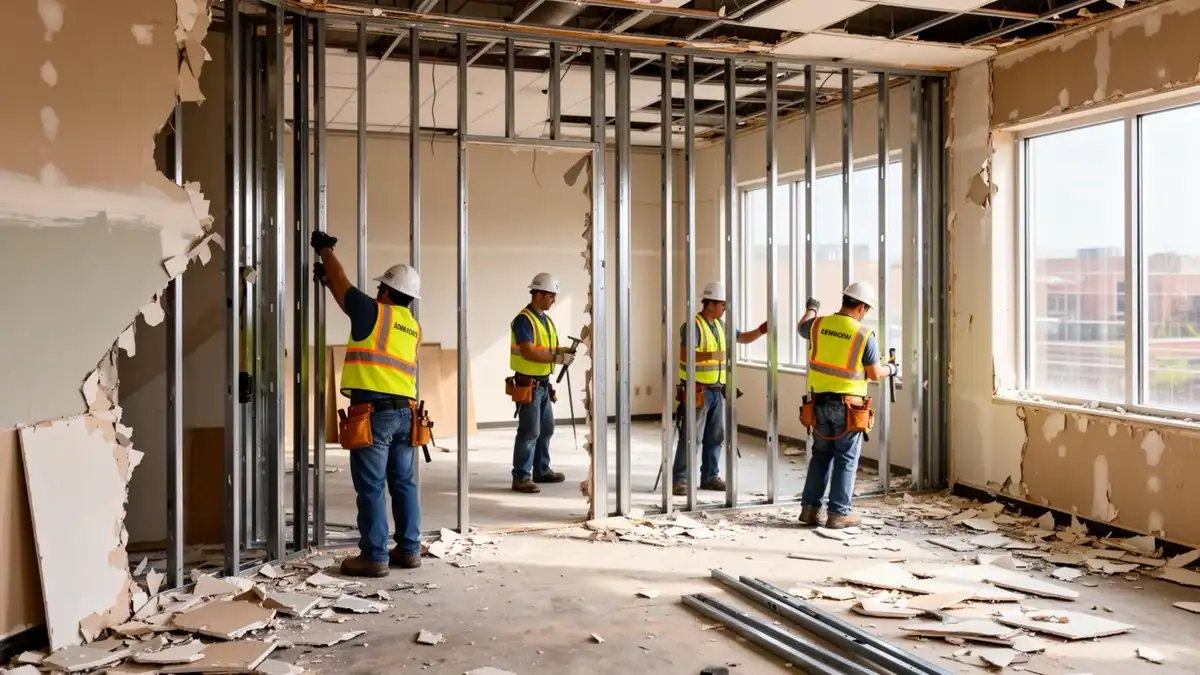
- Full tenant strip-out — back to shell, new MEP. This is the common one and it is where budgets go wrong.
- Change of use — retail to industrial, office to medical, warehouse to flex. Heavy demo plus structural and code work.
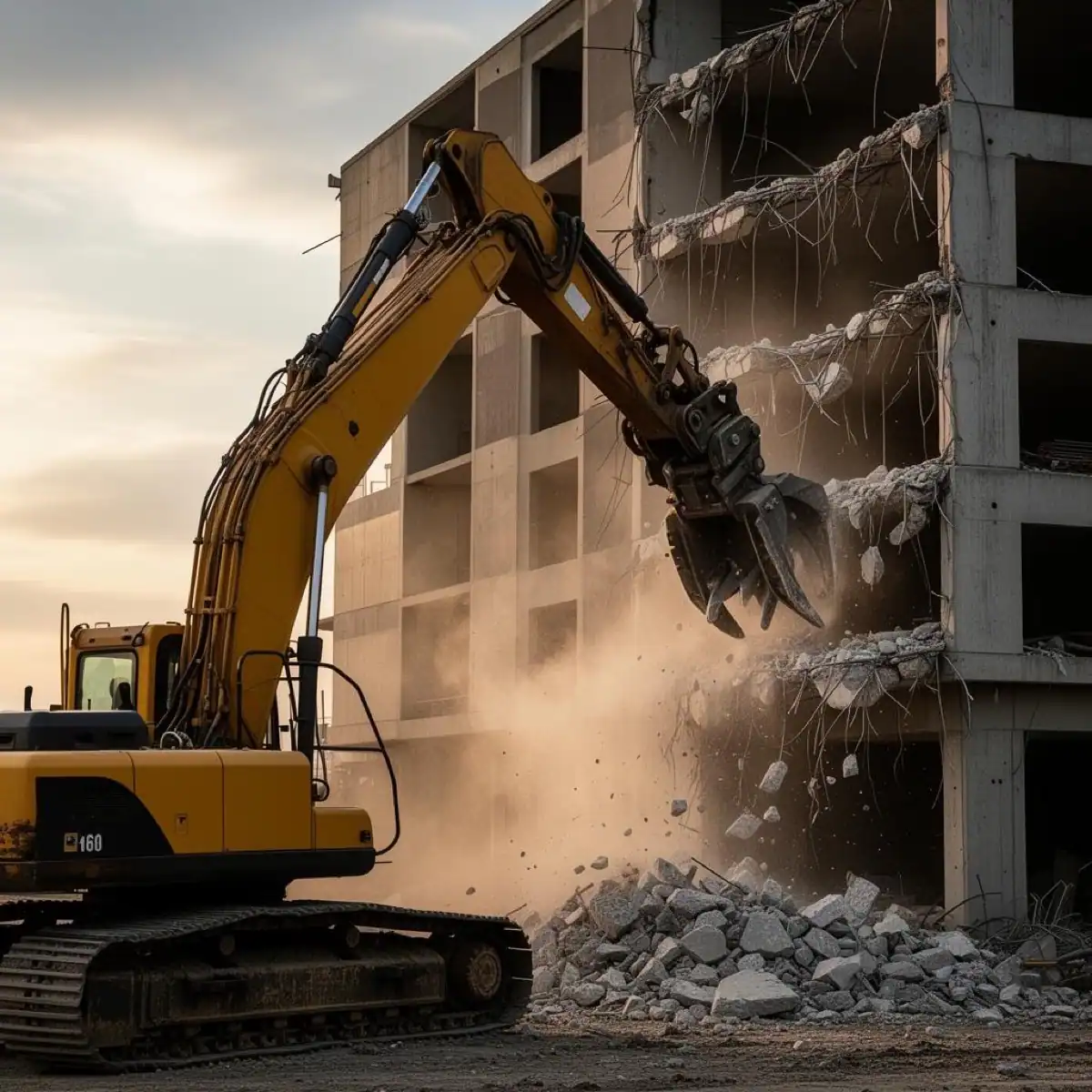
- Land play — demolish everything, sell or build. Priced by tonnage, not by square foot.
Each has a completely different demo number. Write down which one you are buying and price that.
3. What is inside is worth money — count it
This is the line most commercial investors leave on the table. An older commercial or industrial building typically contains equipment with real resale value:
- Rooftop units, chillers, and cooling towers
- Boilers and hot water plant
- Generators and transfer switches
- Transformers, switchgear, and panels — plus the copper in the feeders
- Air compressors, pumps, and motors
- Racking, dock equipment, and material handling
- Kitchen equipment in restaurant and institutional properties
Because we buy this equipment outright, we can appraise a building during your due diligence and tell you what the contents are worth. On the right property that recovery is a genuine line item in your acquisition math — see how equipment recovery offsets demolition cost.
4. Permits and time are money
Commercial demolition permitting in Florida means a licensed contractor, the survey, a NESHAP notification with a ten-working-day clock, documented utility disconnects, and a building department review that varies by jurisdiction. Interior strip-outs are lighter but still permitted.
Underwrite four to ten weeks of pre-construction on a demo-heavy deal, and more if abatement is involved. On a commercial property with real debt service, that window is a hard cost. The phase-by-phase version is in how long commercial demolition takes.
5. Slab, foundations, and what the next use requires
If the plan is redevelopment, find out early whether the slab and footings have to come out. Leaving a sound pad in place can remove one of the largest single line items from the budget. Nobody will volunteer this answer — you have to ask the civil engineer and the permit reviewer.
6. The traps specific to commercial
- Occupied tenants. Demo next to a live tenant means protection, restricted hours, noise limits, and slower production. Price it.
- Shared systems. One electrical service, one fire loop, or one roof drain serving multiple units complicates any partial demolition.
- Structural surprises. Older commercial buildings hide unpermitted alterations. Removing a "partition" that turns out to be shear wall is an engineering event.
- Environmental site history. Former dry cleaners, gas stations, auto shops, and any manufacturing use can carry soil and groundwater issues. A Phase I is table stakes; take the Phase II recommendation seriously.
- Underground tanks. Common on older commercial parcels and governed by their own closure process.
7. How to structure the demo contract
Fixed price on a written scope, with abatement either included after a survey or explicitly excluded and priced separately. State who keeps salvage and whether it is credited. Set a milestone schedule with the permit and notification dates named. Require the closeout documentation — manifests, clearances, permit closure — because your lender or your buyer will ask.
The version that works
Underwrite conservatively, survey during diligence, and get the equipment appraised while you still have an inspection period. Deals penciled that way survive contact with the building.
We demolish, strip out, and decommission commercial and industrial buildings across Florida, and we buy the equipment inside so the value comes back to you rather than to a scrapper. Call (689) 323-4676 or request a quote.
Fix-and-flip or rehab portfolio?
House gut-outs in 2–5 days. Volume pricing for repeat investors.
Get an Investor QuoteMore in Investor Guides
What It Costs to Get an Industrial Parcel Development-Ready
Between buying a closed plant and putting something new on it sits a set of costs that are predictable if you ask for them.
Buying a Closed Industrial Plant: What to Check First
Closed plants trade at a discount for reasons. Environmental status, structure, equipment and demolition cost decide whether the discount is real.
Gutting a House After Water Damage in Florida
Flooded and storm-damaged houses need a specific kind of gut-out, fast. What comes out, how far up the wall, and why the clock matters in Florida's climate.