
Used Cooling Towers for Sale in Florida
A cooling tower is the cheapest major piece of a water-cooled plant to buy used and one of the most forgiving, because there's no compressor or sealed refrigerant circuit to fail. That makes used towers a genuine bargain — often 40 to 60 percent below new — as long as you know what corrodes and what to inspect. We pull, test, and resell towers off decommissioned plants across Florida, and here's what you actually need to know.
Why Florida is a strong tower market
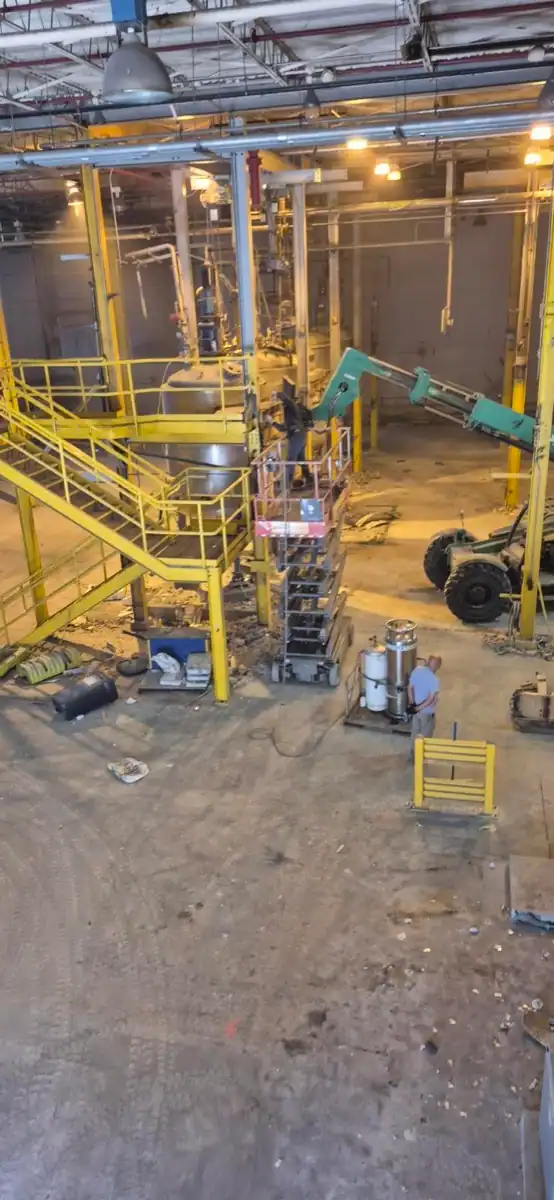
Florida runs water-cooled plants hard and wet. High ambient wet-bulb temperatures mean towers here work at the edge of their rating for months, and facilities replace them on a faster cycle. When a manufacturing plant, hospital, or data center gets decommissioned, the tower comes off the roof or the pad whole — often having run under a maintenance contract right up to shutdown. Those are the good ones, and it's exactly the equipment we recover during a plant cleanup.
The flip side is coastal corrosion. Salt air is brutal on galvanized steel towers, so a coastal unit's material of construction matters enormously to its resale value.
What used cooling towers cost
Pricing tracks nominal tonnage, construction material, and configuration. Working ranges we see:
- Small packaged towers (under 200 tons): roughly 3,000 to 15,000 dollars.
- Mid-size (250 to 600 tons): roughly 12,000 to 45,000 dollars.
- Large field-erected or multi-cell (800 tons and up): 40,000 to 150,000-plus dollars.
Material drives a big chunk of that. Galvanized steel is cheapest but the first to corrode in coastal service. Stainless-steel basins and hardware command a premium and are worth it near salt water. Fiberglass (FRP) and HDPE towers resist corrosion inherently and hold resale value best in Florida. For the wider cooling-plant budget picture, see used chiller prices in Florida.
The brands worth buying
Three names dominate the resale market, and parts availability is a real reason to favor them:
- BAC (Baltimore Aircoil). Ubiquitous, well-supported, strong on closed-circuit and evaporative designs. Easy to get fill, drift eliminators, and nozzles.
- Marley / SPX. The workhorse of large field-erected and induced-draft crossflow towers. Parts and rebuild kits are everywhere.
- Evapco. Excellent closed-circuit and induced-draft units, well-regarded for corrosion-resistant construction options.
Off-brand or no-nameplate towers are cheap for a reason — fill, eliminators, and mechanical parts get hard to source, and you'll pay for that later. This is the same logic that drives chiller brand selection: buy what your techs can service.
What to inspect before you buy
A tower has no compressor, so the inspection is about structure, water path, and mechanicals.
- Basin and cold-water pan. The most common failure point. Look for rust-through, patched holes, and thinning on galvanized units. A rotted basin is a full replacement, not a repair.
- Fill media. PVC fill degrades, fouls, and collapses. Check for scale, biological fouling, and sagging. Fill is replaceable but a fresh pack on a large tower is thousands of dollars — factor it in.
- Drift eliminators. Missing or broken eliminators waste water and violate some codes. Cheap to replace, but confirm they're there.
- Fan, motor, and gearbox/belt. Megger the fan motor, spin the fan for bearing noise and shaft play, and check the gearbox oil or belt condition. On induced-draft towers the gear reducer is the pricey mechanical part.
- Structure and hot-water distribution. On field-erected towers, check the framing, hot-water basin, nozzles, and distribution deck for corrosion and blockage.
The same discipline we apply to testing chillers applies here — the goal is a known quantity, not a hopeful guess.
Rigging, delivery, and Florida logistics
Towers are bulky but relatively light for their footprint, which changes the logistics versus a chiller.
- Packaged towers ship on a flatbed and set with a single crane pick — often 2,000 to 10,000 dollars all-in for the move.
- Field-erected towers come apart into sections and reassemble on site, which is more labor but avoids an oversize load.
- Rooftop sets in the metros need crane permits and street closures — see our delivery and rigging guide for the Florida permit realities.
Two local factors: hurricane season means you don't leave a tower half-rigged on a roof from June to November, and Florida sales tax applies to the purchase unless a manufacturing exemption fits — check with your accountant.
Closed-circuit vs open towers
One choice shapes both price and maintenance: open versus closed-circuit. An open tower exposes your condenser water directly to the atmosphere — cheaper to buy, but the water picks up airborne dirt and biological growth, which means more water treatment and more fouling in the plant. A closed-circuit (fluid cooler) tower keeps the process fluid in a sealed coil and rejects heat through a secondary spray loop, protecting the chiller's condenser from contamination. Closed-circuit units cost more used — often 30 to 50 percent more for the same capacity — but they pay it back in cleaner plant water and lower treatment cost, which matters in Florida's high-biological-load climate. BAC and Evapco both build strong closed-circuit designs, so parts support isn't a reason to avoid them.
Matching the tower to the plant
A tower has to match your chiller's condenser flow and heat-rejection load, and it has to be rated for Florida's design wet-bulb, which is higher than most of the country. An undersized or mis-selected tower will bottleneck an otherwise healthy chiller. If you're building or rebuilding a water-cooled plant, pair the tower selection with your chiller sizing so the whole loop is balanced.
Bottom line
Used cooling towers are one of the best value buys in industrial cooling — no compressor to fail, 40 to 60 percent off new, and strong supply from Florida plant decommissioning. Favor corrosion-resistant construction for coastal service, stick to BAC, Marley/SPX, or Evapco for parts support, and inspect the basin, fill, and fan drive hard before you commit.
We recover and resell towers off decommissioned plants across the state, tested and ready. Tell us your tonnage and condenser flow and we'll match you a unit — start here or reach out directly.
Looking for used equipment?
We move chillers, boilers, generators, and cooling towers across Florida and nationwide. Tell us what you need.
Ask About Available UnitsMore in Buying Guides
Buying Used Machine Tools From a Plant Closure
Machine tools from a closing facility can be the best value in industrial equipment, provided you evaluate wear, controls and what it takes to move.
Inspecting a Used Industrial Boiler Before You Buy
Pressure vessel condition, jurisdiction paperwork and burner package all decide whether a used boiler is a bargain or an ornament.
Load Testing a Used Generator Before You Buy
Hours mean little without a load test. What to test, what to look for, and what a generator's history tells you.